

FIFA defends arbitration independence despite Trump's call in Balogun case
Gianni Infantino spoke out after the criticism that allowed Balogun to play against Belgium
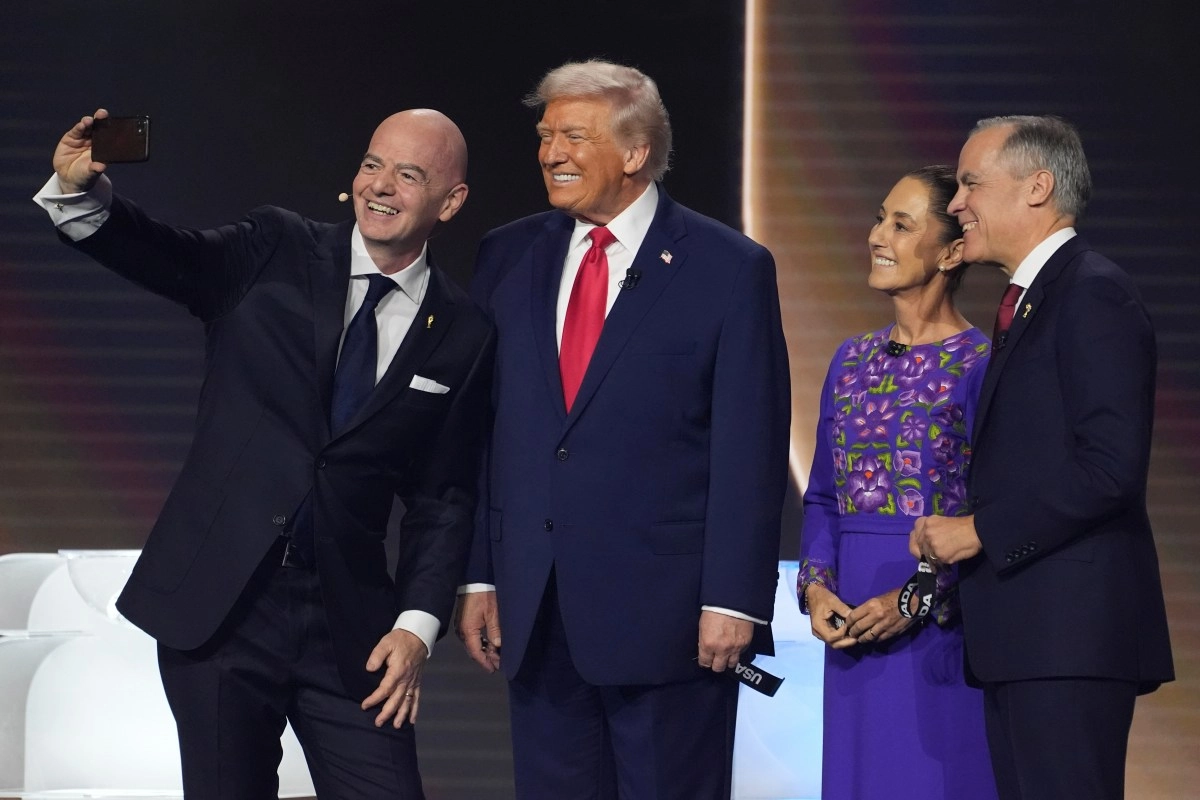

The United States team had its main offensive weapon for the decisive round of 16 match against Belgium in Seattle. Folarin Balogun, the American team's top scorer in the tournament, was eligible to participate after receiving a pardon from the FIFA Disciplinary Commission, starting in the 1-4 defeat.
The Monaco striker had been sent off in the round of 32 match against Bosnia Herzegovina, after the VAR intervened in an action where he hit an opponent's leg with his studs, a play initially classified as a violent foul.
This resolution provoked immediate responses in the European environment. The Royal Belgian Football Federation (RFBA) expressed its rejection by sending an email to FIFA, an action interpreted as a formal appeal, and announced that it will exhaust all necessary instances to reverse the annulment of the punishment. In line with this position, UEFA issued a statement warning that the decision adopted represents the crossing of “a red line”, putting at risk the fair and equal treatment that must be guaranteed to all delegations within international competition.
Political intervention and institutional autonomy
The case took on an extra-football dimension when the president of the United States, Donald Trump, confirmed from the Oval Office of the White House that he had telephoned the president of FIFA, Gianni Infantino, to request that the sanction be reviewed on the grounds that it was applied outside the VAR protocol.
"I asked for a review because I didn't think it was a foul, and you know, I repeat, I'm good at these things. I didn't think it was even an infraction, I thought it was two great athletes running at full speed who collided with each other and got tangled up, that wasn't a guy hitting someone in the face or anything like that," declared the American politician.
As a result of this situation, Gianni Infantino published a statement admitting the telephone contact, although he stressed that this type of interactions with heads of state, officials, executives and actors in world football are part of his usual agenda to discuss World Cup issues. The Swiss leader emphasized that the final resolution fell exclusively to an autonomous body.
"During our conversation, I explained to him that there was an ongoing legal process involving FIFA's independent judicial commissions and that the case would be decided in due time by the competent bodies. This is how the FIFA system works, and it is a principle that I will always defend," Infantino explained.
Likewise, the head of the international federation stressed that his personal opinions have no weight in the deliberations of the Disciplinary Commission. "I read the decisions of the FIFA Disciplinary Commission when they are published. Sometimes they surprise me. Sometimes I agree with them and sometimes I don't. What I always do, however, is respect those decisions and the autonomy of the commissions that make them," he noted, concluding that "respect for independent institutions and the rule of law is what protects the integrity of our competitions and the credibility of FIFA at all times."