

Secretary of Energy promotes “historic” agreement with Delcy Rodriguez in Caracas
Rodriguez also announced the establishment of an energy partnership, which will cover projects in oil, gas, mining and electricity
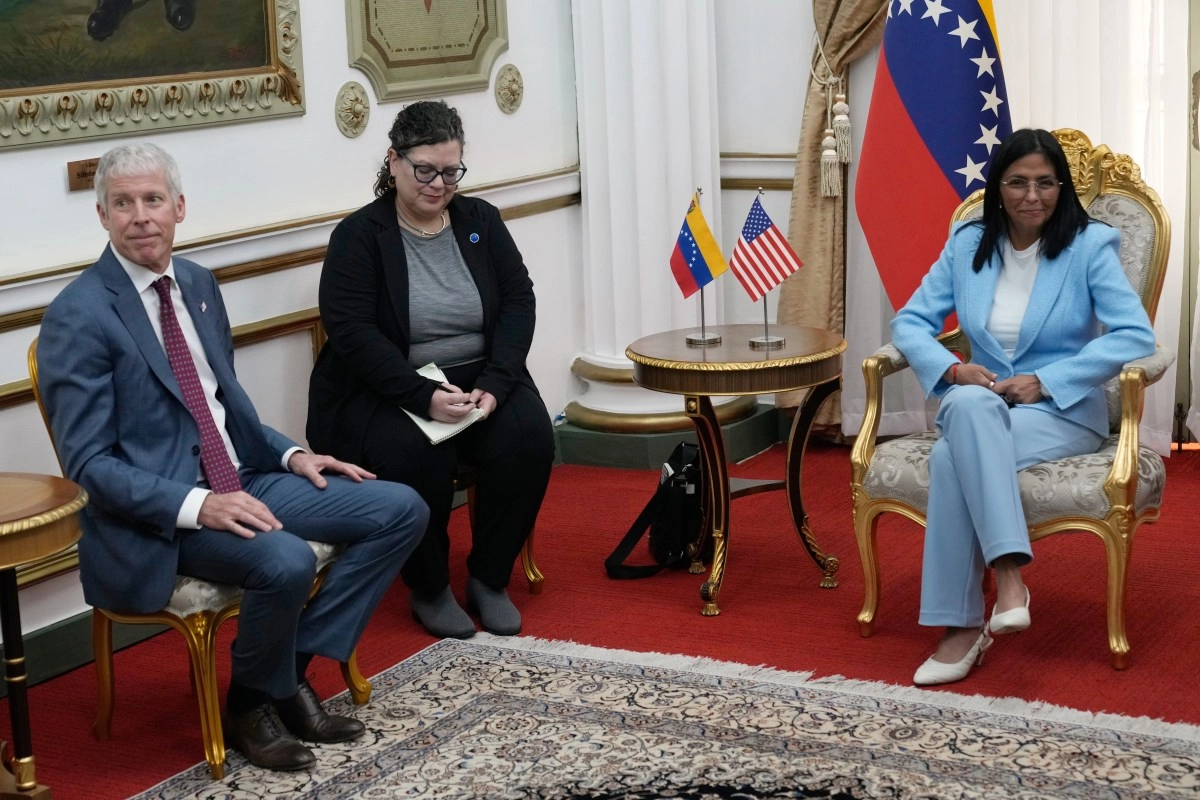

U.S. Energy Secretary Chris Wright met in Caracas with Venezuelan interim president Delcy Rodriguez to promote what both governments described as a “historic” energy agreement, at a key moment for the bilateral relationship after years of political tensions and economic sanctions.
The The visit marks the first trip by a high-ranking Washington official to Venezuelan territory since the military operation last January in which Nicolas Maduro and his wife, Cilia Flores, were captured. The meeting also comes amid recent decisions by both countries aimed at facilitating oil investment and revitalizing the South American country's struggling energy industry. Wright arrived at Miraflores Palace two weeks after the Venezuelan Parliament approved a reform to the hydrocarbons law that opens the sector to private and foreign investment. Meanwhile, the U.S. Treasury Department issued new licenses that ease restrictions on U.S. companies operating in Venezuela, albeit under strict controls. In a statement released from Caracas, the Department of Energy described the visit as “historic” and noted that the agreement promoted by President Donald Trump seeks to foster peace and prosperity in the hemisphere. A “long-term” energy partnership. During the private meeting, which also included key figures such as PDVSA President Hector Obregon and U.S. Charge d'Affaires Laura Dogu, a “long-term productive partnership” was outlined. Rodriguez emphasized that energy must be the central focus of a new era of mutual respect and shared benefits. “We seek to make this energy agenda productive, effective, and complementary,” said the Venezuelan leader, who recalled that the trade relationship between the two countries spans a century and a half. According to projections presented by Rodriguez,Revenues from crude oil sales are expected to increase by 37% in 2026, funds that will be managed through new transparency mechanisms and sovereign wealth funds. Following the private meeting, Rodriguez announced the establishment of a “long-term productive partnership” in the energy sector, encompassing projects in oil, gas, mining, and electricity. Although no timelines or investment amounts were specified, the president emphasized that the agenda must be “beneficial, complementary, and effective for both countries.” “Let diplomatic dialogue, political dialogue, and energy dialogue be the appropriate channels to move forward with maturity,” Rodriguez stated, highlighting that Caracas and Washington have maintained energy relations for over a century. More licenses and promises of increased production. Wright asserted that the Trump administration has been working “seven days a week” to issue new licenses that will allow existing and new companies to invest in the country. “We want to liberate the Venezuelan people and the economy,” he stated from Miraflores Palace, acknowledging that previous sanctions had restricted the sector's development. The official maintained that if both nations work together, this year could see a significant increase in oil, natural gas, and electricity production, which, he said, would translate into more jobs, better wages, and a higher quality of life for Venezuelans. As part of his agenda, Wright will hold meetings with business leaders and international media, and on Thursday he will visit facilities of the joint ventures Petroindependencia and Petropiar, the latter operated by Chevron in Anzoategui state. Until now, Chevron was the only U.S. oil company with special authorization to operate in the country. For Washington, this rapprochement represents a strategic move to secure energy supplies and strengthen its influence in the region. For Caracas, it's an opportunity to reactivate a key industry and increase its oil revenues, which the government estimates will grow by 37% in 2026. The success of this agreement, according to both governments, will depend on diplomacy overcoming the deep historical differences that still persist.
“Let diplomatic, political, and energy dialogue be the appropriate channels for moving forward with maturity,” Rodriguez stated, emphasizing that Caracas and Washington have maintained energy relations for over a century.
More licenses and promises of increased production
Wright asserted that the Trump administration has worked “seven days a week” to issue new licenses that will allow existing and new companies to invest in the country. “We want to liberate the Venezuelan people and the economy,” he stated from Miraflores Palace, acknowledging that previous sanctions had restricted the sector's development. The official maintained that if both nations work together, this year could see a significant increase in oil, natural gas, and electricity production, which, he said, would translate into more jobs, better wages, and a higher quality of life for Venezuelans. As part of his agenda, Wright will hold meetings with business leaders and international media, and on Thursday he will visit facilities of the joint ventures Petroindependencia and Petropiar, the latter operated by Chevron in Anzoategui state. Until now, Chevron was the only U.S. oil company with special authorization to operate in the country. For Washington, this rapprochement represents a strategic move to secure energy supplies and strengthen its influence in the region. For Caracas, it's an opportunity to reactivate a key industry and increase its oil revenues, which the government estimates will grow by 37% in 2026. The success of this agreement, according to both governments, will depend on diplomacy overcoming the deep historical differences that still persist.
“Let diplomatic, political, and energy dialogue be the appropriate channels for moving forward with maturity,” Rodriguez stated, emphasizing that Caracas and Washington have maintained energy relations for over a century.
More licenses and promises of increased production
Wright asserted that the Trump administration has worked “seven days a week” to issue new licenses that will allow existing and new companies to invest in the country. “We want to liberate the Venezuelan people and the economy,” he stated from Miraflores Palace, acknowledging that previous sanctions had restricted the sector's development. The official maintained that if both nations work together, this year could see a significant increase in oil, natural gas, and electricity production, which, he said, would translate into more jobs, better wages, and a higher quality of life for Venezuelans. As part of his agenda, Wright will hold meetings with business leaders and international media, and on Thursday he will visit facilities of the joint ventures Petroindependencia and Petropiar, the latter operated by Chevron in Anzoategui state. Until now, Chevron was the only U.S. oil company with special authorization to operate in the country. For Washington, this rapprochement represents a strategic move to secure energy supplies and strengthen its influence in the region. For Caracas, it's an opportunity to reactivate a key industry and increase its oil revenues, which the government estimates will grow by 37% in 2026. The success of this agreement, according to both governments, will depend on diplomacy overcoming the deep historical differences that still persist.Wright will hold meetings with business leaders and international media, and on Thursday he will visit the facilities of the joint ventures Petroindependencia and Petropiar, the latter operated by Chevron in Anzoategui state. Until now, Chevron was the only US oil company with special authorization to operate in the country. For Washington, this rapprochement represents a strategic move to secure energy supplies and strengthen its influence in the region. For Caracas, it is an opportunity to revitalize a key industry and increase its oil revenues, which the government estimates will grow by 37% in 2026. The success of this agreement, according to both governments, will depend on diplomacy overcoming the deep historical differences that still persist.Wright will hold meetings with business leaders and international media, and on Thursday he will visit the facilities of the joint ventures Petroindependencia and Petropiar, the latter operated by Chevron in Anzoategui state. Until now, Chevron was the only US oil company with special authorization to operate in the country. For Washington, this rapprochement represents a strategic move to secure energy supplies and strengthen its influence in the region. For Caracas, it is an opportunity to revitalize a key industry and increase its oil revenues, which the government estimates will grow by 37% in 2026. The success of this agreement, according to both governments, will depend on diplomacy overcoming the deep historical differences that still persist.