

Trump travels to China accompanied by Elon Musk, Tim Cook and other Wall Street leaders to meet Xi Jinping
The White House confirmed that the president will not travel alone, but will do so flanked by seventeen of the most powerful executives in the country
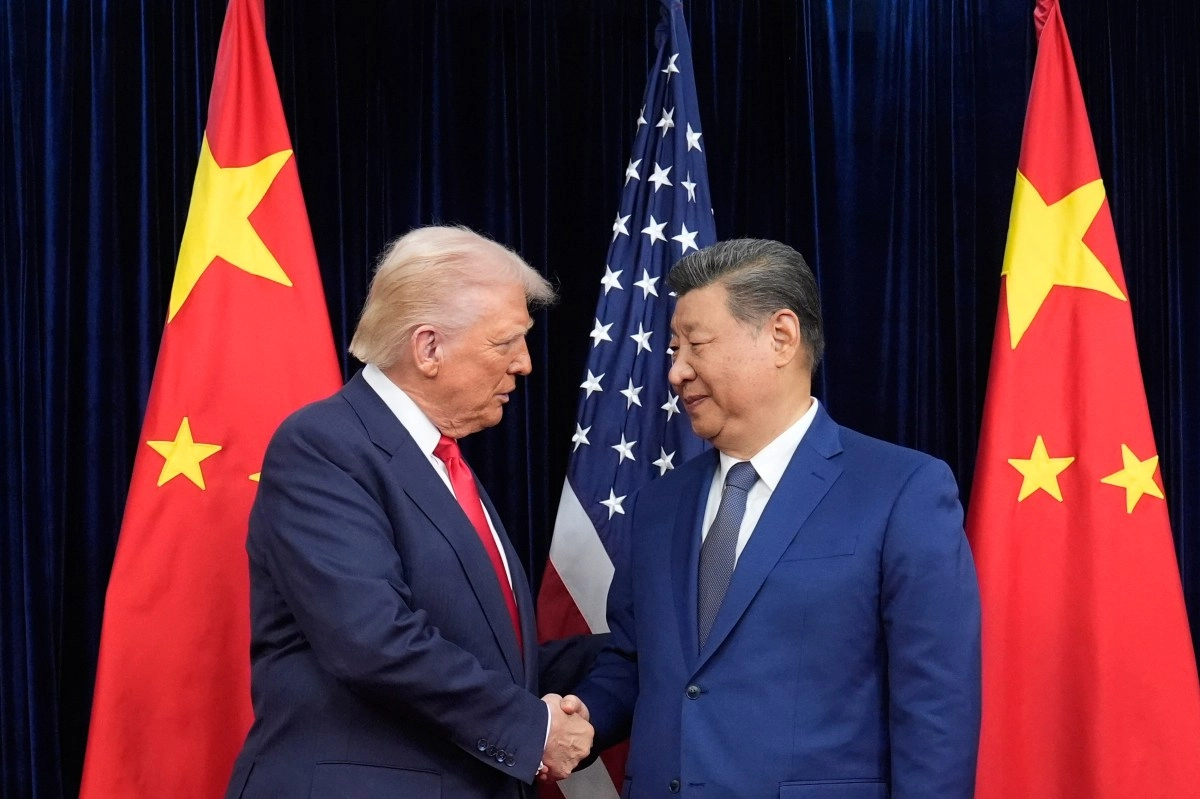

President Donald Trump will travel to China this week accompanied by some of the most influential businesspeople in the United States, including Elon Musk, Tim Cook and senior executives of Wall Street, in a visit that seeks to strengthen the economic ties between Washington and Beijing amid trade tensions and geopolitics.
The US delegation includes more than a dozen executives of large technological, financial, industrial and agricultural corporations. Among the confirmed names Kelly Ortberg, from Boeing; David Solomon, from Goldman Sachs; Larry Fink, from BlackRock; Jane Fraser, from Citigroup; and Dina Powell McCormick, representative of Meta Platforms.
They also include executives from companies such as Qualcomm, Mastercard, Visa, Micron, GE Aerospace and Cargill, a sign of the White House's interest in promoting trade and investment agreements with the Chinese government.
The official visit will take place from May 13 to 15 after an invitation by Chinese President Xi Jinping. It will be the second face-to-face summit between both leaders since the beginning of Trump's second term.
Musk reappears with Trump after months of distancing
One of the aspects that has drawn the attention is the participation of Elon Musk, whose relationship with Trump had deteriorated after leaving the Republican administration in 2025 following disagreements on the fiscal package promoted by the White House.
However, in recent months both have resumed political and business contact. Analysts in Washington believe that Musk could play a key role as an informal interlocutor with China due to Tesla's strong interests in that country.
Tesla's Shanghai plant has become one of the company's most important operations globally, and Musk himself has previously described the business relationship with China as a “successful example of economic cooperation.”
The most noticeable absence in the department will be that of NVIDIA's executive director, Jensen Huang, despite the discussions will include topics related to technology and artificial intelligence. US officials noted that the talks will be focused primarily on agricultural, financial and aviation sectors.
Taiwan and trade will set the bilateral agenda
In addition to the economic agreements, Trump announced that he will directly address with Xi Jinping the issue of the sale of US arms to Taiwan, one of the most sensitive points in the relationship between both powers.
“I'm going to have that discussion with President Xi,” Trump declared from the White House, acknowledging that Beijing opposes Washington continuing to supply defensive weapons to the island.
China considers Taiwan a rebel province and has reiterated that it does not rule out the use of force to take control of the territory . The United States, for its part, has maintained military and political support for Taipei for decades under historic strategic agreements.
In parallel, officials from both countries will hold economic meetings in South Korea to consolidate the tariff truce reached last year and explore new bilateral investment mechanisms.
The Trump administration is also seeking to promote the creation of a joint trade and investment board with China, despite the restrictions that both governments maintain on strategic sectors such as semiconductors, artificial intelligence, and advanced technology.
The trip occurs at a time of high international tension marked by the war in the Middle East, global technological competition and the attempt of Washington and Beijing to avoid a further deterioration in their economic relations.