

Who is Tom Homan, the 'border czar' that Trump sent to Minneapolis after the death of Alex Pretti
Trump's envoy to quell the crisis in Minneapolis after the deaths of two citizens at the hands of ICE is known for his
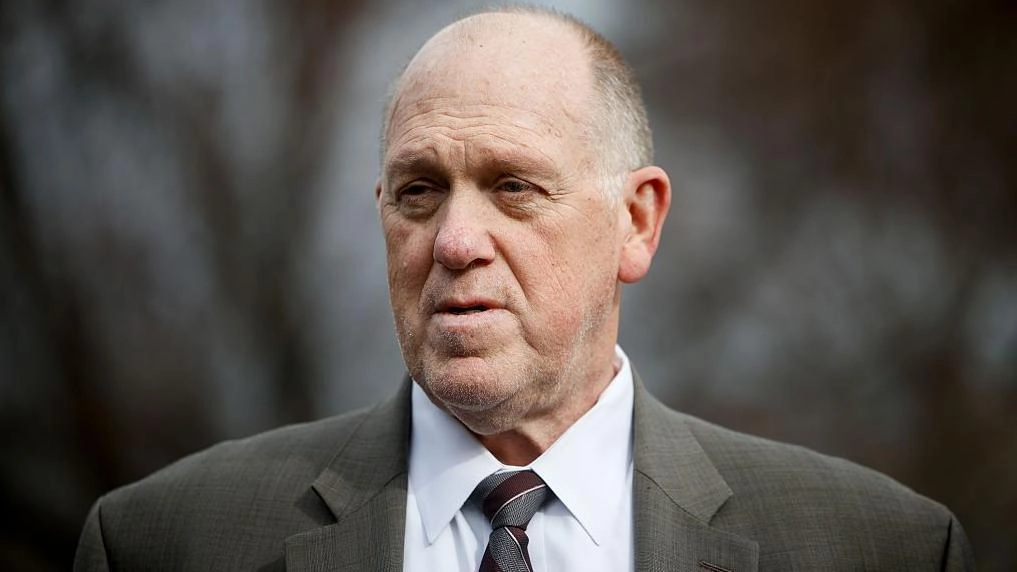

Tom Homan, dubbed the “border czar,” was sent to Minneapolis after two US citizens were shot and killed by federal agents in that city in less than a month. The latest victim was Alex Pretti, a 37-year-old nurse, who died on January 24 at the hands of immigration agents. He was shot 10 times in a matter of seconds.
The White House has said that Homan, who arrived in Minneapolis on Tuesday, will now be the “primary point of contact on the ground.”
This comes as Gregory Bovino, the head of the US Border Patrol and the public face of the Trump administration's mass deportation campaign, was expected to leave the city with some of his agents.
Bovino's replacement by Homan has been interpreted as an acknowledgment by the White House that an urgent change was needed amid growing public concern over raids by Immigration and Customs Enforcement (ICE).
But who is Homan, and what are the prospects for his arrival in one of the areas most shaken by the US administration's immigration policy?
“A tough but fair man”
Homan, 64, is considered a key ally of Trump and someone with decades of experience. with experience in immigration policy in both Republican and Democratic administrations.
He is known for his “zero tolerance” stance on irregular migration and for being a staunch advocate of a hardline approach to combating it.
“A tough man, but fair,” Trump said of him this week.
During Donald Trump's first term, he headed the now-controversial Immigration and Customs Enforcement (ICE).
In that role, he pushed for deportation measures and supported the separation of migrant families to deter illegal border crossings.
During his visit to Minnesota, where he has already met with Mayor Jacob Frey and Democratic Governor Tim Walz, Homan will report directly to Trump, as the president himself announced when he made the announcement.
Not like Bovino, who reports to the controversial US Secretary of Homeland Security, Kristi Noem.
She was one of the first spokespeople after Pretty's death, offering a version that seemed to contradict the events recorded in videos released by witnesses.
Noem claimed that the officers fired defensive shots, when the videos clearly show that the young man was already subdued, unarmed, and on the ground when the first shot was fired.
For all these reasons, Homan's arrival has been interpreted as a gesture by Trump himself to lower the tone and contain a larger social crisis.
From police officer to immigration chief
One of seven children of a Catholic couple, with a father and grandfather who were police officers, Homan's career It began in New York.
There he worked as a police officer before joining the Immigration and Naturalization Service (INS) in 1984, the precursor to what is now ICE.
In the following years, Homan held various positions with the Border Patrol and rose through the ranks.
During Barack Obama's second term, he was executive associate director of ICE's enforcement division in 2013, a key position from which he oversaw an increase in formal removals.
Obama awarded him the Presidential Rank Award, the highest honor bestowed upon civil servants in the United States, for his contributions to border security.
The effectiveness and toughness of his policies earned him recognition among those who saw him as a staunch defender of the law, as well as criticism from those who considered his cruel approach to immigrants.
In 2017, under Donald Trump's first term, he was appointed acting director of ICE and became one of the most visible figures in US immigration policy.
Ideologue of Family Separations
Tom Homan was a staunch defender of the controversial policy that in 2018 led to the separation of thousands of migrant children from their parents at the US-Mexico border.
Along with two other high-ranking officials, he was one of the signatories of the memorandum that approved this policy under the supervision of then-Secretary of Homeland Security Kirstjen Nielsen, who gave the green light to the separations.
The measure, implemented during Trump's first term, sought to deter families from attempting to enter the country irregularly, using family separation as a tool for immigration control.
Considered by journalists and experts as the intellectual father of this strategy, Homan had been promoting it for years before it was officially implemented.
The former police officer argued that the possibility of being separated from their children would lead many parents to reconsider their decision to cross the border.
In total, between 2018 and 2021, more than 4,600 minors were separated from their parents after crossing the border irregularly, according to reports by Human Rights Watch.
Linked to the 2025 Project
Although he left his position at ICE in 2018, Tom Homan remained active in the immigration debate as a public figure in conservative media.
He became a contributor to Fox News, where he continued to defend strict immigration policies.
He also participated in the Heritage Foundation, an influential conservative think tank, where he contributed to the development of immigration policy proposals in anticipation of a second Trump term.
In particular, Homan collaborated on Project 2025, a controversial government reform proposal that advocates, among other things, more radical measures toward undocumented immigrants, and from which Trump has publicly distanced himself.
Mass Deportations
Before assuming the role of “border czar,” Homan told CBS that his mission would be to execute the largest deportation operation in US history during the Trump administration.
According to Homan, this initiative would begin with the expulsion of criminals and threats to national security, and then focus on undocumented immigrants with outstanding deportation orders.
But the former police officer had also said that immigration policy would be controlled. "It's not going to be a massive sweep of neighborhoods. We're not going to build concentration camps. I've read all that. It's ridiculous," he declared. During his time in office, he has been an outspoken supporter of the president's broad deportation goals, promising to target “the worst of the worst” and challenge the notion that “law enforcement is the bad guy and lawbreakers are the victim.” However, the actions of ICE and Border Patrol—just over a year into the administration—have been characterized by indiscriminate raids. In practice, the enforcement of immigration laws and the attempt to focus on threats to public safety have also affected other undocumented immigrants without criminal records. This is something Homan acknowledges and attributes to “sanctuary cities,” which he accuses of not cooperating with federal immigration initiatives.
Authorities have stated that being in the United States without documents is a crime in itself.
“We're not going to order ICE not to arrest (someone) unless there's a serious crime,” he told reporters in July at the White House, where he makes regular appearances.
“What message does that send to the “Whole world? Get in the country!” Homan added.
In September, the White House quickly came to Homan's defense after reports surfaced that he had been charged in a bribery case that was ultimately dropped by the Justice Department when Trump returned to office.
White House press secretary Karoline Leavitt described that case (in which Homan allegedly accepted $50,000 from undercover agents) as an effort to “trap” a key Trump ally.
Will the change in leadership bring about change?
Some political observers view the replacement of Bovino with Homan in Minneapolis as an acknowledgment by the White House that a change was urgently needed in the face of growing public concern.
However, in practice, this change is unlikely to ultimately alter the administration's approach to immigration enforcement.
“Homan has been with ICE longer (than Bovino) and focuses on internal enforcement,” former DHS immigration official Lora Ries told the BBC, referring to her work in many US cities far from the border. “This doesn't surprise me.”
Ries, now director of the Border Security and Immigration Center at the conservative Heritage Foundation in Washington, added that although Homan has said he has tried to focus “first on the worst cases,” all deportable undocumented migrants will remain “on the table.”
For pro-immigration activists, Homan's career trajectory—which includes a staunch defense of Trump's family separation policy, which has led to separating children from their parents who are in the country illegally—also means they see few practical differences between him and Bovino.
“I'm not sure it means much. Homan is a career deportation advocate and the architect of family separation,” said Michael Lukens, executive director of the Amica Center, an organization that helps access legal services.
“I think the difference is that he's more refined than Bovino. He's better at talking to the press and stakeholders,” he added. “It's better for what they need, someone to present their actions as something they're not.” “It's more about whether the White House sees this as a political issue, not a human one,” Lukens added. “But there is no world in which Homan is a moderate.”