

Shahed MS001: the drone with artificial intelligence that selects its targets without human help
Russia debuted a new type of drone that is capable of selecting its targets automatically thanks to AI
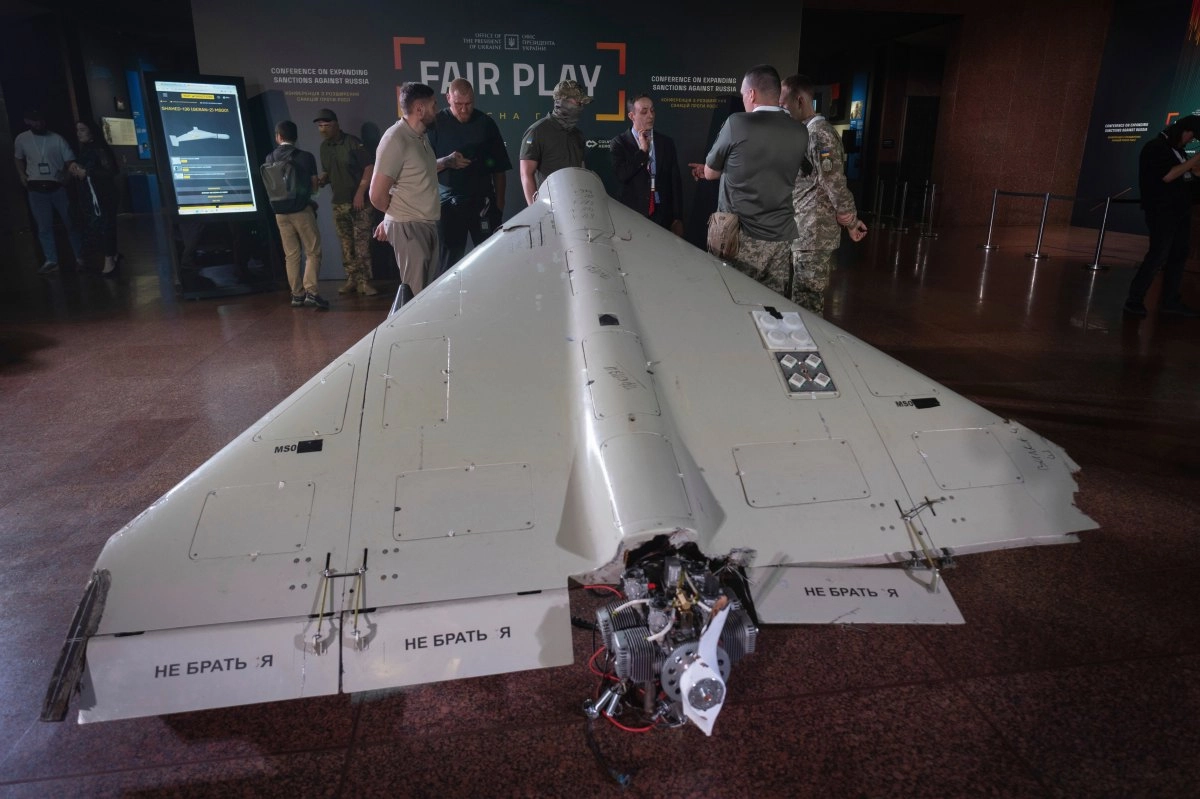

Amid the electronic silence that characterizes modern battlefields, Russia is deploying a new type of suicide drone with a lethal capacity never seen before. This is the Shahed MS001, an evolution of the well-known Iranian Shahed-136 (Geran-2), but powered by the latest in autonomous artificial intelligence.
What's most striking about it is not only that it can identify targets on its own, but that its "brain" is an Nvidia Jetson Orin processor, something that officially shouldn't be in Russian hands. However, the chip has reached that territory through alternative routes, evading international sanctions.
This drone, nicknamed the "digital predator" by Ukrainian Major General Vladyslav Klochkov, doesn't simply launch itself at a predetermined point. Instead, its artificial intelligence is designed to see, analyze, decide, and attack without external orders. In real combat, this means air defenses may be armored against programmed routes, but they are completely vulnerable to a system that reacts instantly and changes trajectory mid-flight.
Technology that shouldn't be in Russian hands
The curious thing is that this AI computing power, the Jetson Orin, is explicitly under sanctions and restrictions. NVIDIA markets this platform for computer vision and embedded AI projects, but not for military use, much less for export to countries like Russia.
So how did this processor get into the drone? Everything points to parallel supply chains, where intermediaries in unrestricted countries acquire the modules and secretly re-export them to Russia.
Thanks to the Jetson Orin, the Shahed MS001 is capable of processing video in real time, detecting vehicles, identifying faces, and even selecting high-value targets while in flight. It doesn't completely rely on GPS or remote commands. Instead, it can act autonomously, recognizing thermal or visual patterns and executing attacks without direct human intervention.
In addition, it is equipped with thermal cameras, anti-jamming navigation, modems for swarm communication, and an airframe optimized for stealth and precision. All of this makes the drone a far more sophisticated tool than its predecessors.
Lethal Capabilities and Risks on the Battlefield
This drone doesn't just attack; it also learns and adapts. Its artificial intelligence can modify flight paths, choose the most valuable target, and evade counterattacks or electronic jamming.
If defenses disable the GPS or generate interference, the Jetson Orin takes control using its visual and thermal sensors. This makes it extremely difficult to predict or intercept, as it does not rely on static instructions or a vulnerable command center.
Military reports indicate that Russia is using these drones in coordinated swarms, which multiplies their destructive effectiveness. The combination of thermal imaging, autonomous AI, and precision navigation creates a threat that many current air defenses are unprepared to confront. According to Ukrainian intelligence, these drones contain at least 100 imported electronic components from countries including the United States, Japan, and European nations. Despite the sanctions, Russia has gained access to this technology through a clandestine procurement network that exploits loopholes in international trade. This makes it clear that while the technological restrictions exist, they are not working effectively, and Moscow has managed to bypass them to deploy a highly lethal, autonomous drone. The Shahed MS001 is not just a new weapon: it is a global warning signal. The presence of suicide drones capable of selecting and attacking targets without human intervention marks a turning point in modern warfare. This is no longer a technology in the testing phase. This model is already actively operating, making it clear that future conflicts will be decided by algorithms that think faster than any human operator.