

The figure that scares experts: Starlink made 355,000 maneuvers to avoid collisions of its satellites
Elon Musk's constellation lives in active defense mode almost all year round due to space debris in orbit
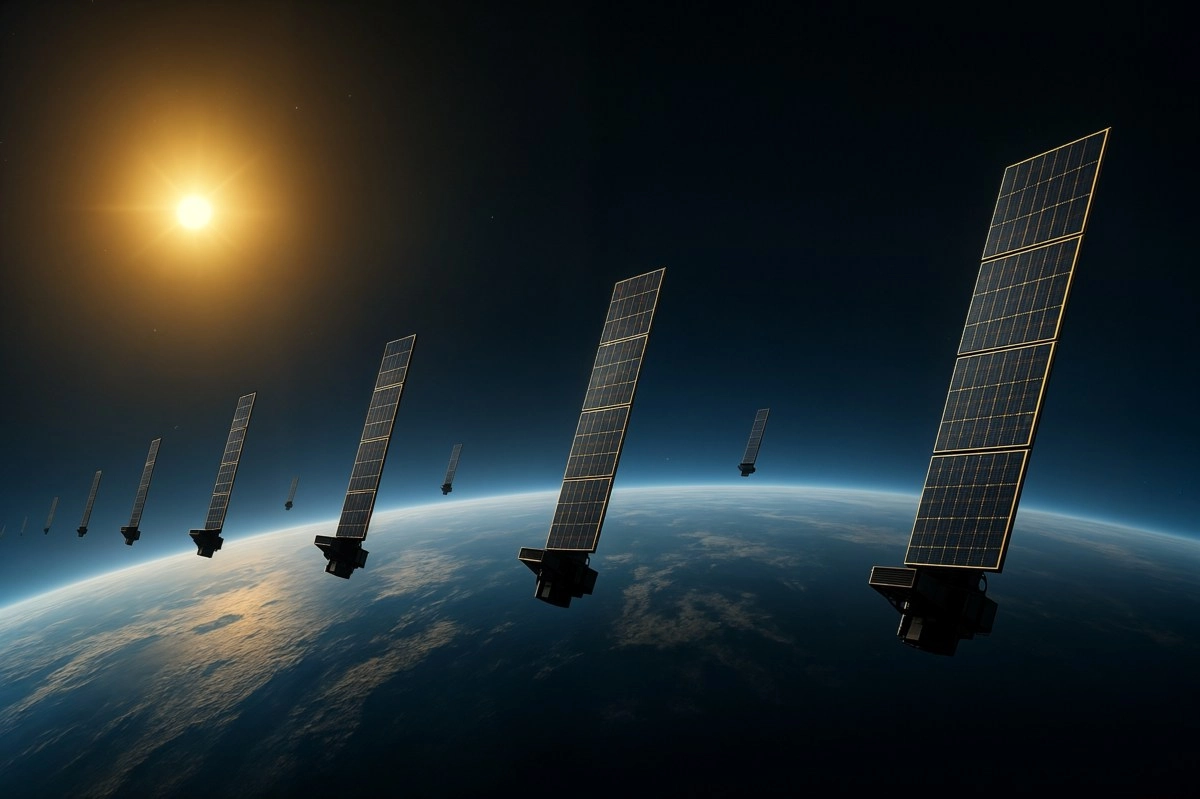

In the last year, the Starlink constellation had to execute more than 355,000 evasion maneuvers to avoid colliding with space debris or other satellites in orbit. This volume of trajectory corrections shows the extent to which traffic in low orbit has become a daily challenge for SpaceX and for any operator who wants to make a living from providing service from space.
More than 355,000 maneuvers in one year
The data comes from the semiannual reports that SpaceX sends to the United States Federal Communications Commission and which detail how many times Starlink satellites had to maneuver due to a risk of collision. Between June 2025 and May 2026, the constellation accumulated more than 355,000 avoidance maneuvers, a figure that triples those registered in 2024 and consolidates a very marked upward trend.
In the most recent period analyzed from December 2025 to May 2026, SpaceX reported 207,152 maneuvers, while in the previous six months 148,696 maneuvers were recorded. The sum of both semesters pushes the annual total above 355,000 maneuvers and reveals that the pace of corrections continues to accelerate as the constellation grows and the number of objects in orbit increases.
If that number is lowered to the scale of each satellite, the panorama does not relax much either. On average, each Starlink satellite corrected its course more than 40 times in a year, which is equivalent to almost weekly maneuvers per device. A traditional operator could go years without having to turn on the thrusters to avoid anything and now we are talking about a routine that is repeated several dozen times a year for each node in the network.
The figure of more than 355,000 maneuvers is added to the previous data of about 300,000 evasive movements during 2025, which confirms that Starlink lives in a kind of permanent “active defense” mode in an increasingly saturated low orbit. It is not only space debris, but also other operational satellites and fragments generated by anti-satellite tests or incidents on previous missions.
How Starlink avoids space debris
To be able to manage such a volume of maneuvers, SpaceX has equipped Starlink with an autonomous collision avoidance system that automatically decides when it is worth moving out of the way. The system constantly monitors conjunction warnings arriving from space surveillance networks and other operators and calculates the probability that an approach will end in a real collision.
SpaceX has opted for a fairly conservative philosophy. Its satellites decide to execute a maneuver when the probability of impact exceeds three in ten million, a much stricter threshold than the industry standard which is usually a probability of one in ten thousand. After the correction, the company assures that the residual probability of collision is reduced to approximately one in a million, a level that they consider negligible from the point of view of individual risk.
Behind each of these maneuvers there are a series of technical decisions. The satellite evaluates whether a minimum correction in height or orbital plane is enough to improve the distance of the planned encounter and coordinates with the network so as not to generate new problems for the rest of the constellation. The key is that a volume of hundreds of thousands of events per year cannot be manually managed, so Starlink's “autopilot” and its algorithms have become a central piece of the operation.
This strategy also has a cost. Each thruster firing consumes fuel and slightly shortens the useful life of the satellite in addition to introducing small uncertainties in the orbit predictions that other systems use to track space traffic. Some experts recall that part of these maneuvers may be avoiding “ghosts” because the position data of many objects continues to be imprecise and generate risk warnings that later do not materialize.
An orbital ecosystem on the limit
The other reading of those more than 355,000 maneuvers in one year is that the problem is no longer theoretical. Researchers like Hugh Lewis and officials from space security organizations point out that although SpaceX is doing very aggressive work to avoid collisions, the added risk of the constellation will continue to grow. If each maneuver leaves a residual probability, no matter how small, when hundreds of thousands of events are added each year, the system approaches a point at which a collision goes from improbable to almost inevitable.
The forecasts used by these experts speak of one million accumulated maneuvers around 2027 and volumes exceeding one million maneuvers per year by 2030 if the current pace of satellite deployment and the entry into play of other mega constellations is maintained. This includes projects such as Amazon networks or large Chinese constellations that aspire to occupy low orbit strips very similar to those exploited by Starlink.