

The graph that shows how Russia has doubled its airstrikes in Ukraine since Trump returned to power
Despite President Trump calls for a ceasefire, Putin has stepped up his drone and missile attacks on Ukraine
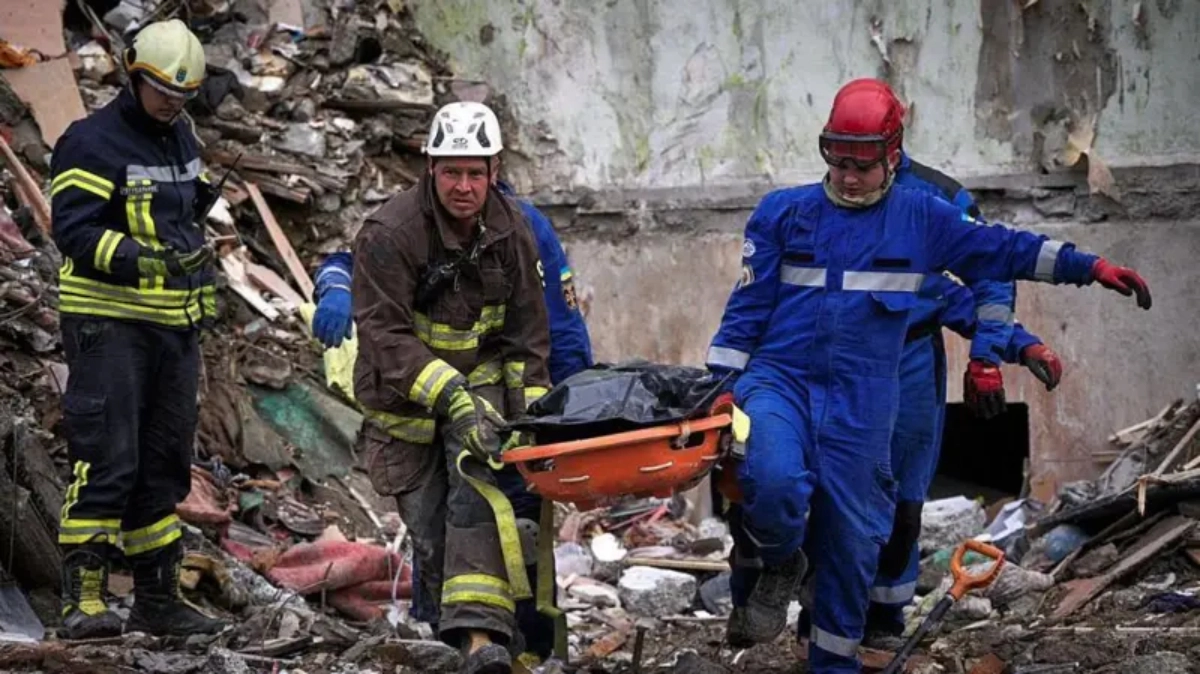

Russia has more than doubled the number of drones and missiles launched at Ukraine since Donald Trump returned to the White House in January, according to an analysis by BBC Verify, despite the US president's calls for a ceasefire. fire.
The attacks were already on the rise during former President Joe Biden's term in 2024, but increased sharply after Trump's election victory in November.
Since returning to power in January, Moscow's airstrikes have reached the highest levels since the start of the war.
During his campaign, Trump promised to end the fighting in a single day if he returned to the presidency.
He claimed in 2024 that Russia's full-scale invasion of Ukraine could have been avoided if a president the Kremlin “respected” had been in office.
However, in his efforts to achieve a cease-fire, he has at times been accused of favoring Russia, and his administration has Twice suspended shipments of anti-aircraft munitions and other military supplies to Ukraine.
Russia intensifies its offensive
The pauses - announced in March and July, and later reversed by the president himself - occurred while Russia steadily increased its production of missiles and drones.
According to Ukrainian military intelligence, ballistic missile production in Russia grew by 66% in the last year.
Data analyzed by BBC Verify, based on daily reports from the Ukrainian Air Force, shows that Russia launched 27,158 drones and projectiles between January 20 (when Trump's term began) and July 19, compared to 11,614 in the last six months of the Biden administration.
“This brutal war was fueled by Joe Biden’s incompetence and has gone on for far too long,” White House deputy spokeswoman Anna Kelly said in a statement to BBC Verify.
He added that “President Trump wants to stop the killing, which is why he is selling American-made weapons to NATO members and threatening Putin with harsh sanctions and tariffs if he doesn’t agree to a cease-fire.”
In the first weeks of the new administration, the White House issued a series of cordial statements that appeared aimed at inviting President Putin to sign a deal.
During that period, Russian attacks on Ukraine briefly decreased compared with the final weeks of the Biden administration.
But in February, when U.S. diplomats led by Secretary of State Marco Rubio met with Russian Foreign Minister Sergey Lavrov’s delegation at a summit in Riyadh, the attacks began to increase dramatically. new.
The talks, which Rubio hailed as a starting point toward ending the war, were followed by mediated dialogues between Ukrainian and Russian officials in Turkey.
The attacks peaked early last month when Moscow launched 748 drones and missiles into Ukraine on July 9, according to the Ukrainian Air Force.
More than a dozen people were wounded in the bombing and two were reportedly killed.
Although Trump has repeatedly criticized the increase in Russian attacks, his growing frustration does not appear to have impacted Moscow's strategy.
On May 25, Russia launched its largest offensive on record, led Trump to angrily exclaim, “What the hell happened to (Putin)?”
Since then, Russia has surpassed that record for launches 14 times.
In response, Trump has demanded that the Kremlin reach a peace deal with Ukraine by August 8.
The number of Russian projectiles making it through Ukrainian air defenses appears to be increasing, and explosions around the capital, Kyiv, have become a part of daily life for its residents.
“Every time you go to bed you don’t know if you’re going to wake up the next day, and that’s not a normal way to live,” Dasha Volk, a journalist living in the city, told the BBC’s Ukrainecast program in June.
And He said: “Every time I hear an explosion or a missile flying overhead, a lot of thoughts go through my mind, like ‘I’m going to die now’ and things like that.”
Ukraine ‘vulnerable’ to airstrikes
Senator Chris Coons, a top Democrat on the US Senate Foreign Relations Committee, told BBC Verify that Trump’s decision to suspend arms shipments twice, and his general approach to Russia, could have given the Kremlin the feeling it was free to escalate attacks.
“It’s clear that Putin is emboldened by Trump’s weakness and has escalated his brutal offensive against the Ukrainian people, repeatedly attacking hospitals and maternity wards, the Ukrainian electrical grid, and other civilian facilities,” he said.
The increased attacks have renewed calls for the U.S. to send new Patriot air defense systems to Ukraine.
The Patriots are the most sophisticated and expensive air defense systems the country has; Each battery costs about $1 billion, and each missile nearly $4 million.
Trump has reversed earlier supply pauses and agreed to sell arms to NATO members, who will in turn send them to Kyiv.
The president hinted that the deal would include new shipments of Patriot batteries.
Justin Bronk, an analyst specializing in the Russian military at the Royal United Services Institute (RUSI), said that the White House's restrictions on the supply of military equipment have left Ukraine "vulnerable" to missile and drone attacks.
However, he also noted that Russia has stepped up production of missiles and so-called kamikaze drones like the Geran-2, a local version of the Iranian Shahed drone.
Bronk explained that the increased Russian stockpiles, coupled with “significant reductions” in the supply of interceptor missiles from the US, have encouraged Moscow to intensify its air campaign.
The Alabuga base
The Military Intelligence Agency of Ukraine (HUR) recently told local media that Russia is now producing up to 85 ballistic missiles per month, up from 44 in April 2024.
Russia is reportedly producing 170 Geran drones per day after establishing a massive manufacturing facility in Alabuga, in southern Ukraine. country.
In a recent interview with Russian military television, the plant's director, Timur Shagivaleyev, proudly stated that Alabuga had become “the largest combat drone factory in the world,” adding that his workers are producing nine times more units than originally planned.
Satellite imagery shows the plant has undergone significant expansion since mid-2024, with several new warehouses built.
Other structures, including what appear to be extensions of worker dormitories, remain under construction.
Senator Coons warned that the surge in Russian arms production means Washington must make clear it is not preparing to walk away from the conflict, as some administration officials have suggested, and stressed that peace can only be achieved through a “decisive push on security assistance.”
He added that President Trump must make clear to Russia that he “cannot simply try to outlast the West.”
“To do that, he needs to maintain a consistent and sustained approach to the war,” she said.
For her part, Dasha Volk noted that public morale is suffering every day the Russian campaign drags on and Ukrainian interceptions decline.
He claimed that “people are getting tired of these attacks, they really affect our lives.”
“We know what we are fighting for, but it gets harder every year because we are all exhausted. That is the reality,” he said.