

How did former Iranian President Ahmadinejad become one of the strangest mysteries of the Iran war?
The New York Times reported that the United States and Israel considered former President Mahmoud Ahmadinejad as a possible post-war leader.
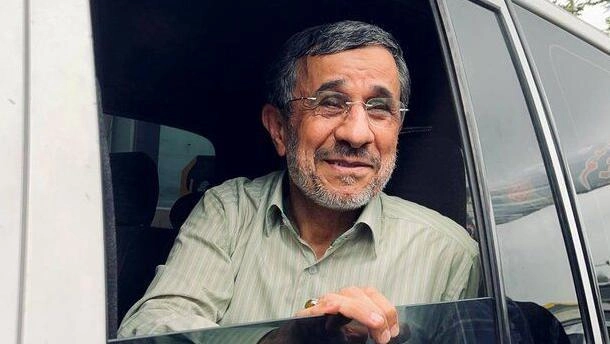

"You must know that this hated regime (Israel) is on a downward path towards collapse, and by the grace of God it will collapse, and no factor will be able to save it. This regime has reached the end of its journey and will soon be wiped off the map."
For years, statements like this made former Iranian President Mahmoud Ahmadinejad one of the best-known anti-Israel figures in the world.
He questioned the Holocaust, called Israel a “manufactured regime” and defended the advancement of the Iranian nuclear program despite sanctions.
These stances led Israeli officials to frequently cite him in explaining why they believed Iran posed a real threat.
However, The New York Times reported that in their “post-war planning,” the United States and Israel had considered a scenario in which Ahmadinejad could break with the Iranian security establishment and emerge as a possible future leader.
But the plan failed, according to the newspaper, as Ahmadinejad was allegedly wounded in an attack to free him from house arrest at the start of the war.
Ahmadinejad and his collaborators have not responded to these claims and their whereabouts remain unknown.
The news was met with skepticism by American and Israeli analysts, who question why either country would consider working with someone long associated with extremely anti-Israel rhetoric.
This apparent contradiction has also led some to reconsider whether Ahmadinejad's image has not always been more complex than it seems.
A useful enemy for Israel?
To understand how delicate the situation is, we must go back to the years when Ahmadinejad began to gain power in Iranian politics.
In 2003, he was elected mayor of Tehran despite being a virtually unknown political figure. In 2005, he came to power as president, with the apparent backing of Supreme Leader Ali Khamenei.
During his election campaign he used slogans about justice, simplicity and the fight against corruption, but he quickly became a global figure, not for his domestic policies but for his comments on Israel, the United States and the Holocaust.
In October 2005, at the “A World Without Zionism” conference in Tehran, Ahmadinejad said: “A world without the United States and without Zionism is possible.”
Approximately a year later, the controversial International Conference to Review the Global View of the Holocaust was also held in Tehran, a meeting attended by well-known deniers of the genocide of the Jews and which unleashed a wave of international reactions.
Years later, some Israeli officials and analysts openly claimed that Ahmadinejad, with his harsh rhetoric and Holocaust denial, had in fact acted in favor of Israel.
In 2008, Efraim Halevy, former head of the Mossad, described him as “Iran's greatest gift to Israel,” noting that his statements made it easier for the world to take the threat from Iran seriously.
Ahmadinejad's supporters dismissed this claim and argued that he was simply pursuing an aggressive, ideological policy that was at odds with Israel and the West.
A change of image after leaving power
Once he left office in 2013, Ahmadinejad entered into escalating conflict with Supreme Leader Ali Khamenei and actors in Iran's security apparatus, including the Islamic Revolutionary Guard Corps (IRGC).
He was then banned from running in the presidential elections on multiple occasions by Iran's Guardian Council.
In response to the New York Times report, Raz Zimmt, director of the Iran and Shiite Axis program at Israel's Institute for National Security Studies, said in a post on X that Ahmadinejad often took contradictory and unexpected positions.
“During his presidency, Ahmadinejad was a combination of populism and opportunism,” he wrote.
In recent years, on social media, Ahmadinejad also modified his international image: he tweeted in English, congratulated the University of Michigan football team and quoted the legendary American rapper Tupac Shakur.
He even praised US President Donald Trump for “fighting political corruption in the US.”
While Zimmt acknowledges this attempt to create a more moderate image within Iran and for Western audiences, he said Ahmadinejad never had a level of support that would allow him to seize power in a country of more than 90 million people.
Skepticism among American experts
Three American experts who spoke to the BBC Persian service also doubted the report of a “serious operational plan” to return Ahmadinejad to power.
Max Abrahms, a professor of political science at Northeastern University and an expert on counterterrorism, says the information should be treated with “a lot of skepticism” because of the high levels of war-related misinformation.
He considers Israel unlikely to welcome Ahmadinejad's return, given his Holocaust denial and role in advancing the Iranian nuclear program, while for Trump, Ahmadinejad would not fit the narrative of successful regime change.
Ilan Berman of the American Foreign Policy Council also considers the idea of a credible US-Israel plan unlikely. He claims that even if Ahmadinejad's name had been considered as a leadership candidate, he would not be the preferred choice.
Michael Rubin of the American Enterprise Institute calls the story “fantastic” and says The New York Times relies too much on anonymous sources.
However, he maintains that many in the West still do not understand that Ahmadinejad had appeal to certain sectors of Iranian society.
For its part, The New York Times noted in
The reaction within Israel
Some Israeli security experts focused on what such a scenario would reveal about Israel's understanding of Iran.
Danny Citrinowicz of the Institute for National Security Studies wrote in X that any attempt to “crown” Ahmadinejad would reflect a profound ignorance of the Iranian political system.
He claimed that Ahmadinejad had no real power base and would never have the backing of the Islamic Revolutionary Guard Corps, so he could only take control if the entire power system currently in place in Iran collapsed, something the US and Israeli attacks have failed to do.
Yossi Melman, a veteran Israeli security analyst, also wrote in X: “This story is crazy on multiple levels.”
He said any idea that the regime's collapse could be precipitated by minority uprisings and airstrikes would demonstrate that Israeli and US planners were “living in a fantasy world.”
Why was Ahmadinejad's name mentioned?
With all these doubts, the question remains: why Ahmadinejad?
The answer could lie in the unusual combination of three of his traits: fame, internal experience and distance from the supreme leader.
Ahmadinejad is well known in Iran, has experience running a government, understands the language of the lower classes and is familiar with the mechanisms of power in the Islamic Republic.
At the same time, his disputes with Khamenei mean that he is not considered a simple member of the regime.
From the perspective of some foreign policy experts, these characteristics could have made him a useful figure in a period of chaos, not as an ally, but as a temporary figure to create divisions within the power structure.
Who really is Ahmadinejad?
Some Iranian critics and commentators argue that Ahmadinejad's behavior over the years — from his presidency and his controversial trips abroad to his silence during the recent war — has raised new questions about his political stance.
They claim his policies helped isolate Iran on the international stage, escalated the nuclear crisis and ultimately provided Israel with some of its most effective political arguments against Tehran.
The New York Times report revived those debates and it wouldn't be the first time.
During his presidency, he built his legitimacy by accusing prominent reformist figures and former senior officials of sedition, an accusation linked to the mass protests that followed the disputed 2009 elections.
However, after leaving power, Iranian media reported that he sought reconciliation with those figures and even attempted to arrange a meeting with one of his predecessors, although the effort never materialized.
This apparent willingness to change stances and redefine alliances rather than adhere to firm ideological lines could simply reflect their attempt to maneuver amid internal power struggles, rather than pointing to hidden ties with foreign powers.
In fact, there is no concrete evidence linking Ahmadinejad to Israel or the United States.
But the central contradiction remains: a politician long defined by his harsh anti-Israel rhetoric is now, according to some reports, presented as a potential option for Iran's future, reigniting one of the most recurring questions in Iranian politics about how Ahmadinejad should be understood.