

How the historical rivalry between the US and Cuba was born
Washington and Havana are experiencing a critical moment due to Trump's pressures and the chronic Cuban crisis. The enmity between the two countries has accumulated for more than 60 years
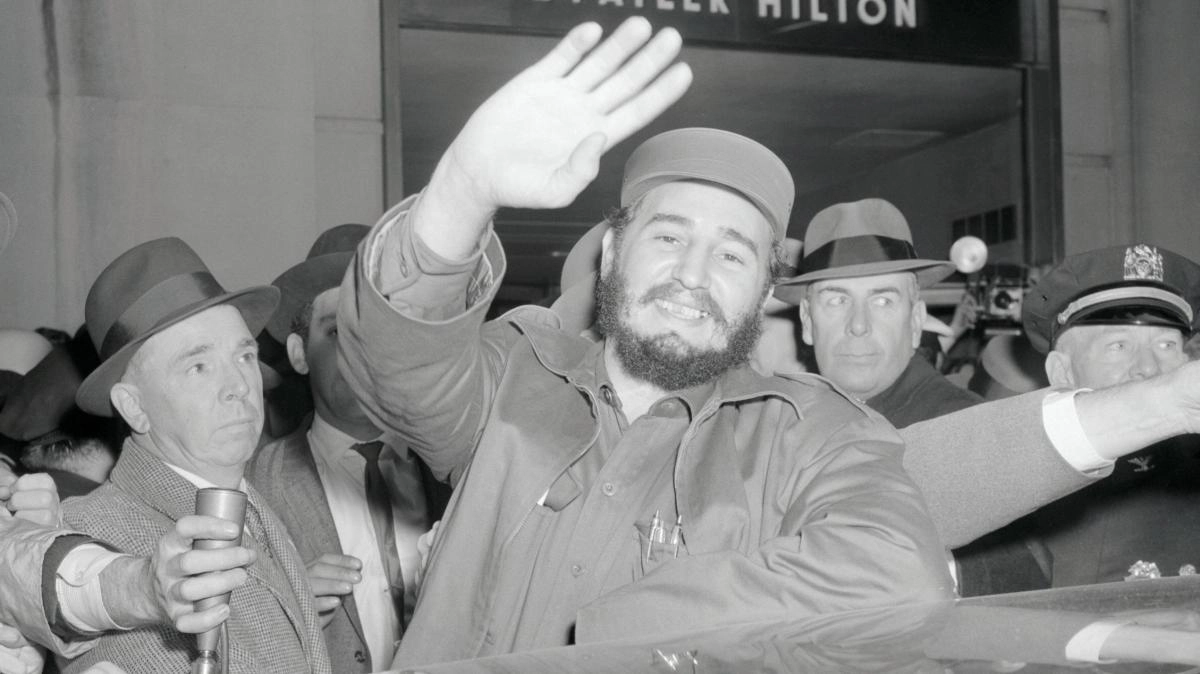

It is one of the longest-standing rivalries in contemporary history. The most powerful country in the world versus an island of fewer than 10 million inhabitants.
The United States and Cuba have been at odds since the triumph of Fidel Castro's socialist revolution more than six decades ago.
During this time, there has been a CIA-backed invasion, the threat of nuclear confrontation, and several migration crises.
Generations of Cubans and Americans have lived marked by a political antagonism that remains unresolved.
For the past few decades, both countries maintained a tense calm with ups and downs.
But Donald Trump's return to the White House in 2025 heightened tensions.
His administration tightened the economic embargo in place since the 1960s, which Havana blames for much of its struggle, and took steps to make it more difficult for Cuba to receive fuel from abroad.
This adds to the energy, economic, and social crisis the island was already experiencing, exacerbated by the drop in support Venezuelan that followed the capture of Nicolas Maduro in a US military operation in early January.
Trump warns that Cuba “is about to fail,” while assuring that his administration and Havana are negotiating a way out of the impasse.
It is a scenario that generates disbelief, even though the Cuban president, Miguel Diaz-Canel, acknowledged contacts between the two administrations.
Those who have witnessed the enmity between Washington and Havana are used to any rapprochement being thwarted.
But how did the rivalry between the two neighbors begin?
Right to intervene
On February 15, 1898, an American battleship called the Maine exploded in Havana harbor. More than 260 crew members died.
Following the sinking, a US Naval Court of Investigation concluded that the ship had been destroyed by an underwater mine.
Suspicion fell on Spain,then immersed in a war against Cuban rebels who had been fighting for their independence since 1895.
In April, the US intervened militarily in the struggle, beginning the Spanish-American War that precipitated the end of Spanish sovereignty over Cuba after more than four centuries of colonial rule.
In 1976, a subsequent investigation by the US Navy concluded that the explosion was probably caused by an internal fire that detonated the ship's ammunition, and not by a Spanish mine or sabotage.
After Spain's defeat, Cuba's economy, infrastructure, and industries were devastated by the war.
The country needed to rebuild, and the US played a fundamental role in this.
“American entrepreneurs found opportunities at very modest prices. The US entered the Cuban economy directly,” Professor Michael Bustamante of the University of Miami explained to BBC Mundo. USA
Between 1898 and 1902, Cuba functioned as a US protectorate. It did not achieve its formal independence until 1902.
However, its first Constitution came with fine print.
Specifically, an appendix called the Platt Amendment, which governed between 1901 and 1934 and, in practice, kept the island under the direct influence of Washington.
“It was an independent republic, but with a clear degree of external control over politics by the US, which arrogated to itself the right to intervenes in Cuba's internal affairs,” says Bustamante.
Article 3 of the Amendment explicitly granted the US the possibility of exercising that right.
It was that same document that allowed, for example, the installation of the Guantanamo naval base, which remains active and under US control to this day.
Castro's Revolution
By the 1950s, domestic industry and Cuban capital had regained weight in the national economy, but it still had a huge Influence of American companies.
Key industries such as nickel, electricity, telecommunications, and finance had significant American participation.
The economic and political relationship between the two neighbors was close. Coca-Cola signs and late-model American cars, which are still seen on the roads today, could be seen in the streets of the main cities.
On the island, prosperity and luxury coexisted with inequality and corruption.
In 1952, Fulgencio Batista, a military officer who had governed Cuba democratically between 1940 and 1944, staged a coup and seized power.
His government was characterized by its authoritarianism. and the persecution and abuses against the opposition.
This exacerbated growing discontent among sectors of the population due to the island's problems and the interference of the United States, a country that supported Batista as well as other Cuban authoritarian governments, such as that of Gerardo Machado between 1925 and 1933. "The US maintained a neocolonial relationship with Cuba in many ways. The sentiment against American dominance was not only found in leftist sectors, but also among diverse ideologies," says Bustamante. Among the opposition, there were sectors that sought to return to the status quo prior to Batista's coup, while others advocated for a nationalist reform of the economy that would reduce dependence on the United States. It is in this second group that Fidel Castro begins to stand out, a young lawyer and political leader with socialist ideas who believed in greater national sovereignty and saw armed struggle as a means of revolution. After his first failed armed uprising in 1953, for which he served almost two years in prison and went into exile in Mexico, Castro returned in late 1956 along with another young Argentine revolutionary, named Ernesto "Che" Guevara, and 80 other men. The rebels organized a guerrilla war in the east of the country. In just over two years, the insurrection spread throughout the island.
In the early morning of January 1, 1959, Batista boarded a plane and fled to the Dominican Republic.
Seven days later, Castro and the so-called bearded revolutionaries triumphantly entered Havana with widespread popular support.
Wave of Nationalizations and Embargo
The break between Cuba and the US was not automatic.
“In fact, there were people in the State Department who believed Castro was simply a nationalist and wanted good relations with the new government,” recalls Bustamante.
In the early 1960s, however, two events fractured the bond.
First, an agrarian reform launched by Castro that proposed nationalizing some of the land controlled by the US
Bustamante clarifies that he had not yet It was a communist idea because it didn't aim to expropriate everything. "It was more of a vision of reformed capitalism," he explains. But American alarm bells started ringing soon after, with the visit of Soviet diplomat Anastas Mikoyan to Cuba to sign agreements with the government. The United States' biggest geopolitical and economic rival, the Union of Soviet Socialist Republics (USSR), was gaining ground in its own backyard. One of the agreements between Havana and Moscow was to exchange Cuban sugar for Russian crude oil. The problem? Several refineries in Cuba were American-owned.
“When the US ordered its companies to refuse to process Russian oil,the Cuban government intervened in the refineries and nationalized them,” says Bustamante.
Washington responded by cutting the sugar quota that Cuba had guaranteed in the North American market, and Moscow reacted by becoming the main buyer of Cuban sugar.
This provoked the first phase of the US economic embargo, to which Havana responded with the total nationalization of American industries and businesses.
By January 1961, the break in relations was complete, and Castro began the socialist turn of his revolution.
The Tense Years
The following months were extremely tense.
In April 1961, some 1,500 combatants, mostly Cuban exiles opposed to Castro, arrived in Cuba with CIA support in plans and ships to overthrow Castro.
It was the The Bay of Pigs invasion was crushed by Cuban forces in three days in the south of the country after US President John F. Kennedy withdrew air support at the last minute. failure strengthened Castro, who intensified his socialist agenda. This, according to the US State Department's Office of the Historian, led Kennedy to reassess his policy toward Cuba. A new coverage program called Operation Mongoose was implemented in Washington to achieve what the Bay of Pigs invasion had failed to accomplish. The mission included political, psychological, military, sabotage, and intelligence operations, as well as assassination attempts against key political leaders, including Castro. "Operation Mongoose aimed to create an insurrectionary situation in Cuba that would bring the country to the brink of disaster, but it became clear that the chances of an internal movement collapsing the revolution were practically nil," Oscar Zanetti, a researcher at the Academy of The History of Cuba.
“Therefore, in March 1962, the option of direct US intervention with the use of all necessary military means became the only option,” Zanetti adds.
Small Cuba needed to defend itself, and the USSR, then under the leadership of Nikita Khrushchev, was ready to support it.
In the summer of 1962, US intelligence reports indicated an increase in shipments of Soviet weapons to Cuba. In October, an aircraft took photographs and discovered the installation of missiles on the island.
The Cuban Missile Crisis, the peak of the Cold War, had erupted.
For 13 days, the world watched a possible nuclear confrontation between the great powers of the time, with Cuba caught in the middle.
After intense negotiations, the crisis was resolved and the USSR withdrew its missiles from Cuba.
But the wound and mistrust left behind were enormous.
The Cuban government consolidated its adherence to the socialist bloc of the USSR and Eastern Europe,distancing itself even further from its northern neighbor.
Decades of Impasse
Cuban historian Rafael Rojas defines the decades between the mid-1960s and the 1990s as a period of “detente” between the US and Cuba, even leading to negotiations and collaboration on migration and security issues.
This did not mean that Cuba ceased to contain US hegemony in the hemisphere.
Several Democratic and Republican presidents passed through the White House, and in Havana, the one-party socialist system led by Fidel Castro was consolidated.
The Cuban Revolution also inspired leftist movements in the region: from the Colombian guerrillas in the 1960s, to Sandinismo in Nicaragua in the 1980s and the Bolivarian Revolution in Venezuela in the late 1990s. During this period, migration was both a point of conflict and cooperation. Since 1959, the US gave preferential treatment to Cuban migrants, encouraging the departure of dissidents and those seeking alternative living conditions. This occurred both through regular channels and, often, by sea in precarious vessels. The Mariel boatlift is particularly noteworthy, when 125,000 people left for Florida after Castro opened the country's doors to anyone who wanted to leave. And the 1994 rafter crisis, when, after the collapse of the USSR in 1991, Cuba was plunged into an economic crisis. severe.
The debacle generated strong and unusual protests. Faced with the pressure, Castro reopened the borders and some 35,000 people left for the US
This led Washington to adjust its immigration policy and implement the "wet foot, dry foot" doctrine, which in practice meant that anyone who reached US soil could stay, while anyone intercepted at sea was returned.
The 1990s also saw a tightening of measures against Cuba.
The implementation of the so-called Helms-Burton Act of 1996 added more restrictions to the economy and codified the embargo, so that it can only be lifted with congressional approval and a presidential executive order is insufficient.
Conditioned by the embargo and a victim of its own restrictions and production shortcomings, the Caribbean country became extremely dependent on tourism and to this day has not fully recovered from the blow of the 1990s.
Frozen Resolution
From 1994 to the present, the relationship remains unrestored, although there have been periods of greater and lesser closeness.
Fidel Castro relinquished power in 2006 after becoming seriously ill, and his brother Raul replaced him.
Under Raul Castro's government and Barack Obama's presidency, both countries took a step toward normalization in 2015.
“As early as 2013, following economic liberalization measures by Raul, the USand Cuba began negotiations with the mediation of Pope Francis and the Cuban Catholic Church,” recalls historian Rojas, from El Colegio de Mexico.
After the so-called “thaw” of 2015, embassies reopened, travel restrictions were lifted, and economic liberalization gave hope to those demanding change.
But the arrival of Donald Trump's arrival at the White House in 2017, months after Fidel Castro's death, marked the dismantling of that opening. And with his return in 2025, the embargo, pressure, and restrictions on the island have tightened even further, as has the tension between the two countries.