

The 4 critical points on which peace between Hamas and Israel depends on
This is not the first ceasefire agreed upon since October 7, 2023, and compliance with it will depend on the parties to the conflict.
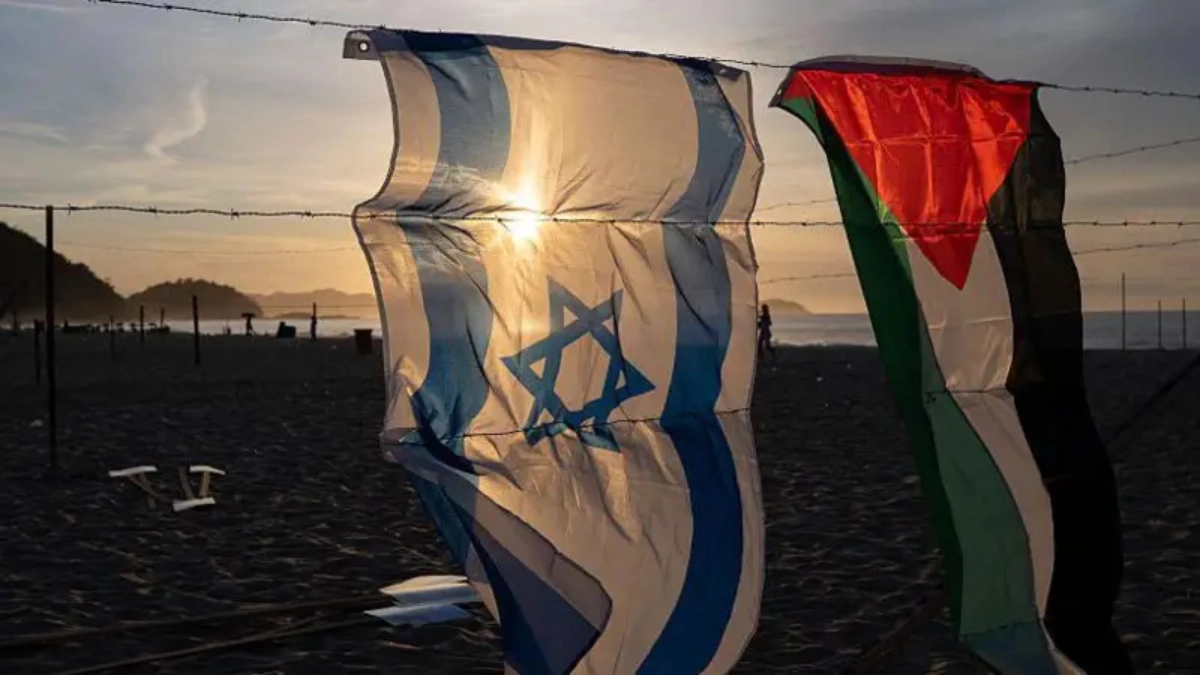

Israel and Hamas signed a first agreement in Egypt that involves an indefinite ceasefire and the release of both Israeli hostages and Palestinian prisoners.
The plan was approved by the Israeli government cabinet on Thursday night and, According to Israel's foreign minister, the ceasefire will take effect within 24 hours.
The live hostages must be released within 72 hours.
The agreement comes after two years in which more than 67,000 people have died as a result of Israeli attacks. Around 1,200 people died in Hamas attacks on October 7, in which 251 more were taken hostage.
The Israeli military offensive has destroyed most of Gaza's infrastructure and caused a catastrophic humanitarian crisis. In the words of the UN commission of inquiry, Israel has committed genocide.
Hamas and Israel have been negotiating indirectly in recent days in Egypt, mediated by Qatar, Turkey, and the United States, based on a 20-point peace plan proposed by President Donald Trump.
With this agreement, Hamas is expected to release the Israeli hostages, Israel is expected to withdraw its troops (they will continue to control 53% of the Gaza Strip), and humanitarian aid is expected to enter the Palestinian territory.
This would be the "first step toward a solid, lasting, and eternal peace," Trump said in his Truth Social platform.
Some details, such as the names of the Palestinian detainees who will be released, are still under discussion. And there is strong opposition to this agreement within the Israeli cabinet.
There is a collective breath of relief in the region and around the world.
However, this is only a first step toward ending the war. Below we detail the four key points on which this new agreement depends, whether it succeeds and allows for the end of the war.
1.Neither side should break the ceasefire
Trust between the two sides is virtually non-existent. And there are reasons for this.
Last month, Israel attempted to assassinate Hamas’s negotiating team with an airstrike in Doha, angering not only Hamas but also Trump and Qatar, a key mediator.
A cease-fire was agreed upon in January, but Israel broke it in March and resumed the war with devastating airstrikes.
Netanyahu’s justification was that Hamas rejected Israeli proposals in the cease-fire negotiations and, furthermore, that it had increased its activity to regroup its forces.
The agreement signed Thursday stipulates that Hamas will release all the Israeli hostages it has held captive since October 7, 2023, between Monday and Tuesday.
And this is another key point, because Hamas knows that by freeing the hostages, it will lose its leverage in the negotiations. The organization has demanded guarantees that Israel will not resume fighting once liberated.
In a statement Thursday, Khalil al-Hayya, a prominent Hamas member, said he had received assurances from the US and other mediating countries that “the war is over.”
What may make the difference in this case so that neither side breaks the ceasefire is the personal involvement of Donald Trump, who has pressured not only Hamas, but also Israel, to reach an agreement.
This time, Trump, seemingly impatient and irritated with Netanyahu, appears to have used the power that only Americans have to influence Israel, leaving the prime minister no choice but to participate in the process.
Threatened by Trump with “total extermination,” Hamas also came under intense pressure, and Arab and Muslim countries supported the president’s plan.
Qatar, Egypt, and Turkiye participated actively involved in the negotiations and exerted enormous pressure on Hamas, convincing even the most radical commanders in its ranks that it was now more beneficial to release the hostages than to retain them.
Keeping them captive would only prolong a war that has significantly weakened them in every respect, even if it has not destroyed their movement.
Netanyahu hailed the announcement as a “diplomatic, national, and moral victory for the State of Israel.”
Notably, unlike Hamas, his statement did not claim that the agreement would end the war.
2. The Disarmament of Hamas
There are still no details on the disarmament of Hamas, a major plank of Trump’s plan.
Hamas has previously refused to lay down its arms.He has said he will only do so once a Palestinian state is established.
The group, designated as a terrorist group by the United States, Britain, and the European Union, once declared that it would not give up its right to “resistance and its weapons” unless an “independent and fully sovereign Palestinian state with Jerusalem as its capital” is established.
And at the same time, Israel’s stated goal throughout the war has been the destruction of Hamas. Netanyahu has repeatedly stated that he will not stop until the group is destroyed.
Last weekend, Netanyahu vowed: “Hamas will be disarmed and Gaza will be demilitarized, by fair means or foul.”
3. Israeli military withdrawal from Gaza
The scope of Israel’s military withdrawal is a point of contention.
It is a key demand of Hamas, which specifically calls for a complete withdrawal of Israeli forces from Gaza.
The agreed-upon plan states that the Israeli military will withdraw from Gaza “based on standards, milestones, and timelines” to be agreed upon by all parties.
A map distributed by the White House showed three proposed stages for the withdrawal of Israeli troops.
The first stage, which was agreed upon Thursday, leaves about 53 percent of Gaza under Israeli control; the second, 40%, and the last, 15%.
This final stage would consist of a “security perimeter” that “would remain until Gaza is adequately protected against any resurgence of the terrorist threat.”
The wording here is vague and does not offer a clear timeframe for a full Israeli withdrawal, something Hamas will likely want to clarify.
4. Who Will Rule Gaza
Another point that could cause tension is who will rule the area.
According to the plan, Hamas will have no future role in Gaza.
The idea is for it to be governed by a temporary transitional body of Palestinian technocrats, overseen by a “Peace Board” headed and chaired by Donald Trump and including former British Prime Minister Tony Blair.
Governance of the Strip would then be transferred at some unspecified point to the Palestinian Authority (PA), which rules the West Bank, is internationally recognized, and is a rival government to Hamas.
Although Netanyahu accepted Trump’s 20-point plan in its entirety, he appeared to reject PA involvement even as he stood at the podium alongside the US president last week, insisting that the PA would play no role in governing the territory.
This is one of many points in the plan that would be objected to by hardline ultranationalists within Netanyahu’s ruling coalition, many of whom wish to retain control of Gaza and rebuild Jewish settlements there.
In its response, Hamas indicated that it hopes to play some future role in Gaza as part of “a unified Palestinian movement.” Although the wording is vague, this will likely be unacceptable to both Trump and the Israelis.
In a statement, Hamas said it “renews its agreement to hand over the administration of the Gaza Strip to a Palestinian body of independents (technocrats), based on the Palestinian national consensus and Arab and Islamic support.”
Netanyahu, for his part, reiterated his opposition to the creation of a Palestinian state.
Those living in the occupied West Bank face uncertainty about what this agreement will mean for their future. And Israeli politicians are already plotting the next elections and discussing the next stages of this agreement to ensure there is never another October 7.
For now, it's worth remembering that this is a ceasefire, not a peace deal. And that it is sustained by a delicate balance that depends on both sides keeping their end of the agreement.
*With information from Lyse Doucet, Hugo Bachega and Tom Bennett.
Click here to read more stories from BBC News Mundo.
Subscribe here to our new newsletter to receive every Friday a selection of our best content of the week.
You can also follow us on YouTube, Instagram, TikTok, X, Facebook and on our new WhatsApp channel.
And remember that you can receive notifications in our app. Download the latest version and activate them.