

The dispute over who should pay for Maduro's defense in the US
The former president of Venezuela intends to use his country's funds to pay his lawyers, but the US government is blocking it and a judge must decide
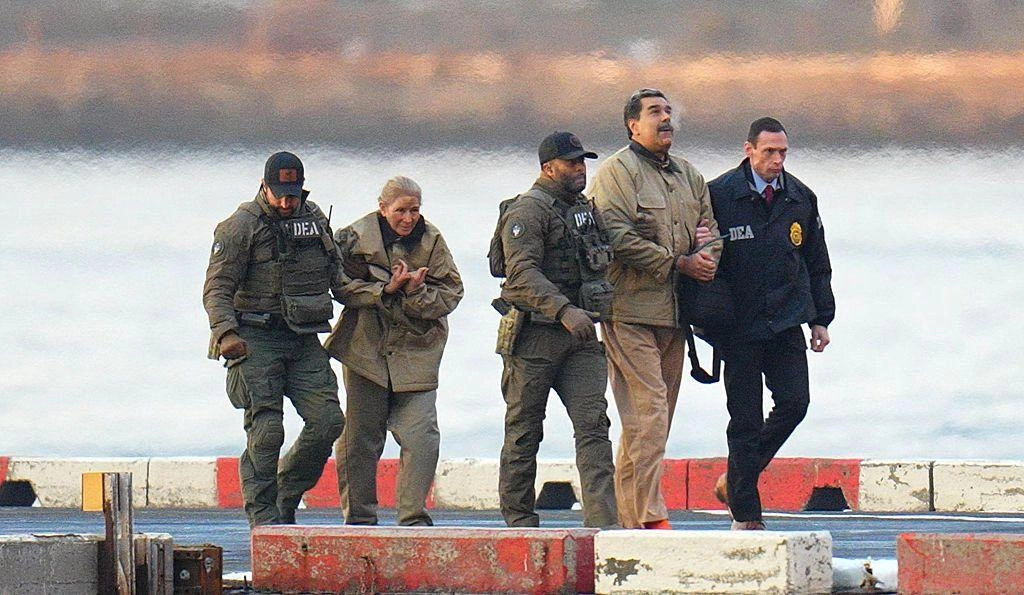

A simple question is currently pitting the US government against Nicolas Maduro: who should pay for the defense of the former Venezuelan president in New York?
The issue is expected to be a crucial topic in Maduro's new appearance before a federal court in Manhattan this Thursday, in the initial phase of the proceedings against him on charges of drug trafficking, which he denies.
Maduro and his wife, Cilia Flores, who faces similar charges and is also imprisoned in New York, maintain that their defense should be paid for by the Venezuelan state.
In contrast, the US government claims that this possibility is barred by the sanctions it applies to Venezuela and that the defendants could only pay for their defense with personal funds.
The costs of lawyers chosen in large cases like this can amount to millions of dollars.
Maduro and Flores deny having the resources of their own to finance their defense, and their lawyers have asked the judge in the case, Alvin Hellerstein, to dismiss the charges because they believe their rights were violated.
Legal experts believe it is unlikely that Hellerstein will dismiss this case, which has attracted international attention since the US arrested Maduro and Flores in a lightning military operation in Caracas on January 3.
“The request “Dismissing the charges is absurd,” Ronald Allen, a law professor at Northwestern University and an expert in criminal procedure, told BBC Mundo. But the dispute over paying for the defense is seen as an early sign of the challenges posed by this gigantic case, with few precedents to guide it. “Obligation to Pay” Days after Maduro and Flores were arrested and transferred to New York, their lawyers began seeking to have their fees financed with funds from the Venezuelan government. On January 7, they requested authorization for this from the Office of Foreign Assets Control (OFAC), a division of the US Treasury. which applies Washington's international economic sanctions.
The OFAC permit is key because Maduro and the Venezuelan government he led from 2013 until his arrest are sanctioned for allegations of corruption, human rights violations, drug trafficking, and other crimes.
On January 9, OFAC issued the requested permits for Maduro and Flores. But it reversed the first ruling less than three hours later and the second a few weeks later. Maduro's lawyer, Barry Pollack, asked the Manhattan court in February to dismiss the charges because, in his view, the US government interfered with the right to choose one's defense, enshrined in the Sixth Amendment to the Constitution. “The government of Venezuela, under its laws, has an obligation to pay Mr. Maduro's defense costs,” he stated. To support this, he presented a declaration from a Venezuelan jurist, noting that the Venezuelan government “is prepared to fulfill its obligation to pay the costs of the defense.” Venezuela's interim president, Delcy Rodriguez, has said that Maduro is still the country's “legitimate president” and that both he and Flores are innocent. However, Caracas and Washington restored diplomatic relations after Maduro's arrest, amid pressure from the Donald Trump administration. to Rodriguez.
Pollack is an experienced lawyer who handled major cases and in 2004 secured the release of Julian Assange, the WikiLeaks founder who was accused by the US of disclosing national security information.
But in his letter defending Maduro, Pollack indicated that he would withdraw from the case if the Treasury restrictions remain in place.
“Administrative error”
Prosecutors responded that the initial authorization for Maduro and Flores to pay for their defense with Venezuelan funds was an “administrative error” that was corrected.
“OFAC regulations expressly prohibit using the funds of a sanctioned entity to pay the attorneys' fees of another sanctioned person,” a document filed with the court on March 13, signed by Jay Clayton and other prosecutors, stated.
The document denies that the US is interfering with the right to a defense and points out that both Maduro and Flores can pay their lawyers with personal funds, despite being sanctioned.
They also rejected that Maduro and Flores are entitled to benefits from the Venezuelan government because, according to the US, “they were not legitimate officials or employees of Venezuela.”
Last week, Pollack and Flores's lawyer, Mark Donnelly, reiterated to the judge that their clients lack the resources to pay for their defense, as they maintain in an affidavit, and could present financial evidence.
Furthermore, they denied that the eventual appointment of public defenders for Maduro and Flores would remedy the violation of rights that, in their view,"In this case, if (Maduro) receives the funds, he can use them to cover his legal expenses, which solves the problem," he adds. to spend other people's money on their defense.
The US government initially denied Noriega access to his frozen bank accounts to pay for his defense costs, estimated in the millions of dollars.
But Noriega's lawyers also indicated they would abandon the case due to lack of payment and, after a standoff with the prosecution, reached an agreement approved by the judge in the case to allocate part of the frozen funds to the defense.
The trial took place in a federal court in Miami and General Noriega was convicted in 1992.
More recently, former Honduran President Juan Orlando Hernandez was extradited to the US in 2022 to be tried for drug trafficking in the same court that is handling Maduro's case.
Hernandez's family indicated that his defense would be financed with their own resources and donations.
The former president was also convicted, but in December he received a surprise pardon from Trump and regained his freedom. But in none of these or previous cases were the defendants still considered presidents by their country's government when facing US justice, as is the case with Maduro. And this is beginning to generate complications that will surely continue in the process, warns Chimene Keitner, a professor of international law at the University of California, Davis. “Nothing would prevent Venezuela from reimbursing Maduro for his legal expenses in Venezuela, outside of US jurisdiction,” Keitner tells BBC Mundo. “But lawyers appearing in US courts must be paid in a manner consistent with the applicable sanctions.” In his opinion,Whether Maduro's Sixth Amendment rights are violated by the prohibition on using Venezuelan money in his defense "is undoubtedly an unprecedented issue, given the highly unusual circumstances of this case."