

The US-Iran deal is a welcome birthday gift for Trump, but it is shrouded in uncertainty
The success or failure of this agreement could depend on the details and what each actor involved in the conflict does.

The announcement of the agreement to end hostilities between the United States and Iran provides Donald Trump with a welcome birthday gift, albeit one shrouded in some uncertainty.
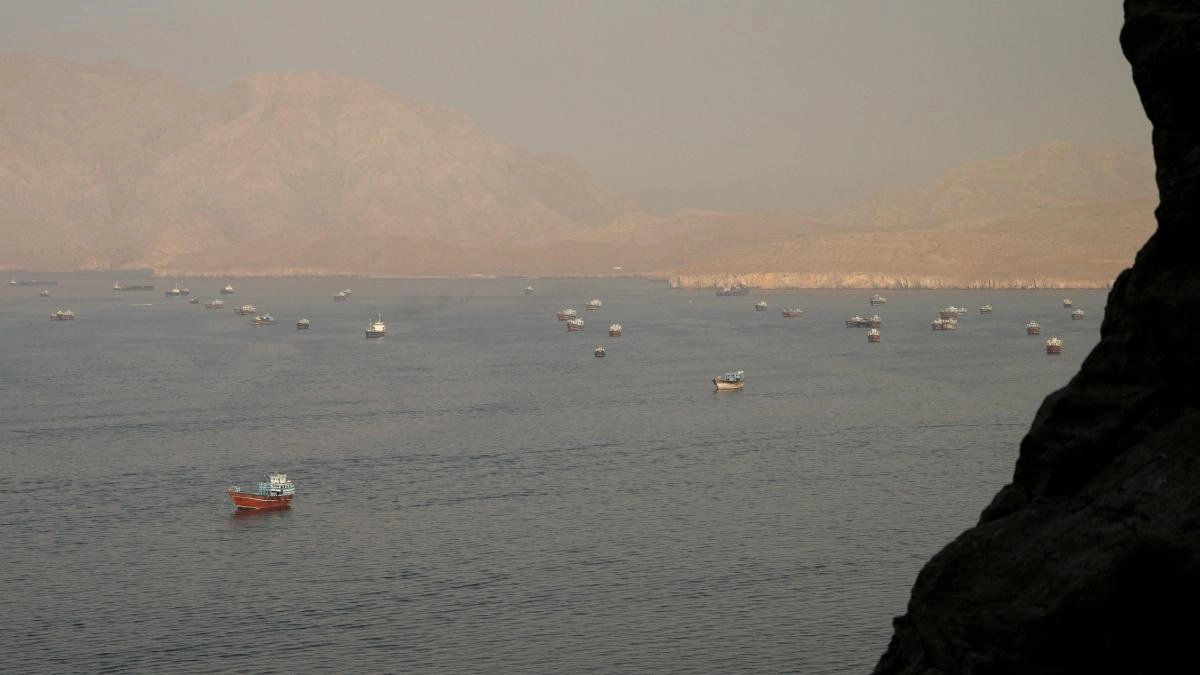
The US president stated in his social media post announcing the agreement that the Strait of Hormuz would be opened to commercial maritime traffic and that the United States would lift its naval blockade.
“Let the oil flow!” Trump exclaimed on Sunday.
He went on to declare that, unlike the failures of previous American presidents, he had achieved a “grand deal” that would bring “peace and security to the entire region.”
Such hyperbole is nothing new for Trump, of course.
His statements about last year's agreement that ended the Gaza war — “a peace for all eternity” and the “beginning of the era of faith, hope and God” — were equally grandiloquent, even though the reality on the ground is far from what was expected.
In diplomatic agreements of such significance, success or failure often depends on the details. And in this case, details are scarce.
The vice president of the United States, J.D. Vance stated in an interview Sunday night with Fox News that Iran's lack of nuclear weapons was “enshrined in this agreement” and that the United States will be able to verify its compliance.
However, questions remain over crucial issues, such as what the restrictions on uranium enrichment will be and what will happen to Iran's current stockpile of highly enriched uranium.
Some of this is certain to be resolved in subsequent negotiations and in “technical” talks to be held during a 60-day extension of the current ceasefire.
But if anything has become clear from decades of efforts to persuade and coerce Iran to give up its nuclear ambitions, it is that there are no guarantees, regardless of what the United States believes it has secured in this “memorandum of understanding.”
As if to underscore this point, Iran's Supreme National Security Council issued a statement on Sunday stating that “final negotiations will be postponed until after the other side fulfills the commitments made under the memorandum.”
The content of these commitments, and how Iran interprets them, will be key to determining whether the agreement is maintained.
Energy market experts have warned that oil shipping through the strait is unlikely to immediately return to pre-war levels. Clearing the large number of tankers backed up, removing mines and restoring regular oil transportation and production could take weeks.
With just a few days to go before the official signing, Iran and the United States have time to finalize key details that will ensure the success of the agreement, but there is also the possibility that it will fail.
Another unpredictable factor is Israel.
This was always a three-way war, and Trump told the Wall Street Journal on Sunday that he was furious with Israeli Prime Minister Benjamin Netanyahu for ordering strikes on Lebanon this weekend, which he said could torpedo the Iran deal, which was all but done.
The agreement stood, at least long enough for its public announcement. But if Israel begins new military operations in Lebanon, Iran could decide to close the Strait of Hormuz again, endangering the global economy.
In his remarks, Vance also acknowledged the suffering this war has caused many Americans due to rising energy prices and its economic repercussions.
“My main message to the American people is thank you,” he said, promising that energy prices would begin to fall.
How quickly this happens and how quickly it translates into an overall reduction in costs for American consumers facing financial hardship will be crucial in determining whether the growing political pressure on Republicans eases ahead of November's midterm elections.
Trump and his party face an increasingly disaffected public, recent polls suggest. A YouGov poll found that 63% of Americans disapprove of his economic management, and 57% think the economy is getting worse.
At the very least, Sunday's agreement should help alleviate, if not completely eliminate, some of the economic pressure stemming from the ongoing conflict. If gas prices begin to drop significantly, it could be a tangible sign to Americans that things are improving.
It is an important step towards normality before the start of the war, although Trump's most ambitious goals have not yet materialized and he continues to face political difficulties at home.