

What happened to the Washington Reflecting Pond and why does it concern Trump?
The deterioration of the emblematic reflecting pool revives accusations of sabotage and questions about the priorities of the White House
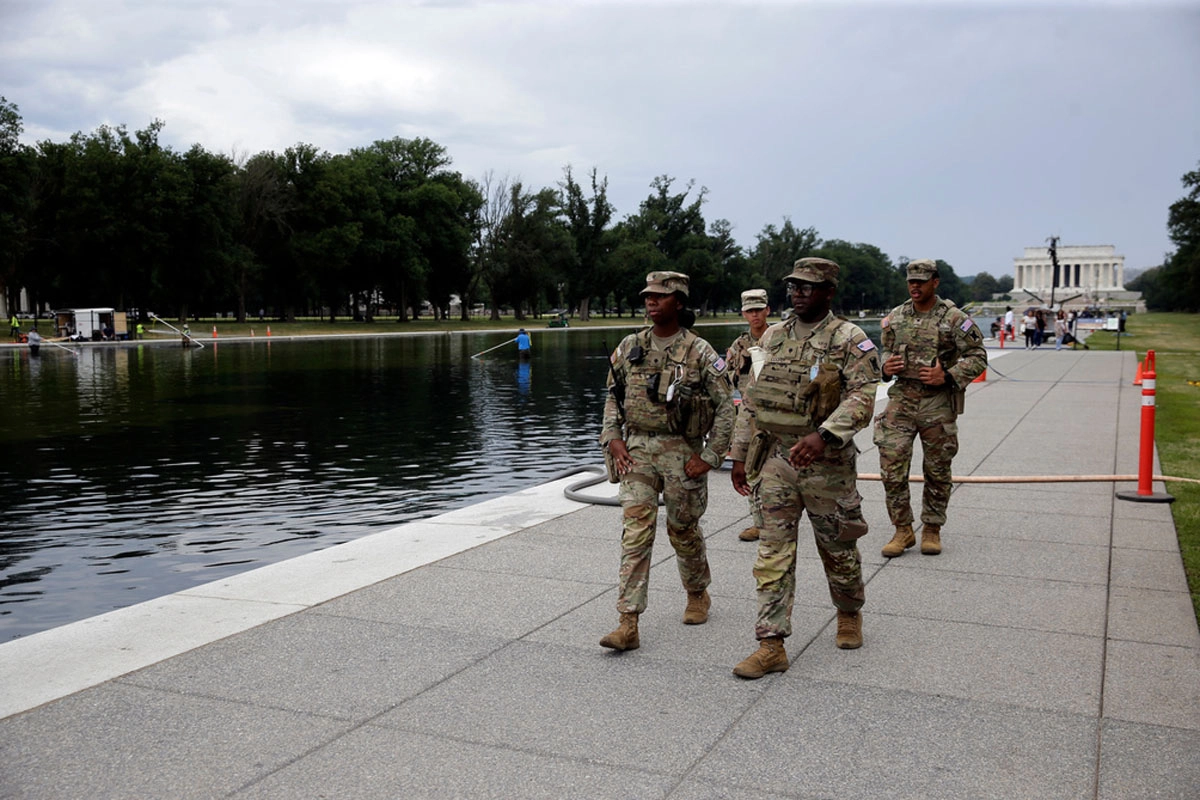

In recent days, the President of the United States, Donald Trump, has shown his concern about the state of the Reflecting Pond on the National Mall in Washington, which has deteriorated and turned green after an expensive renovation, and has pointed to acts of vandalism as the cause of the damage.
With such important issues on the Oval Office table as the closing of peace negotiations with Iran, the boost to the image of an increasingly unpopular government due to the price of gasoline or the cracks in the Republican bloc on Capitol Hill, we analyze in five keys why Trump has turned the Reflecting Pond into a national policy issue.
Five keys to understanding the Reflecting Pond controversy
1. A monument that is part of US history
The long, shallow Reflecting Pool, built in the first half of the 1920s to reflect the Washington Monument and the Lincoln Memorial in the water, has become a symbol of American politics, with such iconic moments as Martin Luther King Jr.'s “I Have a Dream” speech in 1963 or the protests against the Vietnam War four years later.
There is also room for fiction with cinematographic scenes that have entered the global collective imagination, such as the emotional reunion between the protagonists of “Forrest Gump.”
2. Greenish water and algae after the reform
The Reflecting Pond has had problems with leaks, poor water quality and algae blooms since its construction, as it sits on swampy land.
Although a reform was promoted in 2009, carried out during the mandate of Barack Obama, the complications of the installation were not resolved.
As part of his project to remodel and “beautify” Washington for the 250 years of United States independence, Trump undertook another reform a few months ago.
The work, which was projected to cost about $1.8 million, ended up costing almost $16 million and consisted of emptying the facility, installing a new dark blue coating and updating the algae control system.
A few days after completing the renovation, in early June, the color of the pond turned green.
3. Trump and accusations of sabotage
The president of the United States, who sought to show off the work carried out in Washington, attributes the problems to acts of vandalism and assures that someone sabotaged the coating of the pool, damaging the blue color of the bottom.
Trump has also suggested that some chemical product had been poured into the water to cause the proliferation of algae and the greenish color, in addition to threatening, through messages on Truth Social, with sentences of up to 10 years in prison for those who cause damage.
So far there are between five and seven arrests for incidents related to the pond, such as touching the water or detaching part of the liner.
4. No evidence of vandalism
Specialists consulted by American media attribute the growth of algae to natural causes, such as the high temperatures recorded in Washington and stagnant water.
Additionally, government documents obtained by The New York Times indicate that there is no evidence that damage to the coating caused the color change or algae blooms.
5. Between the 4th of July and the political debate
Trump acknowledged that the Reflecting Pond will not be ready for the July 4 celebrations, the date on which the United States commemorates its independence.
His critics consider that the president's insistence also seeks to divert attention from other issues that dominate the agenda, such as the tensions derived from the crisis with Iran and internal differences within the Republican Party ahead of the midterm elections.
The question now is whether the Reflecting Pond will be able to overcome the problems of leaks and algae to recover the appearance that the remodeling sought to project.