

Iran attacks Bahrain in retaliation for US bombings on its territory
Iran once again demonstrated that, as long as the United States insists on attacking its territory, the Islamic Revolutionary Guard will exact revenge in other countries.
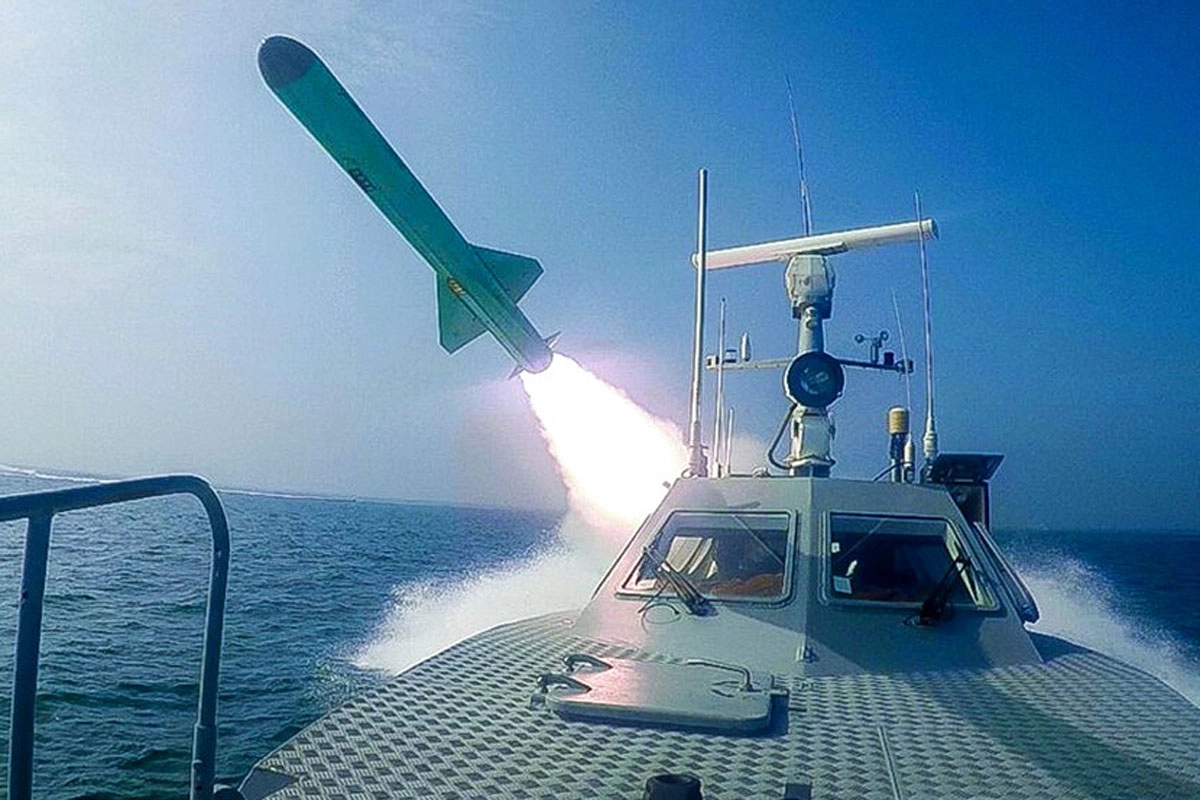

Hours after the US military sent several of its planes to bomb Iranian military facilities located along the southern coast of its territory, the Islamic Republic carried out a drone attack in Bahrain.
Despite the existence of a memorandum of understanding (MOU) signed by President Donald Trump and Iranian President Masoud Pezeshkian aimed at ending the war and establishing a ceasefire, on Thursday, the Islamic Revolutionary Guard Corps attacked a ship flying the Singapore flag in the Strait of Hormuz.
This action was considered by Washington as an affront and immediately the United States Central Command (CENTCOM) deployed in the Persian Gulf received the order to resume its bombing to show its adversary proof of its power.
In contrast, the initiative to attack Bahrain, where the Fifth Fleet of the US Navy is concentrated, arose from Tehran.
The authorities of the Asian nation made up of more than 30 islands in the Persian Gulf described the Iranian offensive as a flagrant violation of its sovereignty.
“While the Ministry condemns this atrocious aggression, it affirms that the Iranian regime's continued attacks, at a time when regional and international efforts are moving towards de-escalation, hold Tehran exclusively responsible for undermining peace efforts and reveal an approach based on destabilizing security, exporting chaos and weakening regional stability,” the Ministry of Foreign Affairs of Bahrain said in a statement.
In response, the Ministry of Foreign Affairs of the Islamic Republic issued a brief statement justifying its military action.
“Our armed forces will defend the sovereignty, security and national interests of the country with all their strength,” he warned.
The leaders of several organizations established in the Persian Gulf issued strong statements against the position taken by Bahrain.
Jasem Mohamed Albudaiwi, secretary general of the Gulf Cooperation Council (GCC), defined Iran's attack as “treacherous”; while the Gulf Cooperation Council (GCC), which represents the interests of Bahrain, Oman, Saudi Arabia, Qatar, Kuwait and the United Arab Emirates, demanded an immediate sanction against the government of Tehran for its audacity to have violated an established commitment to maintain a ceasefire in the region for at least 60 days while a definitive peace agreement is negotiated, which seems complicated to close, since the Islamic Republic is clinging to maintaining control of the Strait of Hormuz.