

Why rare earth minerals have become an advantage for China in its negotiations with the US
China has a near-monopoly on processing elements crucial to making everything from smartphones to fighter jets
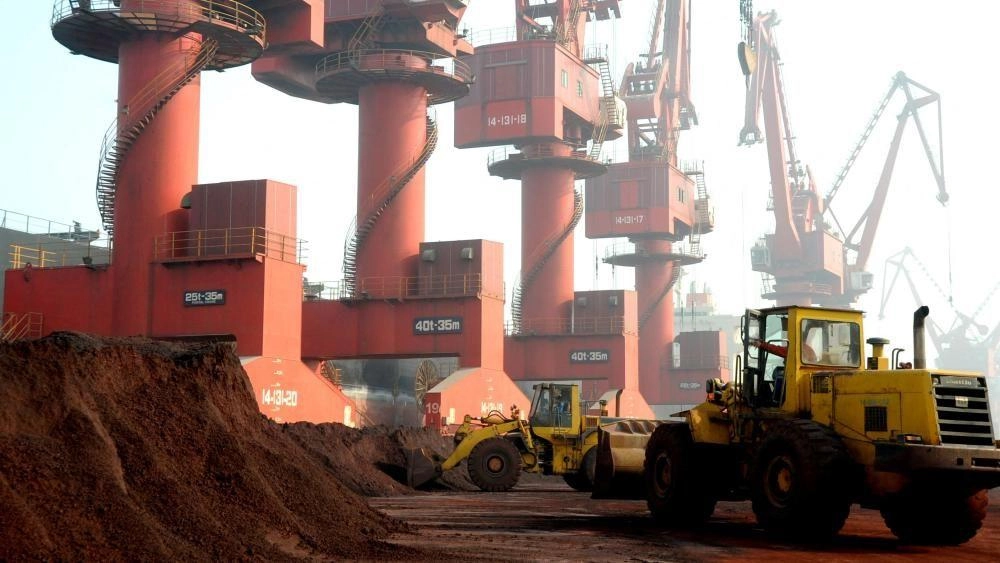

Two weeks ago, China's Ministry of Commerce published a document called “Announcement No. 62 of 2025.”
But this was no mere bureaucratic missive. It has shaken the fragile tariff truce with the United States.
The announcement detailed sweeping new restrictions on rare earth exports, a move that tightens Beijing's control over the global supply of these critical minerals and reminded Donald Trump of the outsize influence China has in the trade war.
China has a near-monopoly on rare earth processing, crucial to the production of everything from smartphones to fighter jets.
Under the new rules, foreign companies now need Chinese government approval to export products containing even a trace amount of rare earths and must declare their intended use.
In response, US President Donald Trump threatened to impose an additional 100% tariff on Chinese goods and establish export controls on key software.
“This is China against the world. They've taken a bazooka to supply chains and the industrial base of the entire free world, and we're not going to allow it,” said US Treasury Secretary Scott Bessent. Shortly afterwards, China claimed the US had “deliberately caused unnecessary misunderstanding and panic” over the rare earth restrictions. “As long as the export license applications meet the requirements and are for civilian use, they will be approved,” added a Commerce Department spokesperson. And last week, the world's two largest economies also imposed new port fees on each other's ships. The escalating trade war ends months of relative calm after senior US and Chinese officials brokered a truth in May. Later this month, Trump and Chinese President Xi Jinping are expected to meet, and experts have told the BBC that the rare earth restrictions will give China an advantage.
China's new controls are likely to “shock the establishment” as they target vulnerabilities in US supply chains, said Naoise McDonagh, a professor of international business at Edith Cowan University in Australia.
“The timing has dramatically altered the timeline for negotiations that the US had wanted,” she added.
Essential materials
Rare earth minerals are essential for the production of a wide range of technologies, including solar panels, electric cars, and military equipment.
For example, a single F-35 fighter jet is estimated to require more than 400 kg of rare earths for its stealth coatings, engines, radars, and others components.
Chinese rare earth exports also account for around 70 percent of global supply of metals used in magnets for electric vehicle motors, according to Natasha Jha Bhaskar of advisory firm Newland Global Group.
Beijing has worked hard to achieve its dominance in global rare earth processing capacity, said Marina Zhang, a critical minerals researcher at the University of Technology Sydney.
The country has developed a vast talent pool in the field, while its research and development network is years ahead of its competitors, she added.
While the United States and other countries are investing heavily to develop alternatives to China in supplying rare earths, they still have a long way to go to achieve that goal.
With its own large rare earth deposits, Australia has emerged as a potential rival to China. However, its production infrastructure is still underdeveloped, making processing more expensive, Zhang said.
“Even if the US and all its allies made rare earth processing a national project, I would say it would take at least five years to catch up with China.”
Exports Drop
The new restrictions expand on measures Beijing announced in April that triggered a global supply crunch before a series of deals with Europe and the US eased the shortage.
China's latest official figures show exports of the critical minerals fell more than 30% in September compared with a year earlier.
However, analysts say the Chinese economy is unlikely to be hurt by the drop in exports.
Rare earths represent a very small part of China's $18.7 trillion annual economy, according to New York University professor Sophia Kalantzakos.
Some estimates put the value of exports at less than 0.1 percent of China's annual gross domestic product (GDP).
While the economic value of rare lands to China may be minuscule, their strategic value “is enormous,” she said, as they give Beijing greater leverage in talks with the United States.
Despite accusing China of “betrayal,” Bessent has left the door open to negotiations. “I think China is open to dialogue and I am optimistic that tensions can be reduced,” he said.
During a meeting with Stephen Schwarzman, chief executive of US private equity group Blackstone,Chinese Foreign Minister Wang Yi also stressed the need for dialogue.
“Both sides should maintain effective communication, properly resolve differences, and promote stable, healthy, and sustainable development of China-US relations,” Wang was quoted as saying on the ministry's website.
What China has done recently is “get its affairs in order” ahead of those trade talks with the US, Professor Kalantzakos said.
By curbing rare earth exports, Beijing has found its “best immediate leverage” to pressure Washington into a favorable deal, Bhaskar said.
Jiao Yang of Singapore Management University believes that while Beijing has the short-term advantage, Washington has some strategic options.
The US could offer a tariff reduction, which is likely to be attractive to Beijing given that the trade war has hit its manufacturers hard, Professor Jiao said.
The Chinese economy relies on revenue from the goods it manufactures and exports. The latest official figures show its exports to the United States were down 27 percent compared with the previous year.
Washington may also threaten to impose more trade restrictions on China to hamper its efforts to develop its technology sector, Professor McDonagh said.
For example, the White House has already targeted China's need for high-end semiconductors by blocking the purchase of Nvidia's most advanced chips.
However, experts say this is likely to have limited effects.
Measures targeting Beijing's tech industry may slow China down, but will not stop it completely, Professor McDonagh concluded. China has shown with its recent economic strategy that it is willing to accept certain difficulties to achieve its long-term goals, he added.
“China can continue to move forward even if it costs much more under US export controls.”
“But if China cuts off the supply of rare earths, that could cripple everyone's industry. That's the big difference.”