

Why the state of Sinaloa is considered “the cradle of drug trafficking”
Sinaloa has been the core of drug trafficking production and operations in Mexico, where several of the most notorious organized crime bosses emerged
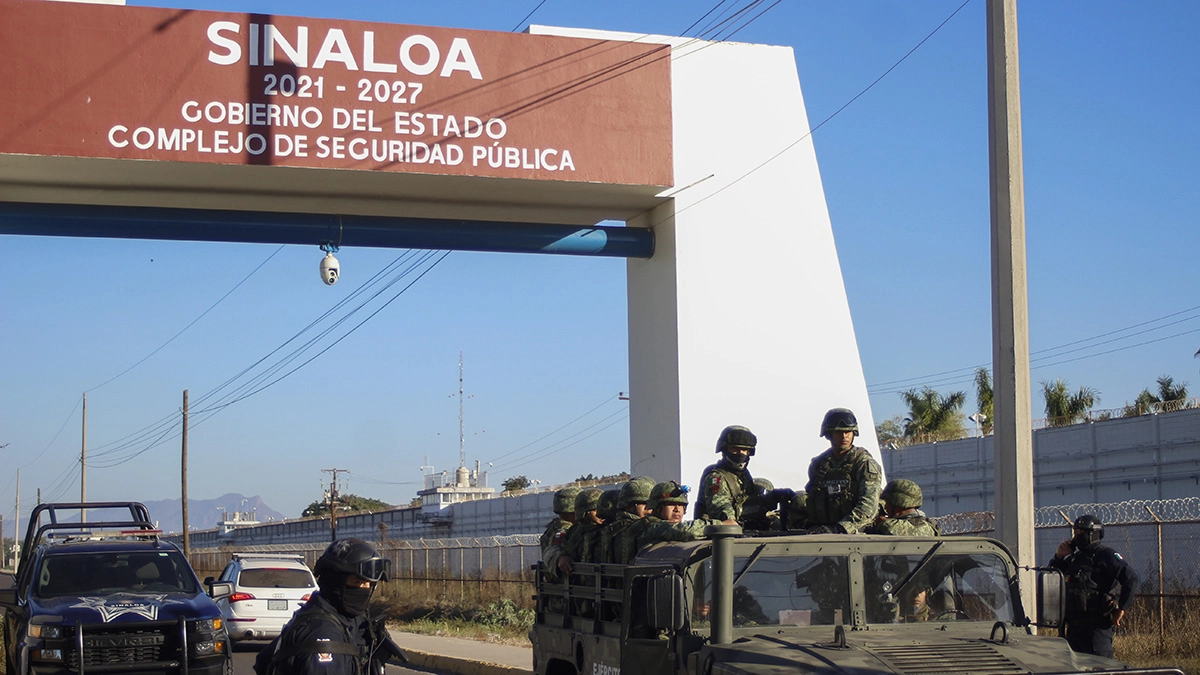

The state of Sinaloa, located in northwestern Mexico, is recognized as the cradle of drug trafficking in the country. The history of organized crime in this region has shaped the economic, cultural, and social life of its inhabitants for more than a century, making it a key territory for understanding the phenomenon of drug trafficking in Mexico and its international expansion. With nearly three million inhabitants and an area of ????58,200 square kilometers, the mountainous geography of Sinaloa—part of the so-called “Golden Triangle,” which it shares with Durango and Chihuahua—has made this state an ideal area for the cultivation of poppies and marijuana. This region, difficult to access and with a favorable climate, has been the epicenter of drug production and trafficking for decades. The origin: opium, Chinese migration, and war. The origins of drug trafficking in Sinaloa date back to the 20th century, when Chinese immigrants, such as the enigmatic Lai Chang Wong, brought with them knowledge about opium. According to research by historian Froylan Enciso, opium cultivation began in the region as part of an agreement between the Mexican and US governments during World War II, to supply medicine to American soldiers. The massive planting of poppies in Badiraguato—a Sinaloan municipality nestled in the mountains—was driven by the medical urgency of the time. Chang Wong reportedly guided US officials to the optimal areas for cultivating the drug. After the war ended in 1946, production not only continued but grew unchecked. "The Mexican government lost control of this production over time. The commercialization of opium gum became massive," Enciso explained in an interview with the newspaper Milenio. Drug lords are born in Sinaloa. Drug trafficking evolved rapidly in Sinaloa, and with it emerged some of the most notorious drug lords in Mexican organized crime. Among them are Joaquin “El Chapo” Guzman, Ismael “El Mayo” Zambada, Miguel Angel Felix Gallardo, Rafael Caro Quintero, Ernesto Fonseca, alias “Don Neto” and the Beltran Leyva brothers.
All of them were born in or near Badiraguato, a municipality of just 30,000 inhabitants.The area was not only their place of origin, but also their refuge. “El Chapo,” for example, used the mountains of the Golden Triangle to hide and operate, protected by an impenetrable security network.
Even after his capture, his image hardens. In Badiraguato, it is common to see walls with his face and supportive phrases in a narrative that portrays him as a kind of local Robin Hood, although many families also hold him responsible for forced displacement, threats, and violence.
Culiacan, the capital of Sinaloa, is also one of the visible faces of the economic impact of drug trafficking. According to Nexos magazine, it is the city where the most luxury pickup trucks are sold in the entire country. Brands like Porsche, Hummer, Cadillac, Mercedes-Benz, and BMW cruise its streets, purchased with cash. Ostentatious houses, bars, restaurants, and casinos bear witness to the money circulating thanks to drug trafficking. Behind this opulence lies a complex network that includes poppy farmers, transporters (drug mules and mules), hitmen, distributors, businesspeople who launder money, police officers who protect the kingpins, and military personnel who collaborate with criminal groups. The human cost of drug trafficking in Sinaloa is extremely high. The dispute between cartels for control of routes and territories leaves in its wake homicides, kidnappings, torture, and disappearances. In municipalities like Badiraguato, the homicide rate is five times higher than the national average. Furthermore, drug trafficking is not limited to production; it also includes sophisticated transportation networks. In the 1980s, Cessna and Turbo Commander aircraft transported shipments from South America, stopping in Sinaloa before crossing into the United States. By sea, shrimp boats converted into drug boats took advantage of the state's more than 600 kilometers of coastline to move merchandise toward Baja California. The so-called "Golden Triangle"—a term coined by the US government in reference to the Southeast Asian region with high drug production—has been the core of drug production and operations in Mexico. Today, in addition to poppies and marijuana, this region produces fentanyl, a highly addictive synthetic drug that has generated a public health crisis in the United States. Former President Andres Manuel Lopez Obrador proposed changing the name of the Golden Triangle to “Triangle of Peace” or “Triangle of Good People,” as part of a symbolic effort to transform the region's image. However,The weight of history and the power of criminal organizations continue to dictate the course. More than an isolated phenomenon, drug trafficking in Sinaloa is a structured system that has operated for over a century. Its historical roots, geographical conditions, economic marginalization,and institutional corruption have allowed this state to be considered the cradle of drug trafficking in Mexico.