

It is a great electric, but also generates large losses
Despite its international growth and advances in autonomy, Lucid Motors loses around $82,000 for each unit sold
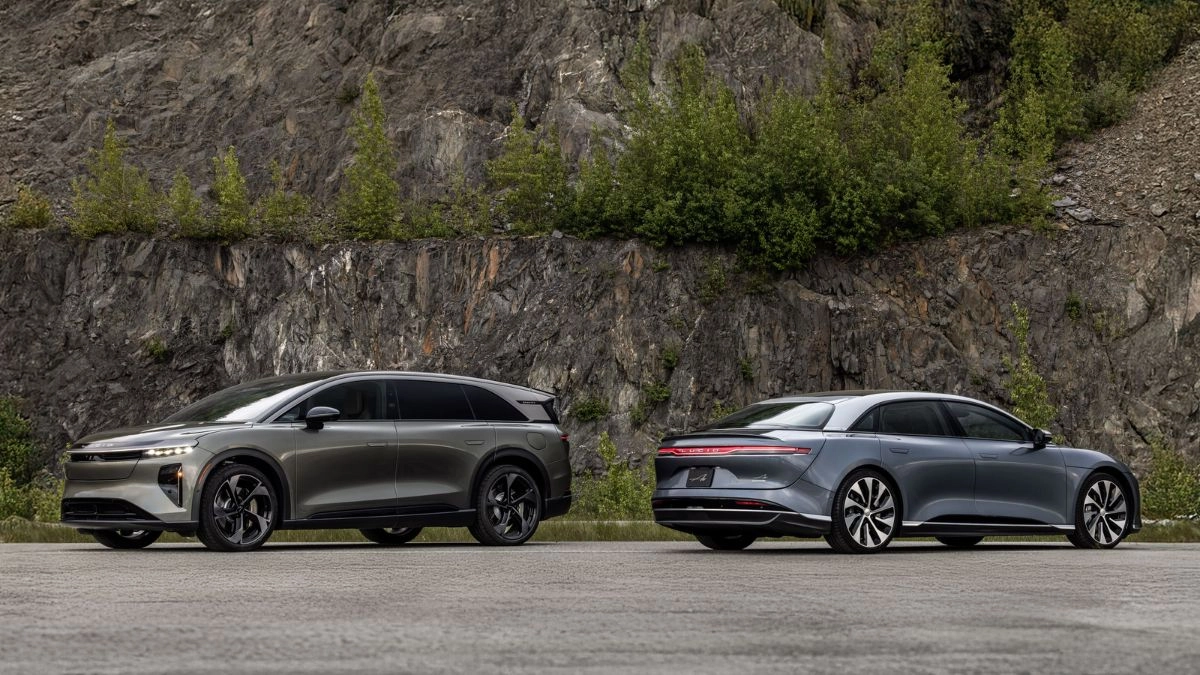

The success of a product does not always guarantee the financial health of a company. In the case of Lucid Motors, the paradox is evident: its electric sedan, the Lucid Air, has been widely praised for its design, performance, and range.
Also read: Elon Musk faces Tesla's worst drop in Europe
However, behind this achievement lies a major challenge: every car that leaves its factories generates millions in losses.
You can read: Hyundai and General Motors seal alliance to stop China
In the midst of an increasingly competitive market, Lucid has managed to position itself as a premium firm within the universe of electric vehicles.
Its strategy has been to focus on quality and autonomy, offering the electric car with the highest approved range in Europe. But not even the most advanced engineering can hide the red figures on its balance sheets.
Production on the rise, but far from the break-even point
During the second quarter of the year, the California-based company reported a total production of 3,863 vehicles between the months of April and June. During the same period, it delivered 3,309 units, representing a 38.2% increase compared to the same quarter of the previous year.
Revenues amounted to $259,400,000, while available liquidity reached approximately $4,860,000,000. Figures that, at first glance, could indicate a path of sustained growth.
Despite this, a deeper analysis reveals that Lucid is still losing around $82,000 on each car it delivers.
Although this figure represents an improvement compared to the $113,000 loss per unit recorded in the second quarter of last year, the path to profitability still seems distant.
A record-breaking car in autonomy, but also in losses
The Lucid Air is currently the electric vehicle with the longest official autonomy in Europe, with 839 kilometers approved.This capability was recently put to the test during an extensive road trip that crossed several countries on the continent, demonstrating its superiority in energy efficiency.
This achievement has not gone unnoticed. In a market where range anxiety remains one of the main obstacles for consumers, the Lucid Air has proven that long-range electric mobility is possible without compromising luxury or performance.
However, this technical excellence has not yet translated into profitability. Lucid's problem isn't its product, but rather its high production costs, logistical complexity, and lack of economies of scale.
Adjustments to production plans for 2025
Lucid Motors had planned to manufacture 20,000 vehicles throughout 2025. However, supply chain difficulties and certain bottlenecks have forced the company to revise its projections. Production is now expected to be between 18,000 and 20,000 units by the end of the year.
Although the difference may seem marginal, it reveals a structural tension in the company's production processes. Disruptions in the supply of key components, coupled with the high technical sophistication of its models, mean that Lucid's industrial efficiency is far from optimal.
Even so, the company remains optimistic about its capacity for improvement and expansion. Its agreements with charging networks such as Tesla's —thanks to the adoption of the NACS port— will allow it to offer access to more than 25,000 charging points in North America, a key step in improving its customers' experience.
Europe and the Middle East: Two Strategic Fronts
The internationalization of Lucid Motors has been one of its main bets in recent years. Its entry into the European market has not only served to position the Lucid Air as a benchmark for autonomy, but also to open a door to one of the most demanding and profitable markets in the world.
Furthermore, much of the company's financial backing comes from Saudi Arabia. That country's sovereign wealth fund, the Public Investment Fund (PIF), has been one of Lucid's main shareholders since its inception.
This support has allowed the company to survive its first years of losses without resorting excessively to external debt.
The influence of the Middle East is not only economic. Lucid has already begun construction of its first facility outside the United States, in Saudi Arabia, with the goal of serving the growing regional market and reducing logistics costs in the long term.