

Another country will tax Tesla and Elon Musk
The Norwegian government has decided to change its course: starting in 2026, electric cars will start paying taxes, even the popular Tesla
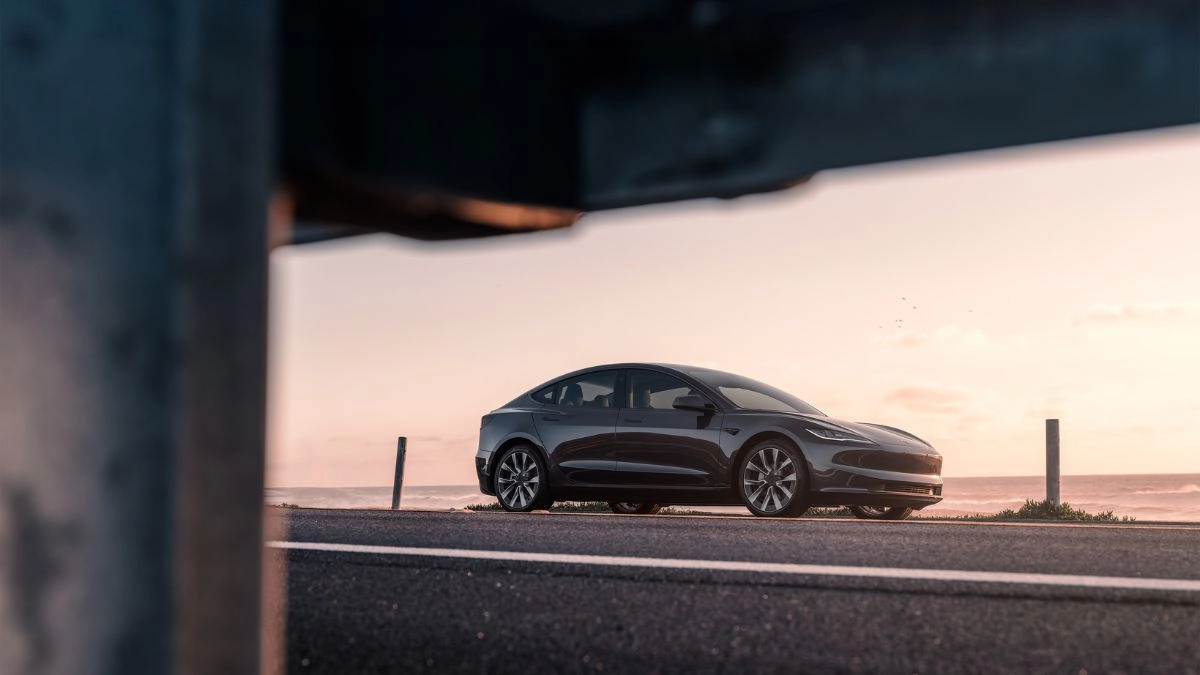

For years, Norway has been the perfect example of how a country can transform its vehicle fleet. The Scandinavian country's roads are full of electric cars, and gasoline has become almost a rarity. However, the policy that enabled that revolution is about to change.
Read also: Mitsubishi to expand its range with another SUV for North America
The Norwegian government has announced that, within the next two years, it will eliminate the tax exemptions that benefited electric car buyers for more than a decade. The decision marks the end of a model that many countries viewed as ideal for accelerating the decarbonization of transportation.
You can read: Toyota 4Runner TRD Pro 2025: more power, more technology
The impact will be considerable, especially for brands like Tesla, whose Model Y has been the best-selling car in Norway for three consecutive years.
End of VAT exemption: a blow to the most popular electric cars
Until now, electric cars in Norway were exempt from value-added tax (VAT), which in that country is equivalent to 25%. This policy drastically reduced the final price of each vehicle, making models like the Tesla Model 3 or the Volkswagen ID.4 much more accessible to the average consumer.
In 2023, the government began to cut these benefits, applying VAT only to the portion of the price that exceeded 500,000 Norwegian kroner (about $45,400). That first measure affected premium models, such as the Porsche Taycan or the Tesla Model X.
Now, the new budget proposal contemplates an even greater reduction of that threshold. In 2026, it will apply to all cars that exceed 300,000 kroner (about $27,300), thus including mid-range vehicles such as the Tesla Model Y or the Volkswagen ID.4. Finally, in 2027, the exemption will disappear completely if Parliament approves the measure.
In practice, a Tesla Model Y, which today costs about 422,000 kroner (approximately $38,300), could increase in price by almost 75,000 kroner,That is, an additional $6,800 dollars.
“The goal has already been met”
Norwegian Finance Minister Jens Stoltenberg justified the decision by stating that the country has already achieved its environmental goal: “We had set the goal that all new passenger cars would be electric by 2025, and we can say that the goal has been met,” he stated when presenting the proposal.
And he’s not exaggerating. In September, 98.3% of new cars registered in Norway were pure electric. The country, with just 5.5 million inhabitants, leads the world in the penetration of zero-emission vehicles, far surpassing giants like China and the United States.
However, maintaining that leadership comes at a high cost. According to official estimates, tax incentives for electric vehicles cost the state more than $1.5 billion dollars annually. Hence the need to "normalize" the market and reduce public spending.
Criticism has not been long in coming
The measure has not been well received by all. Christina Bu, director of the Norwegian Electric Vehicle Association, described the change as "hasty" and warned that it could have negative consequences: "Such an abrupt change could cause some buyers to return to fossil fuel cars," she noted.
According to her organization, seven out of ten cars on the road in Norway today still use gasoline or diesel, so eliminating subsidies could slow progress toward a fully electric vehicle fleet.
Despite the criticism, the government insists that its intention is not to reverse the progress made, but rather to balance fiscal policies. At the same time, the registration tax on combustion vehicles is expected to increase, so that electric vehicles remain a more attractive option, albeit with fewer advantages.
The "electric paradise" that Norway built over the past ten years appears to be entering a new phase. Its strategy, based on a combination of robust infrastructure, tax breaks, and environmental education campaigns, has transformed the behavior of its citizens.