

Entrepreneurs affected by Trump's tariffs warn: "I lose $100,000 a month"
The gap between Trump's rhetoric and reality is beginning to become evident in places like Fall River, the former mecca of the textile industry in Massachusetts.
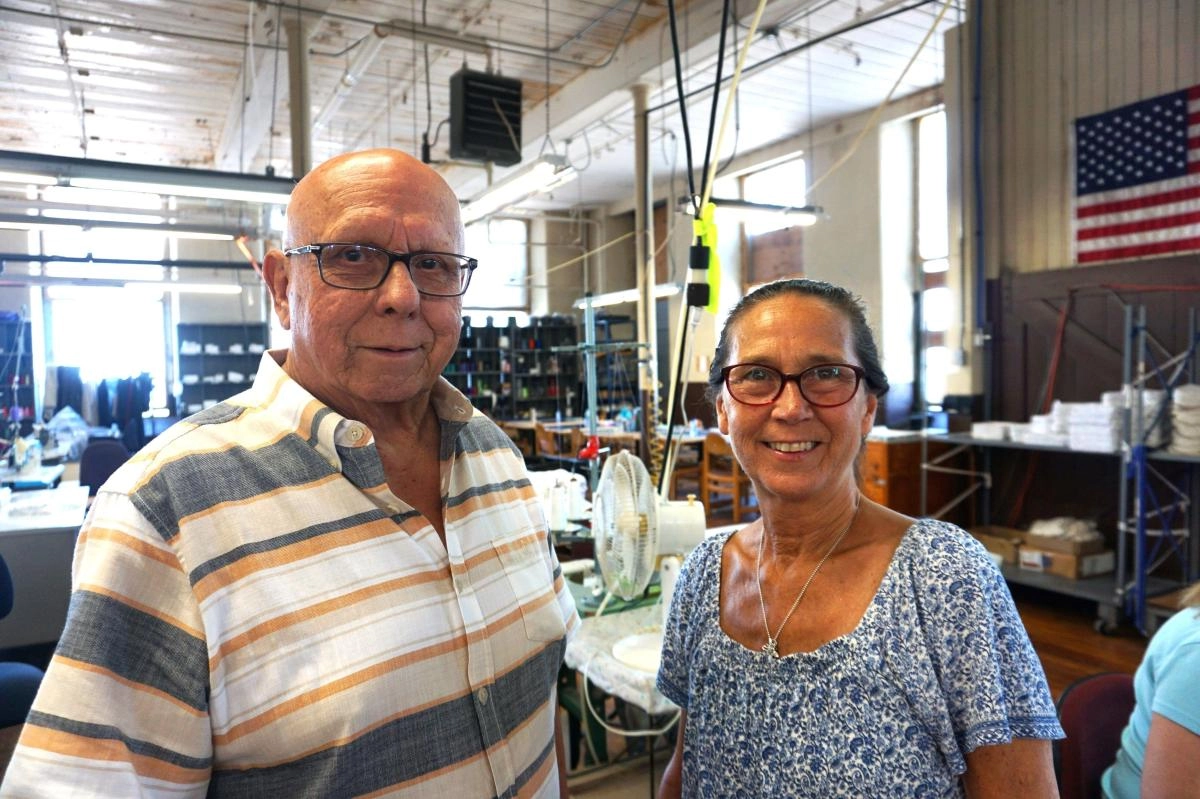

In a corner of an old factory, located in southern Massachusetts and built in the late 19th century, 15 people work at sewing machines, manufacturing high-quality specialized products for neonatology, destined for hospitals.
They are the only remaining employees of what was once a large manufacturing company, most of which closed in 1990 when the Teixeira family reinvented their business as a warehousing and distribution company.
Since U.S. President Donald Trump implemented the tariffs, the Teixeira family has received more inquiries from companies interested in their U.S.-based garment manufacturing services.
But they have rejected those offers, deterred by the difficulty of hiring staff amid restrictive immigration policy and by doubts about whether demand will last.
This is just one of many signs that achieving the industrial revival promised by Trump will be much more difficult than the White House claims.
"It's just not going to happen," said Frank Teixeira, who joined the family business in the 1970s and oversaw its transformation into Accurate Services Inc. "Tariffs are bad policy and, in the long run, they will cause us problems.”
Trump ran for president promising a better economy. This would be achieved through tariffs that he claimed would reduce costs and usher in a new era of prosperity.
This message resonated greatly with voters, allowing his campaign to achieve unexpected results in working-class areas traditionally considered Democratic strongholds.
Among them was the Teixeiras’ hometown of Fall River, a former mecca of the textile industry, where Trump’s victory marked the first victory of a Republican presidential candidate in nearly a century.
However, experts sharply criticized his plans, warning that tariffs, which are taxes on imports,would raise prices for American businesses and consumers and slow growth, posing particular risks to manufacturers who often rely on imported raw materials.
Now, nearly nine months after the president took office and the tariffs went into effect, the gap between Trump’s rhetoric boasting about investment flowing into the country and the reality on the ground in places like Fall River is becoming apparent.
U.S. job growth has slowed dramatically this year, including in manufacturing. After rebounding from the pandemic, manufacturing employment has declined this year, with a loss of 12,000 jobs last month alone.
Business surveys indicate that activity in the sector is contracting.
Last month, 71% of manufacturing firms surveyed by the Dallas branch of the Federal Reserve said that tariffs — which range from 10% to 50% on most imports — had already negatively impacted their businesses, increasing costs and reducing profits.
At Matouk, a high-end bedding maker near the Teixeiras’ home, CEO George Matouk said that between April and August, tariffs had already increased costs by more than $100,000 a month because of their impact on the supply of products such as cotton fabric from India and Portugal and goose down from Liechtenstein.
Founded by his grandfather in 1929, the company has grown to employ around 300 people in recent years, a source of pride for Matouk, who had to overcome some mistrust upon returning to the family business as a third-generation member after graduating from Columbia Business School in the late 1990s.
However, the sudden increase in tariffs has forced the company to cut investments in things like acquiring new equipment and spending on discretionary activities like marketing.
Although many of its products are made in the United States, Matouk said he doesn't expect any benefits from the tariffs, as the increased costs force him to raise prices, which will likely hurt sales.
“Because materials are subject to tariffs like everything else, the benefits don't materialize,” he said.
Matouk called the current problems that his company faces as “a very discouraging situation,” as they are a direct consequence of a deliberate government policy.
“We’ve done everything we needed to to invest in American industry when no one else was willing to, and it’s very frustrating to be penalized now,” he concluded.
Studies of the impact of the more limited tariffs Trump imposed on American manufacturers during his first term found that the few jobs created in protected industries, such as steel, were offset by large losses for other companies that relied on those imports.
However, Mike van der Sleesen, owner of Vanson Leathers, a leather motorcycle jacket company, said this year’s changes have been so disruptive that it’s premature to make predictions.
Van der Sleesen, who voted for Trump last year, disagrees with the president’s tariffs, which have increased his costs by 15 percent this year.
“It’s been a very uneven and unfair trade path for a company like Vanson,” said Van der Sleesen, whose company was founded in 1974 and employed more than 160 people until 2000, before China’s entry into international trade reduced the workforce to about 50.
“In my opinion, we shouldn’t charge them and they shouldn’t charge us, but that’s never going to happen,” he added.
For now, demand for his jackets, which can cost thousands of dollars, is holding up. He said his suppliers in the United States are reporting increased business.
“We haven’t heard of overtime in the textile industry in 20 years!” he said. “It’s hard to be sure how things will turn out because the changes have been so dramatic.”
On the streets of Fall River, many Trump supporters said they were willing to give the president time to implement his strategy.
“We should be able to make products,” said Tom Teixeira. This 72-year-old retired public transport worker voted for Trump in 2016, 2020 and 2024, convinced in part by his speech on the economy.
“I know what it was like before and I know it can improve, but it’s not going to improve overnight,” said Teixeira, who has no relationship with the production company of the same name, adding that he had not yet noticed any significant price increases this year.