

FATF warns that fraud has become the main global threat in just two years
“The fraud epidemic is growing in size, scale, and scope,” stressed Elisa de Anda Madrazo, president of the Financial Action Task Force
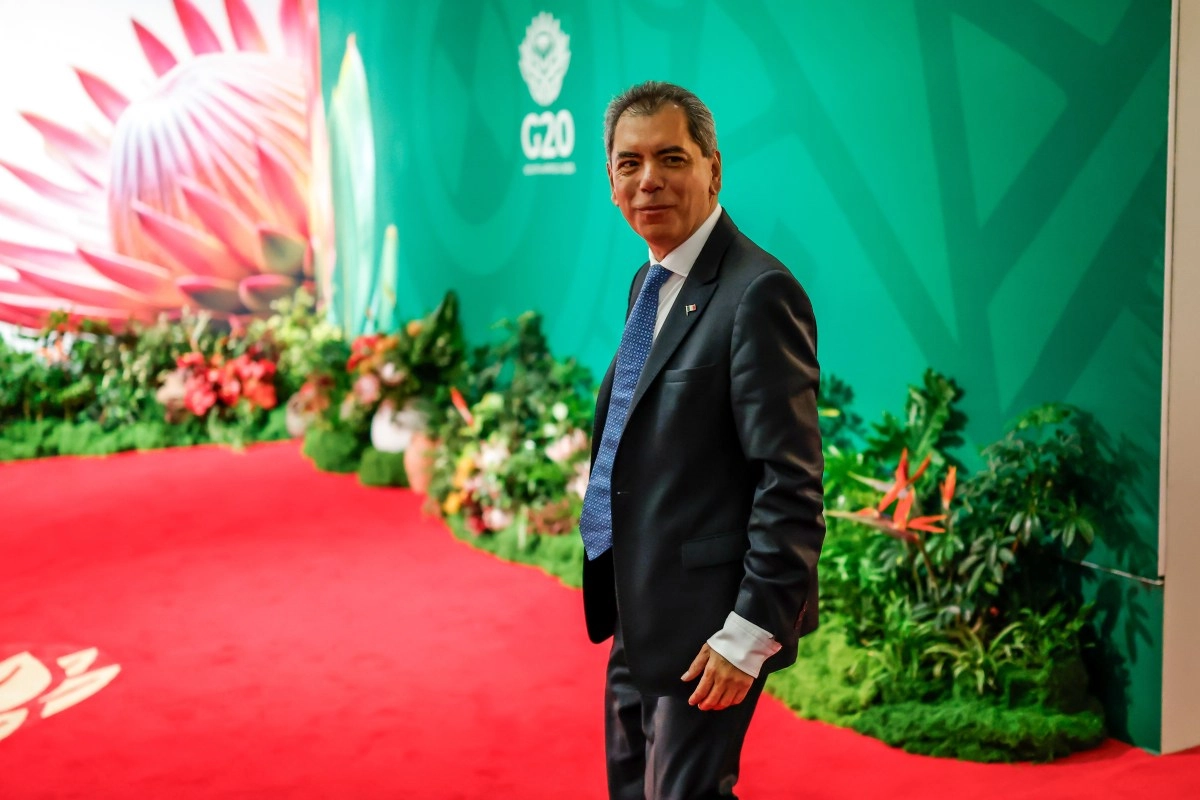

The financial world faces a silent enemy that spreads with the speed of an algorithm. In just 24 months, what was once a secondary concern has transformed into an unstoppable “epidemic”: fraud has become the main global threat to economic stability and the security of citizens. This was the assessment of Elisa de Anda Madrazo, president of the Financial Action Task Force (FATF), after the conclusion of the organization's plenary session in Mexico City. The officer was emphatic in describing a scenario where criminals no longer need weapons, but simply an internet connection to steal millions of their savings. “The fraud epidemic is growing in size, scale, and scope,” she stressed in a virtual conference, emphasizing that the impacts transcend economic losses and affect public trust, financial stability, and digital security. To illustrate the scale of the problem, she cited figures from the Global Anti-Scam Alliance, which estimate that half of all consumers worldwide face at least one attempted scam every week. In the last year, he added, global losses associated with fraud would have reached one trillion dollars.
Mexico maintains a firm commitment to the FATF
For his part, Mexico's Secretary of Finance, Edgar Amador, participating in the Fifth Plenary Meeting of the international organization, assured that the country maintains an active and constant participation in order to protect financial integrity.
In highlighting the importance of the FATF, Secretary Amador emphasized that the institution is widely respected for its technical rigor, for building consensus among its members, and for its leadership in the development and implementation of high-quality standards, as well as for being a fundamental actor in protecting the integrity of the international financial system.
The Finance Minister stressed that financial inclusion is a national priority, Therefore, he welcomed the organization's strengthening of standards to ensure a calibrated, proportionate, and risk-based implementation that protects the integrity of the system without hindering development, innovation, and inclusion.
New technologies amplify the reach of crime
De Anda warned that “no one is exempt,” especially in an environment where new technologies allow criminals to operate more quickly and from anywhere in the world. Among the most frequent methods, he mentioned “romance” scams on social networks and dating platforms, digital extortion, and fake investment opportunities.
Given this scenario, the FATF has strengthened its regulatory tools. The president highlighted the publication of a new document focused on cyber-facilitated fraud, as well as the update to its asset recovery guide, designed to respond to the speed at which resources are transferred in digital schemes. She also reported on modifications to Recommendation 16—related to payments—to incorporate defense mechanisms against fraud and errors in transfers, and adjustments to Recommendation 1 to promote financial inclusion without neglecting risk mitigation. Virtual assets under international scrutiny: The agency also approved specific reports on virtual assets, including stablecoins, non-hosted wallets, and foreign digital service providers. According to a recent Chainalysis report, stablecoins accounted for 84% of illicit virtual asset transaction volume in 2025, reflecting the increasing sophistication of criminal networks. As an example of international cooperation, De Anda mentioned a joint operation in which 11 jurisdictions processed more than 9,000 reports of scams linked to losses exceeding €192 million. The coordinated action resulted in more than 1,800 arrests and seizures exceeding €17 million, thanks to real-time intelligence sharing. In its plenary session, the FATF approved its 2026-2028 strategic priorities, which will be presented to ministers in April, and updated its public statement on Iran, in addition to endorsing mutual evaluations of Italy, Austria, and Singapore. Finally, it was announced that Giles Thomson will assume the presidency of the organization in July 2026, at a time when digital fraud is consolidating its position as the greatest global financial challenge.
New technologies amplify the reach of crime
De Anda warned that “no one is exempt,” especially in an environment where new technologies allow criminals to operate more quickly and from anywhere in the world. Among the most frequent methods, he mentioned “romance” scams on social networks and dating platforms, digital extortion, and fake investment opportunities.
Given this scenario, the FATF has strengthened its regulatory tools.
The president highlighted the publication of a new document focused on cyber-facilitated fraud, as well as the update to its asset recovery guide, designed to respond to the speed at which resources are transferred in digital schemes.She also reported on modifications to Recommendation 16—related to payments—to incorporate defense mechanisms against fraud and errors in transfers, and adjustments to Recommendation 1 to promote financial inclusion without neglecting risk mitigation. Virtual assets under international scrutiny: The agency also approved specific reports on virtual assets, including stablecoins, non-hosted wallets, and foreign digital service providers. According to a recent Chainalysis report, stablecoins accounted for 84% of illicit virtual asset transaction volume in 2025, reflecting the increasing sophistication of criminal networks. As an example of international cooperation, De Anda mentioned a joint operation in which 11 jurisdictions processed more than 9,000 reports of scams linked to losses exceeding €192 million. The coordinated action resulted in more than 1,800 arrests and seizures exceeding €17 million, thanks to real-time intelligence sharing. In its plenary session, the FATF approved its 2026-2028 strategic priorities, which will be presented to ministers in April, and updated its public statement on Iran, in addition to endorsing mutual evaluations of Italy, Austria, and Singapore. Finally, it was announced that Giles Thomson will assume the presidency of the organization in July 2026, at a time when digital fraud is consolidating its position as the greatest global financial challenge.
New technologies amplify the reach of crime
De Anda warned that “no one is exempt,” especially in an environment where new technologies allow criminals to operate more quickly and from anywhere in the world. Among the most frequent methods, he mentioned “romance” scams on social networks and dating platforms, digital extortion, and fake investment opportunities......