

The single-motor Cybertruck disappears from the Tesla catalog
The single-motor, rear-wheel drive electric pickup truck failed to capture the public's interest and leaves questions about the model's future
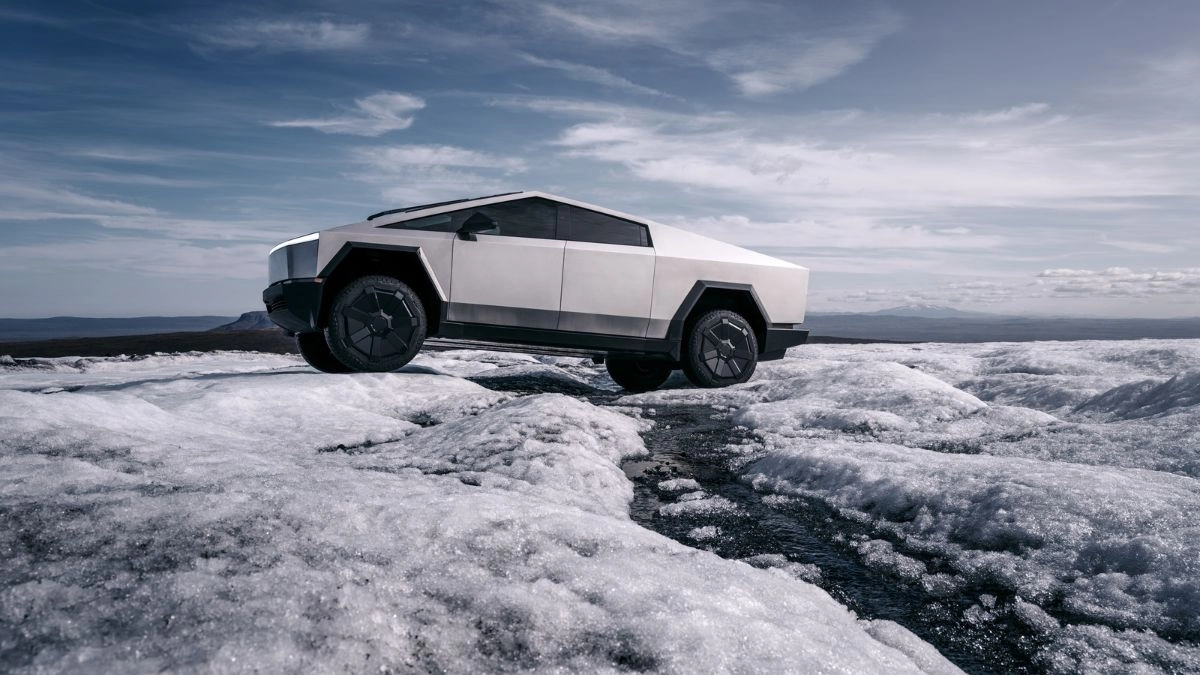

Tesla continues to face challenges with its futuristic Cybertruck, especially with the more affordable version it launched just five months ago. This single-engine, rear-wheel-drive variant was intended to expand the buyer base, but order figures have been disappointing.
As a result, the company has quietly removed this option from its online configurator, suggesting that the strategy did not work.
When the electric pickup truck was introduced in 2019, Elon Musk promised a revolutionary vehicle, with performance superior to any conventional pickup truck and an aggressive starting price.
Expectations were enormous: more than a million reservations and plans to produce up to 250,000 units per year, with the possibility of reaching half a million. However, the actual results are far from those figures: Tesla currently delivers around 20,000 units per year.
The problem lies not only in the production delay, but also in the model's features. The most affordable version was launched at $70,000, an attempt to make up for the difference with the dual-motor version, which costs $80,000.
To achieve this reduction, Tesla eliminated key elements, such as the active air suspension, the motorized cargo cover, the rear power outlets, and one of the electric motors.
A watered-down model
The result was a product perceived as unattractive. Analysts and users pointed out that “nobody wanted” this watered-down version, which offered no advantages over the more powerful version.
The elimination of important functions made the basic version look like a bad deal, especially in a market where consumers expect complete autonomy, features and utility.
The numbers back up this perception: the cheapest option barely generated any orders,and Tesla decided to withdraw it without offering alternatives. This decision marks a clear recognition that lowering the price at the expense of eliminating key features is not always the right strategy to increase demand.
Lessons from the electric market
The case of the Cybertruck highlights Tesla's difficulties in expanding beyond its traditional electric sedans and SUVs and entering segments dominated by historical pickup truck manufacturers.
Competition in the electric vehicle market is increasing rapidly, and consumers are increasingly critical of products perceived as "cut-rate" or that fail to deliver on initial promises.
Furthermore, the Cybertruck demonstrates that Tesla's success does not automatically translate to all segments. While models like the Model 3 and Model Y maintain solid sales, the futuristic pickup truck faces cultural and perceptual barriers: many pickup buyers expect sturdiness, cargo capacity, and consistent performance, attributes that the single-motor version didn't fully deliver.
Industry experts speculate that Tesla could relaunch the model in 2026 with performance improvements and a more adjusted price point, although there's no official confirmation yet. The goal would be to create a product that meets the original 2019 expectations and can effectively compete with electric pickups from rivals like Rivian or the Ford F-150 Lightning.
Uncertain Future for the Cybertruck
Meanwhile, the Cybertruck remains a vehicle on the ropes. Neither the budget version managed to attract buyers, nor do current production figures come close to the announced 1 million reservations. The retirement of the base version also raises questions about Tesla's strategy: Will the company focus its efforts solely on higher-performance versions? Or will it revise its budget-friendly proposition with comprehensive features that can justify a more competitive price?
Despite these setbacks, Tesla continues to push its vision of innovative and futuristic electric vehicles. However, the experience of the Cybertruck shows that even for a brand with a strong presence and loyal following, delivering on initial promises and balancing price, performance, and functionality is essential to maintaining credibility in an increasingly demanding market.
The retirement of the single-engine version of the Cybertruck makes it clear that Elon Musk and Tesla must rethink the strategy for this model if they want the electric pickup truck to fulfill its potential as an icon of electric mobility in the pickup truck segment.