

3 keys that explain the historic and tight victory that the pre-count gives to De la Espriella and the “new right” in Co
The conservative lawyer wins the pre-count of the presidential runoff against the leftist Iván Cepeda by raising flags of radical rightists from the region
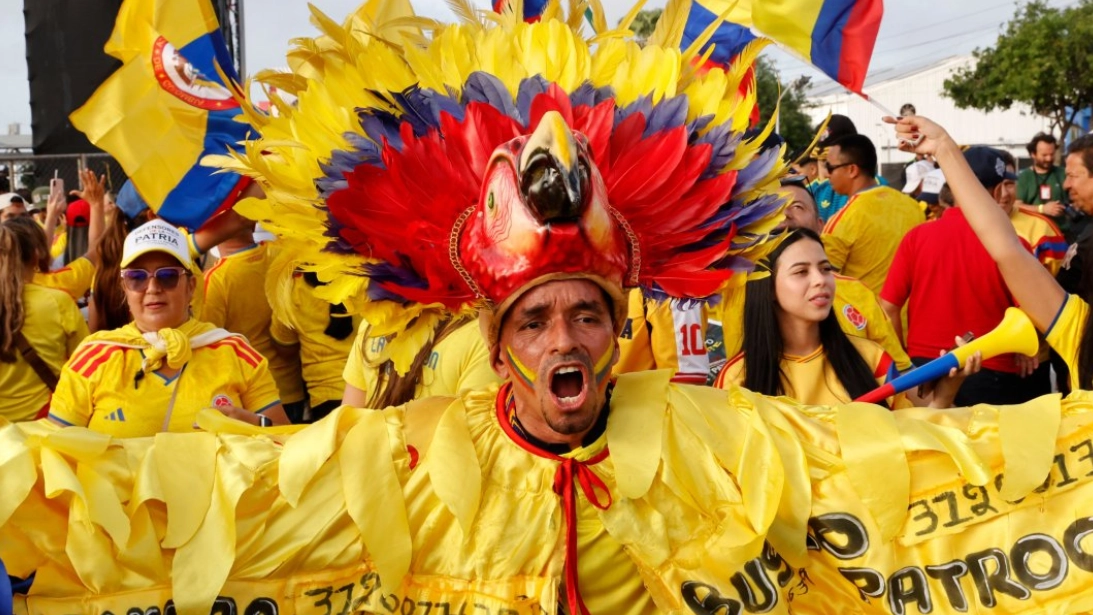

Almost in the blink of an eye, Abelardo de la Espriella went from being a businessman and lawyer for alleged criminals in high-profile cases to being one step away from being the elected president of Colombia.
The minimal advantage that De la Espriella achieved in the pre-count of votes for this Sunday's runoff, with 49.7% support when 99.99% of the informed tables go, predicts the possible arrival of a new type of right to the Colombian government.
His opponent, Senator Iván Cepeda, added 48.7% of the votes as a candidate of the left led by the outgoing president, Gustavo Petro, who was prevented from being re-elected.
With a difference of less than 300 thousand votes between both candidates, De la Espriella celebrated the result while Petro and Cepeda called to wait for the official vote count to proclaim the next president.
De la Espriella obtained almost 13 million votes, a record number in history that confirms his rapid rise to the top of power in his country, after announcing just last year his foray into politics and winning by surprise the first round of the elections at the end of May.
A peculiar achievement for this criminal lawyer who has had among his clients Alex Saab, an ally of the deposed Venezuelan president Nicolás Maduro accused of money laundering in the United States, and defendants in cases of corruption, fraud or links with paramilitaries, without this implying that he collaborated with alleged crimes.
There are three keys to understanding why this 47-year-old outsider, who likes to be called “El Tigre”, is poised to govern Colombia starting August 7.
1. The “flags” of the radical right
De la Espriella became the Colombian face of a radical right that wins elections in Latin America with his criticism of the political class and promises of a tough line on security and reduction of the State.
His proposal to build ten megaprisons in Colombia evoked the Nayib Bukele prison model in El Salvador, which inspires right-wingers in the region despite receiving complaints of serious abuses.
De la Espriella has said that he likes Bukele, although some time ago he described him as “very soft.”
His defense of the legal carrying of weapons for citizens, as well as the exaltation of patriotism and militarism, also recalled aspects of former Brazilian president Jair Bolsonaro, today convicted of attempted coup d'état.
And his reproaches for the political “caste” or his promise to reduce the size of the Colombian State by 40% earned him comparisons with the positions that brought the Argentine Javier Milei to the presidency.
Bibiana Ortega, a professor of political science at the Javeriana University of Bogotá, shares the idea that De la Espriella “took what stands out most from Bukele, Milei, Bolsonaro” and other exponents of the radical right in the region.
“Those are the flags and in the case of Colombia I think they work,” Ortega tells BBC Mundo.
He explains that in urban or rural areas of the country “the levels of perception of insecurity and a failure of the 'total peace'” proposed by Petro to negotiate with armed groups increased, which led many to support De la Espriella's punitive ideas.
And he adds that middle-class, upper-class and religious sectors are seduced by the “idea that the State has to be minimal,” as the conservative suggested after an expansion of government and public spending under Petro's mandate.
On the other hand, the distance that De la Espriella marked with the ruling class seemed to distinguish him in a country where political parties are one of the worst valued institutions in surveys.
But his vice president and trusted economist is the former conservative minister José Manuel Restrepo, who served as a letter of introduction to more moderate sectors.
2. The bet on anti-Petrism
This election was also in a sense a plebiscite on the government of Petro, the first leftist president in Colombia.
Without being a candidate, Petro assumed a leading role in the campaign and, with his confrontational style and popular measures, this year he improved his approval ratings in the polls to almost match his rejection ratings.
But a part of Colombian society maintains “negative feelings (towards) Petro that automatically passed to Cepeda,” explains Ortega.
Everything indicates that De la Espriella captured votes from the traditional right with his promises to “confront, defeat and punish” Petro, whom he maintained that he would extradite to the United States if required.
“Petro generates extreme circumstances, you love him or you hate him,” and De la Espriella “capitalized on that and became the most credible anti-Petro,” says Miguel García Sánchez, a political scientist who co-directs the Observatory of Democracy at the University of Los Andes in Bogotá.
He adds that for some sectors Petro's guerrilla past influences and “the ghost of the Latin American left does not disappear in the Colombian case either, because here people do not think that Colombia can become Mexico or Brazil, but rather Venezuela.”
“There are also some elements of classism, etc., but finally there is a popular vote in favor of the right that we cannot ignore, and Petro is its best enemy,” García Sánchez tells BBC Mundo.
3. Trump's impact
De la Espriella could also have benefited from the influence of the president of the United States, Donald Trump, in the campaign of the South American country, analysts say.
After the first electoral round in Colombia, Trump announced his “total and absolute support” for De la Espriella with a publication on his Truth Social social network in which he referred to Cepeda as “a Marxist of the radical left.”
“The results of these elections are very important for the future of Colombia and its relationship with the United States,” Trump said on June 2.
And he added that, if De la Espriella won “thanks to his competence and his love for his country, he will have the full support and strength of the United States in his favor.”
In recent decades, Colombia was the best ally that the US had in the region.
De la Espriella, who is also a naturalized US citizen, thanked his “dear and respected President Trump” through a post on the X social network.
“Together we will wage a frontal and uncompromising war against narcoterrorism,” he indicated.
On the other hand, Petro criticized Trump's support for his opponent on the same network and maintained that "when a country intervenes in the decisions of another country, freedom dies."
Although the two met at the White House to discuss differences in February, Trump and Petro have maintained a tense relationship since last year.
The US president even called the Colombian a “drug trafficker”, one of the biggest critics of his bombings of ships suspected of transporting drugs in the region and of the deportation flights of migrants from the US.
Polls show that Colombians are also divided in their opinion of Trump, but want their next president to have good relations with Washington, their main trading partner and their largest security financier.
“Unlike the people of the Southern Cone, this is a much more pro-American country,” says García Sánchez. “And I think people lean more towards anti-Petrism than anti-Trumpism.”
“Finally, Trump is a distant figure and our condition of subordination is assumed as part of the national identity,” he adds. “We are quite uncritical of everything that comes from the US, and even what doesn't work we use as an example.”