

AIIMS Doctors Continue Strike, Demand Central Protection ACT Following RG Kar Medical College Incident
The AIIMS community stands in solidarity with RG Kar Medical College & Hospital, reaffirming their demand for the implementation of the Central Protection ACT following a tragic incident. The strike continues with some services operational.

In the wake of the tragic rape and murder of a young woman doctor at RG Kar Medical College and Hospital, Kolkata, the All India Institute of Medical Sciences (AIIMS) community has reaffirmed their demand for the immediate implementation of the Central Protection ACT. This call to action has garnered widespread support from medical professionals across the country, who are deeply disturbed by the incident and are demanding stronger measures to protect healthcare workers.
On August 9, 2024, the horrific incident at RG Kar Medical College and Hospital shocked the nation and sparked outrage within the medical community. In response, the Resident Doctors’ Association (RDA) at AIIMS, New Delhi, has announced a continued strike, emphasizing their commitment to justice for the victim and the implementation of critical protective measures for healthcare workers.
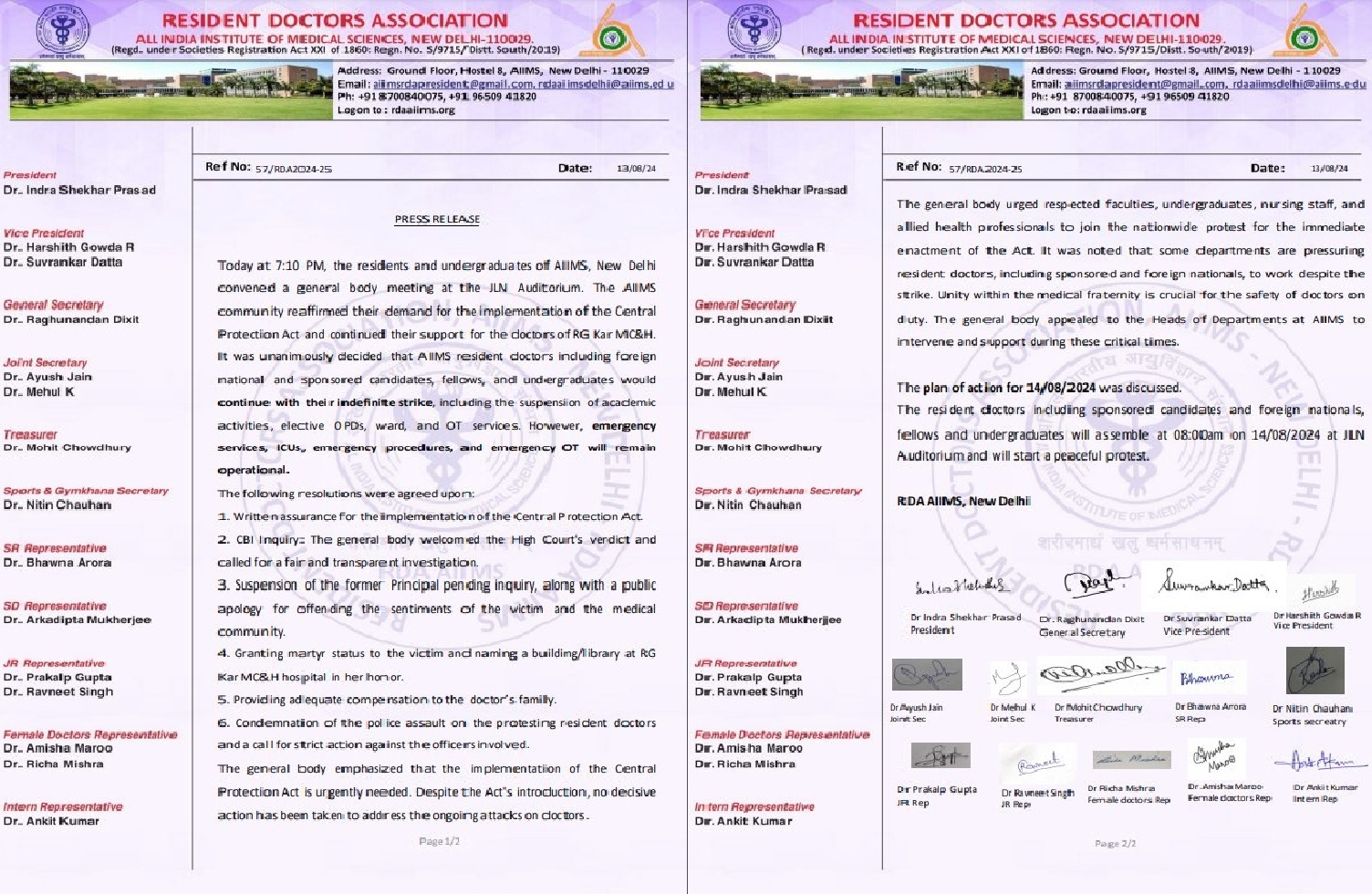
According to a statement released by the RDA AIIMS, New Delhi, it was unanimously decided that resident doctors, including foreign national and sponsored candidates, fellows, and undergraduates, would persist with their strike. This strike includes the suspension of academic activities, elective Outpatient Departments (OPDs), ward services, and Operation Theatre (OT) services. However, the AIIMS community has ensured that essential services, including emergency services, Intensive Care Units (ICUs), emergency procedures, and emergency OT, will remain operational.
The RDA AIIMS statement further emphasized the importance of the Central Protection ACT, which is seen as a vital measure to safeguard healthcare professionals from violence and ensure their safety in the workplace. The incident at RG Kar Medical College and Hospital has brought the issue of healthcare worker safety to the forefront, highlighting the urgent need for legislative action.
The strike has drawn significant attention from both the public and the medical community nationwide. Many healthcare workers and institutions have expressed their solidarity with AIIMS and RG Kar Medical College and Hospital, with similar strikes and protests being organized in other parts of the country. The medical community is unified in their demand for the government to take immediate steps to address the growing concerns over the safety of doctors and other healthcare professionals.
In light of the ongoing strike, patients at AIIMS and other affected institutions are facing challenges in accessing non-emergency medical services. Elective surgeries, routine check-ups, and other non-urgent medical procedures have been put on hold, leading to delays and disruptions in healthcare delivery. However, the striking doctors have assured that emergency care will not be compromised, and all critical services will continue to operate without interruption.
The AIIMS community’s decision to continue the strike reflects the deep sense of injustice felt by healthcare workers in the aftermath of the RG Kar Medical College incident. The tragic event has underscored the vulnerability of doctors and medical staff, prompting widespread calls for reforms to protect those who dedicate their lives to saving others.
As the strike continues, the medical community and the public alike are watching closely to see how the government will respond to the demands for the Central Protection ACT and other measures aimed at ensuring the safety of healthcare workers. The incident at RG Kar Medical College and Hospital serves as a somber reminder of the risks faced by those in the medical profession, and the need for stronger protections to prevent such tragedies in the future.
The RDA AIIMS has stated that they will maintain their strike until tangible action is taken by the government, urging all stakeholders to prioritize the safety and well-being of healthcare workers across the country.