

“I was deported to Mexico by mistake and after 3 months and several attempts, the US finally managed to bring me back”
Cuban Lázaro Romero León was expelled to Mexico despite a federal judge's order prohibiting him. This is the story of his odyssey to return
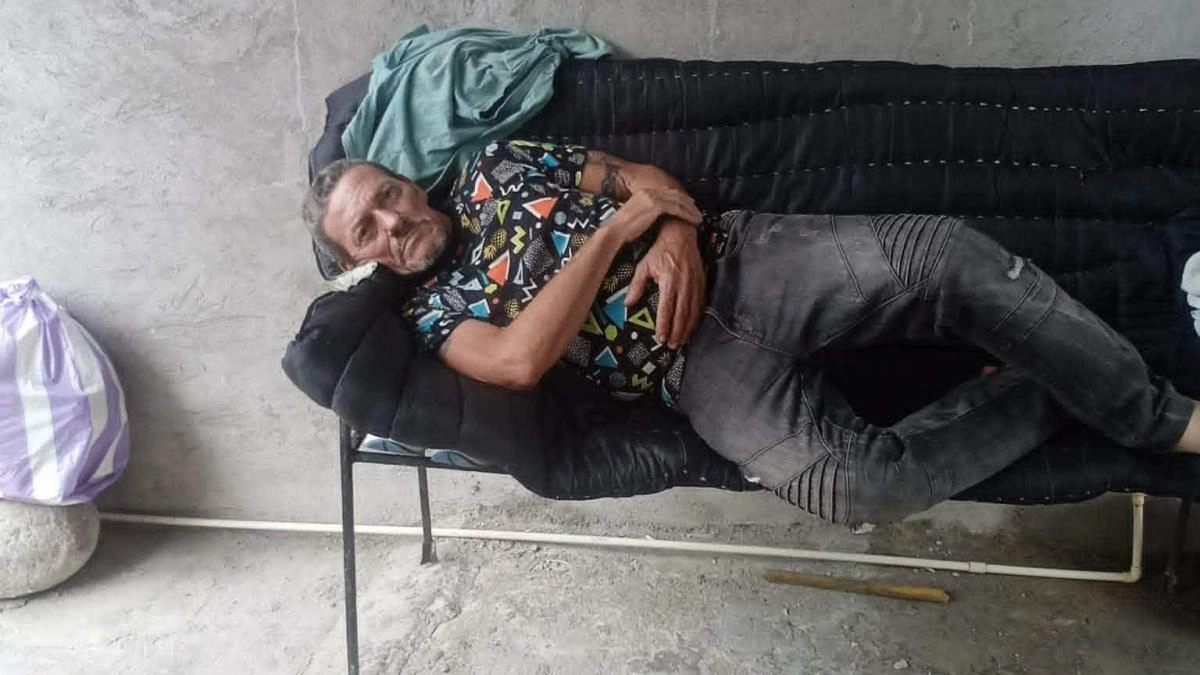

For Lázaro Romero León to return to the United States, from where he was deported to Mexico despite a federal judge's order prohibiting him, almost three months and several failed attempts had to pass.
A 59-year-old Cuban, he had been detained in Puerto Rico, an unincorporated territory of the United States, where he settled after leaving his native island in the 90s and passing through Miami, Tennessee and Los Angeles.
An unexecuted expulsion order had been pending against him since 2002. Because there was no deportation agreement between the US and Cuba, Romero León, like tens of thousands of other Cuban immigrants, was allowed to continue with his life in the country.
And so he did, under a supervision order that required him to report periodically to Immigration and Customs Enforcement (ICE).
“I had been signing for 28 years, without missing a single appointment,” he tells BBC Mundo. “Until on May 20, 2025, six agents grabbed me outside my house in Aguadilla (Puerto Rico) and, without further explanation, they took me away,” he says, something that ICE also confirms.
This is how he ended up first in the ICE detention center in Adelanto (California) and later in Florence (Arizona).
According to ICE, in June 2025 the agency requested documents from the Cuban authorities so that Romero León could travel to the country, something that is still pending. And in September of the same year he notified them that he would be expelled to a third country, a notice that was also given to Romero León. According to ICE, he refused to sign the notification.
It was of no use then that in December the man requested habeas corpus before a federal court and that the legality of his detention be reviewed, pointing out that it was unlikely that Cuba would accept him back. Nor did federal Judge Hernán Diego Vera for the Central District of California order the US government not to deport him while the legal action was resolved.
“To be extremely clear, this order means that it is prohibited (…) to transfer the petitioner out of the United States to Mexico (…) until this court has resolved the request completely,” reads the judge's order to which BBC Mundo had access.
However, after an “apparent communication error,” as the government later admitted, as stated in the judge's order, on February 16 of this year, Romero León was taken to the border, from where he was transferred to southern Mexico.
After that, almost three months “of pure agony,” he says.
It was a time in which, he says, he lost count of the days, while his lawyer fought for his return to the US in court, and ICE tried unsuccessfully to comply with the judge's order and have Romero León return to the US.
In those weeks, undocumented in the south of Mexico, Mexican immigration agents intercepted him, he entered another detention center and was left on the border with Guatemala. He claims that he ended up living on the streets in the city of Tapachula, wearing the same clothes as when he was deported and eating donated food.
"I saw many others like me. That is full of older Cubans, even grandparents, some sick, without money or papers, condemned to destitution," he says now.
“It seems like they wanted to send us to die there,” he emphasizes, already back in the US, from the Californian city of Palmdale.
We will talk about how he finally managed to return later.
Now consulted about the case by BBC Mundo, the Department of Homeland Security (DHS) emphasizes that he is a “criminal illegal immigrant with an extensive criminal history” and an expulsion order since 2002.
Romero León served a sentence years ago for several crimes: in 1997 for physical assault on his wife, in 2000 for trying to transport marijuana for sale, and in 2001 for falsifying a driver's license and presenting false information.
"Lázaro Romero León received full due process, including a final deportation order from a judge. This government will not ignore the rule of law. ICE complies with court orders," said a DHS spokesperson.
"Criminal illegal immigrants are not welcome in the United States. We are enforcing the law as it is written. If a judge determines that an illegal immigrant has no right to be in this country, we will deport them."
A third country for Cubans
For years, Cubans were not a priority target of US deportation policies, in part due to a lack of agreements and because Cuba refused to accept certain people back, such as those who had served sentences.
For this reason, many immigrants received expulsion orders that were never carried out and, like Romero León, remained in the United States for decades, where they worked and raised families, often with naturalized partners and children with citizenship by birth.
But that changed dramatically under President Donald Trump's second term.
Since taking office in January 2025, his government, as promised before becoming president, has ordered massive anti-immigration operations to deport undocumented immigrants and taken measures to expand both the means of expulsion and agreements with countries willing to receive deportees of other nationalities.
Cubans, whose home country is facing one of its biggest crises in decades and a maximum pressure campaign from Washington, have also been affected.
According to an April report from the Cato Institute, a nonpartisan, conservative think tank based in Washington, ICE arrests of those born on the island jumped from less than 200 per month at the end of 2024 to more than 1,000 per month a year later.
And while the deportations face litigation in federal courts, the list of nations willing to become receiving “third countries” has been expanding.
Costa Rica has been the last to join the group that already included Cameroon, Ecuador, El Salvador, Eswatini, Ghana, Honduras and Panama.
There is no public contract of that type with Mexico—and President Claudia Sheinbaum ruled out signing it—but the country has also received thousands of citizens of other nationalities deported from the United States, mainly Cubans, Haitians and Venezuelans, since Trump's return to power.
But Mexico has been doing so for years by virtue of a commitment made with the previous government, that of Democrat Joe Biden.
Although then these were migrants who had just crossed the border irregularly and were immediately returned, something very different from the type of deportations we are seeing now.
The authorities of both countries have not given official figures regarding the new expulsions. But little by little clues have come to light.
In December, President Sheinbaum assured that her country had received 11,886 foreigners until that moment.
And in March, federal judge William G. Young indicated in a resolution that the Department of Homeland Security (DHS) had indicated to him that, based on an “unwritten agreement,” in the last year the United States had deported 6,000 Cubans to Mexico.
A Human Rights Watch report just published in May indicates that between January 20, 2025 and March 9, 2026, the Trump administration sent almost 13,000 foreigners to the neighboring country; Of them, the largest group is made up of Cubans: 4,353 deportees in total.
Without papers or money
For the report, HRW interviewed more than 50 people in Tapachula (Chiapas) and Villahermosa (Tabasco), cities in southern Mexico where these deportees are sent.
With the exception of one, all the Cubans questioned stated that they had previously had permanent residence in the United States and the majority acknowledged having lost it after a conviction.
In a large part of the cases it was for minor crimes, such as driving under the influence of alcohol, falsification of documents or charges related to drugs, says HRW after its investigation of the available data. Some were sentenced for more serious offenses, such as assault or weapons offenses.
“I already paid,” Romero León tells BBC Mundo about the sentences he served for his crimes 25 years ago.
Like him, many Cubans ended up in a strange country without documentation, money or any belongings.
The Mexican government does not guarantee services to deportees from other countries, according to HRW, and forces them to navigate a complicated system to request asylum.
According to the organization, all those interviewed said that, before being released, the Mexican immigration authorities notified them that they had a limited permit to remain in the country—in most cases, for a period of 10 days—and urged them to initiate a process before the Mexican Commission for Refugee Assistance (Comar).
This was also recommended to Romero León, his lawyer, public defender Margaret Farrand, confirms to BBC Mundo.
Under Mexican law, those who do so must remain in the state where they submitted the application while it is being processed.
BBC Mundo tried to communicate with Comar without success and consulted the National Migration Institute (INM) about how many foreigners deported from the US requested refuge in Mexico since Trump came to power and how many were granted refuge.
To this, the INM responded that all information related to figures is handled by the Migration Policy Unit and that, since these are in many cases "personal immigration administrative processes that are underway", it cannot be provided.
And when asked if there is an agreement or some type of coordination between the US and Mexican immigration authorities for the deportations of other nationalities, he responded: “We have no information about that.”
“If you come to our country illegally, you could end up in the CECOT [the Terrorism Confinement Center, the infamous maximum security prison in El Salvador] or in any other third country,” a spokesperson for the Department of Homeland Security (DHS) answered that same question from BBC Mundo.
"We are applying the law as it is written. If a judge determines that an illegal alien does not have the right to be in this country, we will deport him. Period," he stressed in an email.
“These agreements with third countries, which ensure due process under the US Constitution, are essential to the security of our country and the American people.”
The fourth time's the charm
When BBC Mundo spoke for the first time with Romero León, he had been in Tapachula for two months, a city in the poorest state of Mexico located a few kilometers from the border with Guatemala and accustomed to migrant caravans.
"Here I am, going through tremendous work. A boy saw me on the street and took me in, gave me his food... But I'm still wearing these clothes, I've been wearing them since last year," he said during that telephone conversation on May 5.
By then he had contacted Arody Tomé, a countryman whom he met while he was detained before being deported and whom he cared for when he fell ill with pneumonia. Released but with a GPS anklet to monitor him, Tomé promised to help him and acted as a bridge with lawyer Margaret Farrand.
Thus, with the resources that the lawyer presented and the pressure from the judge in California, ICE first tried to get Romero León to take a plane to Tijuana.
Something unviable with the copy of his Puerto Rico card, the only identification with which he was deported, and the copy of the Cuban birth certificate that the lawyer had obtained.
They then tried to get him to travel to the US border by bus. The lawyer herself paid for a ticket for April 11.
“But shortly after leaving, before reaching Tuxtla Gutiérrez (the capital of Chiapas) there was a checkpoint, and they took me down and took me to the immigration station” in Tapachula, he says.
“After keeping me prisoner for a few days, they left me on the border with Guatemala.”
BBC Mundo consulted the INM about this, but until the time of publication of this article it did not receive a response.
Despite his reluctance to try again without the accompaniment of a US official who assured the Mexican agents that he was going to the US as requested by his government, history repeated itself once again.
He got back on a bus. And they took him down again at the checkpoint, he says. He ended up in detention again and then on the street.
“How is it possible that there is a mechanism to deport someone to a country that is not theirs but there is none to bring them back?” the defender questioned at that point when BBC Mundo called her to contrast her client's story with her.
The nightmare began to come to an end this May 8, when with a safe passage in hand and thanks to the coordination between authorities from both countries, he was able to get on a plane to Tijuana.
From that border city he crossed the San Ysidro Pass into the United States, where after passing through a detention center again, he was released under supervision.
Now he goes to sign at an ICE office in downtown Los Angeles. He does it like a deportee who had to be brought back.