

They question the CNDH report on the Ayotzinapa case that exonerates the Mexican Army
Mexico's human rights commission faces criticism for exonerating the Army in the Ayotzinapa case
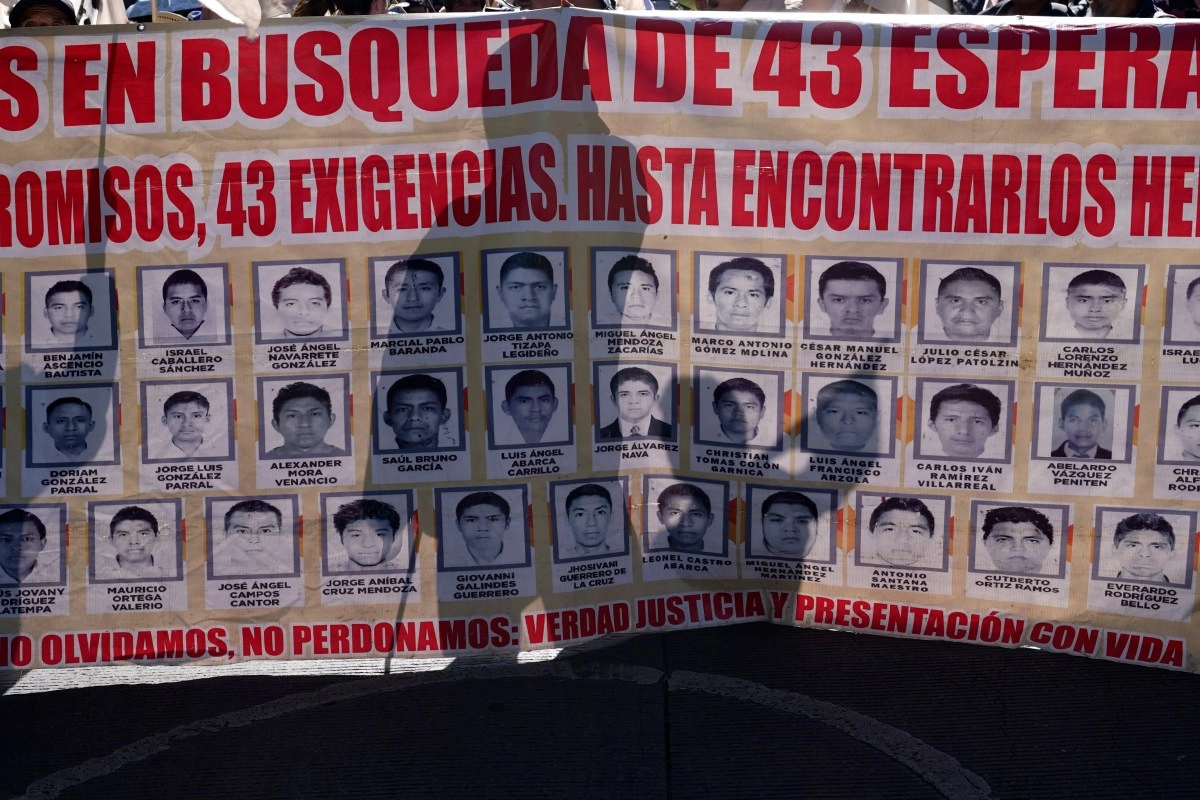

The National Human Rights Commission (CNDH) opened a new controversy for its recent position on the Ayotzinapa case, after separating the Armed Forces from the disappearance of the 43 normal school students, a conclusion that organizations, family members and researchers consider contradictory compared to documents prepared by the organization itself in previous years. The recommendation issued by the CNDH on July 9, called a "recommendation of vindication" of the victims of the case that occurred in Iguala, Guerrero, maintains that The Secretariat of National Defense (Sedena) and the Secretariat of the Navy (Semar) had no participation in the violent events recorded on the night of September 26 and early morning of September 27, 2014. However, the resolution generated questions because previous reports from the same commission had pointed out responsibilities and omissions of members of the Mexican Army during the events.
CNDH denies military involvement in the disappearance of the 43 normal students
In the most recent document, the CNDH establishes that there are no elements to hold the Armed Forces responsible for the disappearance of the students of the Raúl Isidro Burgos Rural Normal School of Ayotzinapa. “There was no participation of the Defense elements in any of the violent events against the students, much less the existence of a counterinsurgency plan or general strategy of the normalistas,” he highlighted. This conclusion provoked the immediate reaction of the relatives of the missing students, who described the resolution as a “historical betrayal”. For the parents of the normalistas, the new position of the CNDH represents a setback in the search for truth and justice, because they consider that there are elements that point to the intervention and knowledge of military authorities during the events.
Previous reports from the CNDH indicated responsibility of the Army
The criticism focuses mainly on the difference between the current recommendation and documents published by the organization itself in previous years. In recommendation 15VG/2018, the CNDH indicated that there was responsibility of elements of the 27th Infantry Battalion, not as direct authors of the disappearance, but for omissions during the attack against the students. The 2018 document established that members of the Army ignored the requests for help made by victims and relatives, in addition to not responding a call from the Public Security Secretariat of Iguala. Years later, in 2022, the General Directorate of Supervision of Progressivity of the CNDH prepared a special report on that recommendation and maintained the conclusion that members of the Armed Forces had some level of participation in the case.
One of the researchers who collaborated in this analysis pointed out that military responsibility does not necessarily imply that the Army directly carried out the disappearance, but that there was knowledge and actions that must be clarified. “There is a responsibility, although we could say that they are not directly responsible for the disappearance of the 43 students, it is undeniable that the Armed Forces are involved and knew about what was happening that night in Iguala,” he stated.
Ayotzinapa Case: they point out the presence of a military infiltrator in the Normal
Another point that generated debate was the case of soldier Julio César López Patolzin, a member of the Army who was inside the Ayotzinapa Normal School before the disappearance of the students. Alejandro Encinas Rodríguez, who headed the Commission for Truth and Access to Justice in the Ayotzinapa Case between 2018 and 2023, stated that official documents proved that López Patolzin operated as a military intelligence element within the campus.Encinas pointed out that the soldier was registered as an Information Search Body (OBI) and that his presence at the school had an intelligence purpose. However, the new recommendation of the CNDH rules out that López Patolzin has been infiltrated as a military informant and maintains that his presence could be explained because military elements also have the possibility of carrying out studies.
Information from the C-4 and actions of the Army during the attacks
Another point of controversy is the role that the Army had in monitoring the events that occurred in Iguala. The 2018 recommendation of the CNDH indicated that personnel from the 27th Infantry Battalion had access to information generated from the Control, Command, Communication and Computing Center (C-4) while the attacks against the normalistas occurred. That report partially coincided with the conclusions of the Interdisciplinary Group of Independent Experts (GIEI), which also documented the presence of military elements with knowledge of what happened.
Relatives of the 43 reject the position of the CNDH
The legal representatives of the families of the missing students rejected the new resolution of the body headed by Rosario Piedra Ibarra. Isidoro Vicario, legal representative of the relatives, stated that there are documented elements about the actions of the Army before, during and after the disappearance. He pointed out that the military had knowledge of the movements of the students, of the attacks that occurred and of information that was subsequently not completely delivered. Vicario accused the CNDH of having lost independence and questioned whether its resolutions respond to interests politicians. "The CNDH has tried to make recommendations in a fashion. It has lost the essence of why the CNDH was created," he stated.
Organizations question the autonomy of the CNDH
Various human rights organizations also criticized the recommendation. The Miguel Agustín Pro Juárez Human Rights Center (Centro ProDH) questioned the autonomy of the CNDH and pointed out that the resolution discredits the work of national and international organizations that have accompanied the students' families. The Washington Office on Latin America (WOLA) described it as worrying that the Mexican organization disqualifies organizations that have participated in the demand for truth and justice for the Ayotzinapa case.
They point out a possible intention to protect the image of the Army
Researchers who participated in previous reviews of the 2018 recommendation considered that the new position of the CNDH could be related to the role that the Mexican Army currently has within the national security strategy. One of them stated that there is an intention to preserve the institutional image of the Army due to the growing role it has had in recent years in security and public administration tasks. The Ayotzinapa case continues to be one of the most controversial episodes of human rights violations in Mexico. More than a decade after the disappearance of the 43 students, the differences between authorities, relatives and human rights organizations keep the dispute open about the role that the different institutions played during that night in Iguala.