

Mexican governor rejects being investigated by the US and demands that The New York Times rectify the report
In an official letter of complaint, the president denied being the subject of criminal investigations in the United States, and demanded an immediate public rectification of the newspaper.
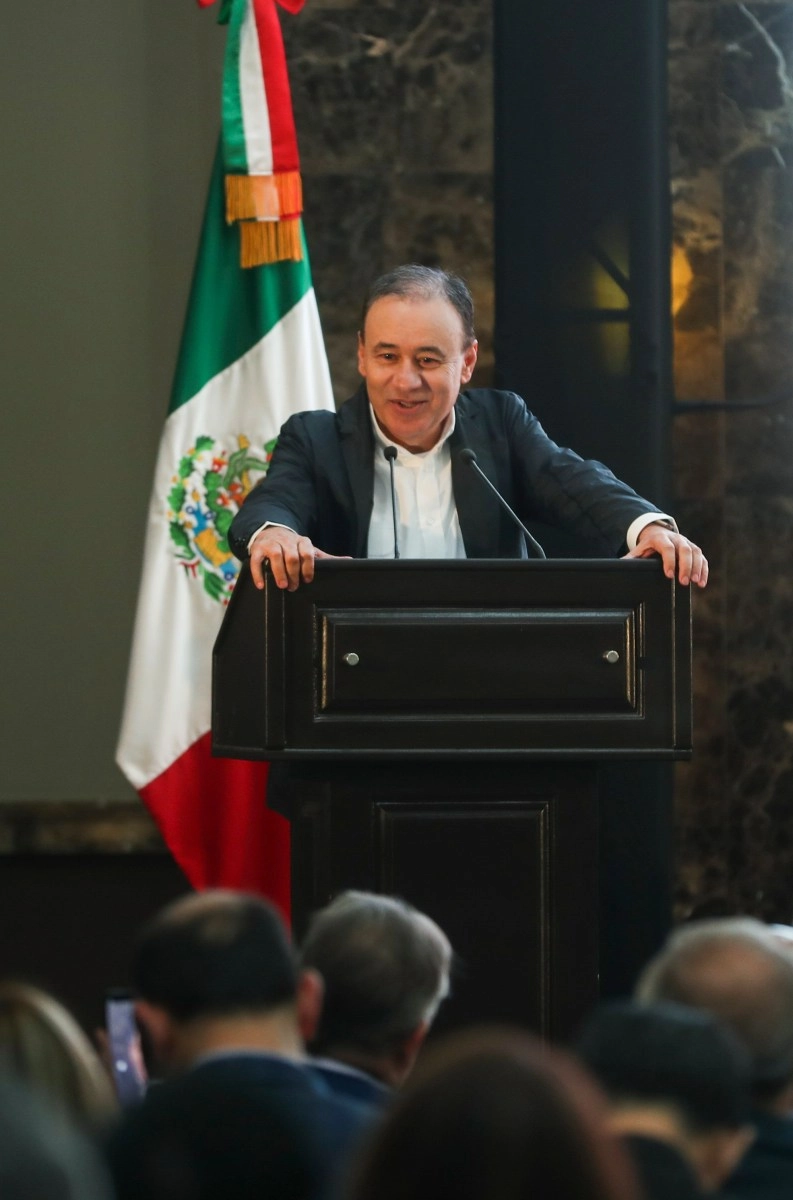

Alfonso Durazo, governor of Sonora (northeast of Mexico), publicly rejected the versions that indicate him as the object of an investigation by the United States authorities and asked The New York Times (NYT) to rectify a report in which he is mentioned among Mexican officials allegedly under scrutiny for alleged cases of corruption.
Through a letter sent to the newspaper's executive editor, Joseph Kahn, and to the company's president, A. G. Sulzberger, the state president assured that he has not received any official notification, neither from Mexican nor American authorities, confirming the existence of an investigation against him.
“I have not received any notification from a competent authority, in Mexico or abroad, about the existence of any investigation against me,” Durazo stated in the document, in which he also maintained that the report lacks verifiable evidence to support his allegations.
The publication of the American newspaper, published on June 27, indicates that several governors and legislators of the ruling Morena party would have sought approaches with US authorities to offer information about other members of their party allegedly linked to criminal organizations. Among the officials mentioned are Durazo and the governor of Tamaulipas, Américo Villarreal, who, according to the report, would be part of ongoing investigations.
Durazo affirms that there is no official evidence
In his response, the governor of Sonora maintained that the newspaper presented as facts statements that, in his opinion, are not supported by official documents or corroborating evidence.
Durazo argued that the report takes up versions previously published by the Los Angeles Times, a medium that in early June also reported on an alleged US investigation related to alleged links to drug trafficking and an alleged revocation of his visa.
At that time, the president dismissed the information by pointing out that it was “just another note, without sources, like many others.” Now he maintains that The New York Times report reproduces these statements without providing new elements to support them.
In the letter he also requested that the newspaper publish a clarification in which it recognizes that there is no publicly confirmed official information that allows one to affirm that he has been notified, required, charged or accused within any investigation in the United States. Likewise, he maintained that a rectification would not represent a limitation on press freedom, but rather the fulfillment of an ethical obligation of journalistic practice when a publication lacks verifiable support.
The report generates reactions within Morena
The New York Times investigation maintains, based on testimonies from anonymous sources who participated in conversations with US authorities, that at least a dozen elected officials in Mexico would have sought to collaborate with US agencies by providing information about other politicians.
According to the newspaper, these approaches occurred while pressure from US authorities increased on alleged links between Mexican officials and drug trafficking organizations, particularly following extradition requests against former Sinaloa officials.
The report also refers to the case of the governor of Baja California, Marina del Pilar Ávila, who acknowledged having taken steps to recover her US visa, although she denied having reached agreements with authorities in that country.
The publications have provoked various reactions within Morena. However, so far, the president of Mexico, Claudia Sheinbaum, has not issued a public position on the content of the report or on the accusations directed against the aforementioned governors.
In his letter, Durazo concluded by requesting that any clarification receive a dissemination similar to that of the original note, considering that this would contribute to restoring the information balance after an accusation that, he insists, has no verifiable official support.