

Los Angeles one step away from giving its non-citizen residents the right to vote in municipal elections
If the measure is approved by voters, the city charter would have to be amended to expand voting eligibility
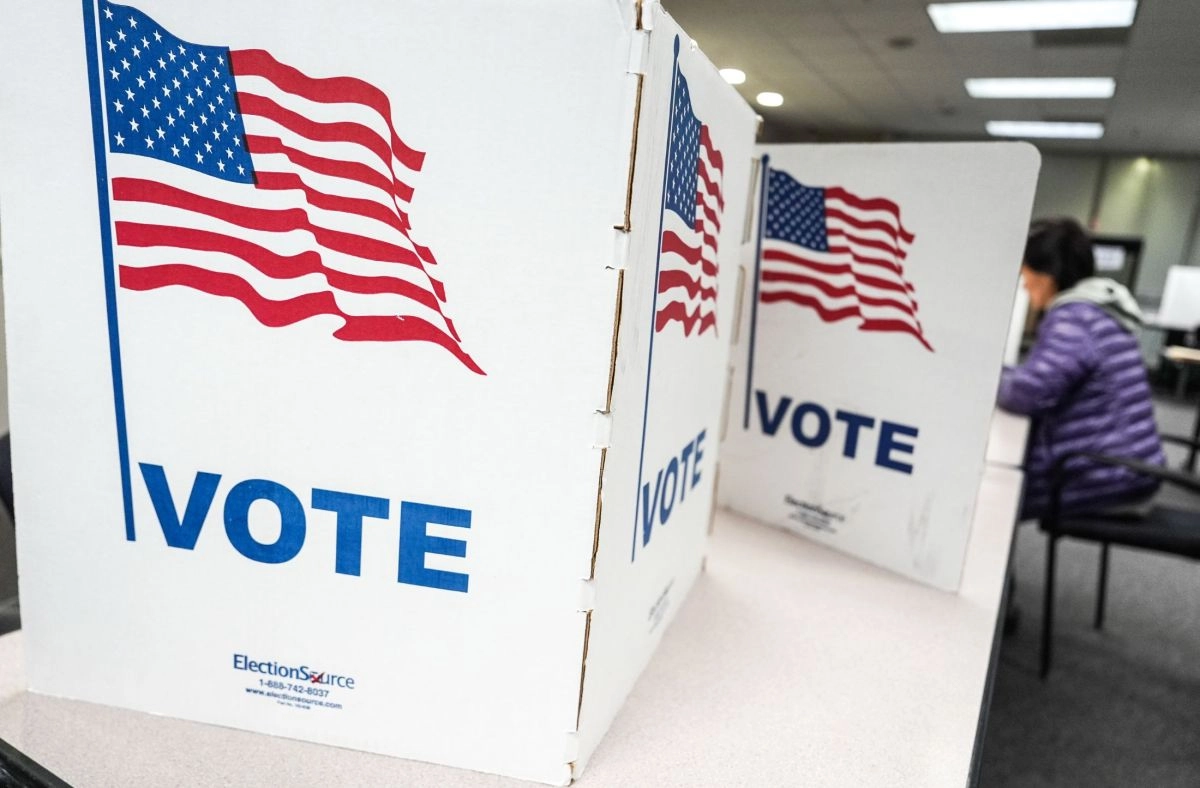

Is Los Angeles ready to let its undocumented residents vote in local elections?
“If you live, work, pay your taxes and have a family here, or are a small business owner, you deserve to have a voice in the City of Los Angeles,” said Los Angeles Councilman Hugo Soto-Martínez.
"This is about local representation, not about making changes in state and federal elections. 40 states like Maryland and cities like San Francisco already do it, and there is a possibility in Washington," he said.
The Los Angeles City Council approved a proposal that will appear on the Nov. 3 ballot to allow long-time noncitizen Angelenos to vote in local elections.
The initiative, promoted by councilor Hugo Soto-Martínez, has generated praise and criticism.
The proposal indicates that while the city of Los Angeles lacks the authority to stop immigration operations, it has the ability to reform its Constitution and empower its immigrant population to participate in municipal and Los Angeles Unified School District Board elections.
If approved, this measure would amend the Los Angeles City Charter and authorize the Council to adopt an ordinance allowing certain non-citizen residents to vote in municipal elections.
It does not mean that the right to vote would immediately be guaranteed to any group. What it would do is give legal authority to the city to establish a residential voting program through an ordinance, which would require the approval of the Council and the signature of the mayor.
In which elections would it be applied?
For municipal elected positions such as Council members, mayor and other positions such as comptroller and prosecutor, as well as members of the Los Angeles Unified School District Board.
Who would vote
Green card holders, Deferred Action for Childhood Arrivals (DACA), Temporary Protected Status (TPS) recipients, and other residents who live, work, pay taxes, and raise their families in Los Angeles.
“This initiative grants electoral rights to those who have worked for a long time to build this city, like me who arrived five years ago from Sinaloa (Mexico), the same state where the founders of this city came from almost 250 years ago,” said Jesús Ramón Villalba Gastelúm, a dreamer who has lived, worked and loved this city for 21 years.
He said today presents a valuable and significant opportunity for essential workers who have raised, fed and vaccinated the population, and who hold the city on their shoulders.
“If our duty is to pay taxes, our right is to have representation,” said Jesús Ramón, who is also an activist with the California Immigrant Policy Center.
Grace McManus, a Filipino immigrant who has lived in Los Angeles for 24 years and is a legal resident, said she contributes to the country by caring for the most vulnerable seniors and paying taxes.
“I have no say in who runs city councils or in government positions that directly affect my daily commute or the policies I must abide by as a local resident,” he said.
Instead, he said no distinction is made when it comes to the services it provides or the taxes it pays.
“I fulfill my obligations faithfully and without question, why, then, should there be discrimination when reaching the polls,” he questioned.
“It is time for Los Angeles to ensure the political representation of its residents along with its fiscal obligations.”
Lorena Zepeda, beneficiary of Temporary Protected Status (TPS), said that even though they are immigrants, they pay taxes every year; and in his case he has lived for more than three decades in Los Angeles without the right to vote.
"We must have the right to vote even at the municipal level. I have faith that this measure will be approved, because we have made this city great, and I hope they will let us vote for our municipal and school district representatives."
It's not something new
In 2016, San Francisco voters approved a measure to allow parents of children residing in the city to vote in school board elections, regardless of their immigration status.
A higher court immediately struck down the measure after the conservative group United States Justice Foundation and its president James V. Lacy sued against it, arguing that it violated the California Constitution.
However, in 2023, a San Francisco appeals court ruled in favor of immigrant parents' right to vote in school board elections.
In the United States, only American citizens can vote in federal and state elections. But cities and municipalities can allow noncitizens to vote in municipal and local elections.
By 2024, 19 different localities allow noncitizens to vote in local elections, while seven states, Alabama, Arizona, Colorado, Florida, Louisiana, North Dakota, and Ohio, prohibit it entirely.
In Vermont, three localities currently allow noncitizen voting: Winooski, Montpellier and Burlington; It should be noted that, before 1828, Vermont did not impose citizenship requirements for exercising the right to vote.
“We want to learn from their experience, how they did it and what mechanisms they used, because we are determined to allow non-citizens to vote here in the city of Los Angeles,” said Councilman Soto-Martínez, who presented the proposal a year after the violent immigration raids that shook the city, and when its inhabitants still live with the anxiety of family separation and loss of income due to fear.
“There are many doubts about what actions the federal government could take if the measure is approved, but the reality is that they are already attacking our communities, separating families, harming our small businesses and sowing terror,” he said.
"We are not going to worry about what they do; we must live by our values as the city of Los Angeles. We say that Los Angeles is for everyone, without exceptions, and that includes ensuring that people have the ability to vote in local elections," he added.
Soto-Martínez's office did not respond to the question of whether approving this measure would not give rise to the Trump Administration and Republicans to intensify their accusations of electoral fraud using undocumented immigrants to vote in elections.
What stage are you in?
On June 17, with ten votes in favor and five against, the measure was approved by the councilors. Councilors Bob Blumenfeld, John Lee, Tim McOsker, Adrin Nazarian and Mónica Rodríguez voted against.
“I support the goal of expanding civic participation for those who contribute to Los Angeles, however, since the County administers our elections, this proposal has not been adequately evaluated to determine if it can truly be implemented,” said Councilwoman Rodríguez.
He added: "I don't want to make promises to our communities that we probably can't keep. I'm also concerned that creating a new database of non-citizen voters could unintentionally expose immigrant communities to greater risks, so I believe this proposal requires further analysis before moving forward."
ACoM sought the position of California Republican gubernatorial candidate Steve HIlton, but there was no response from his campaign office.
The sponsors of this measure are the Coalition for Immigrant Rights (CHIRLA), the Central American Resource Center (CARECEN) and the United Teachers Los Angeles Teachers Union (UTLA).
“As the president and his allies continue to divide communities and restrict civic participation, Los Angeles has the opportunity to embrace a more inclusive vision of democracy,” said Martha Arévalo, executive director of CARECEN.
“If you live, pay taxes and raise your family here, you deserve to have a voice in the decisions that define your city.”
The final fate of this proposal is now in the hands of Los Angeles voters, who in November will decide whether non-citizen residents should have a voice in municipal elections.