

Operation against drugs in Rio de Janeiro leaves more than 64 dead
At least 64 dead in anti-drug operation in Rio de Janeiro; at least 81 arrested
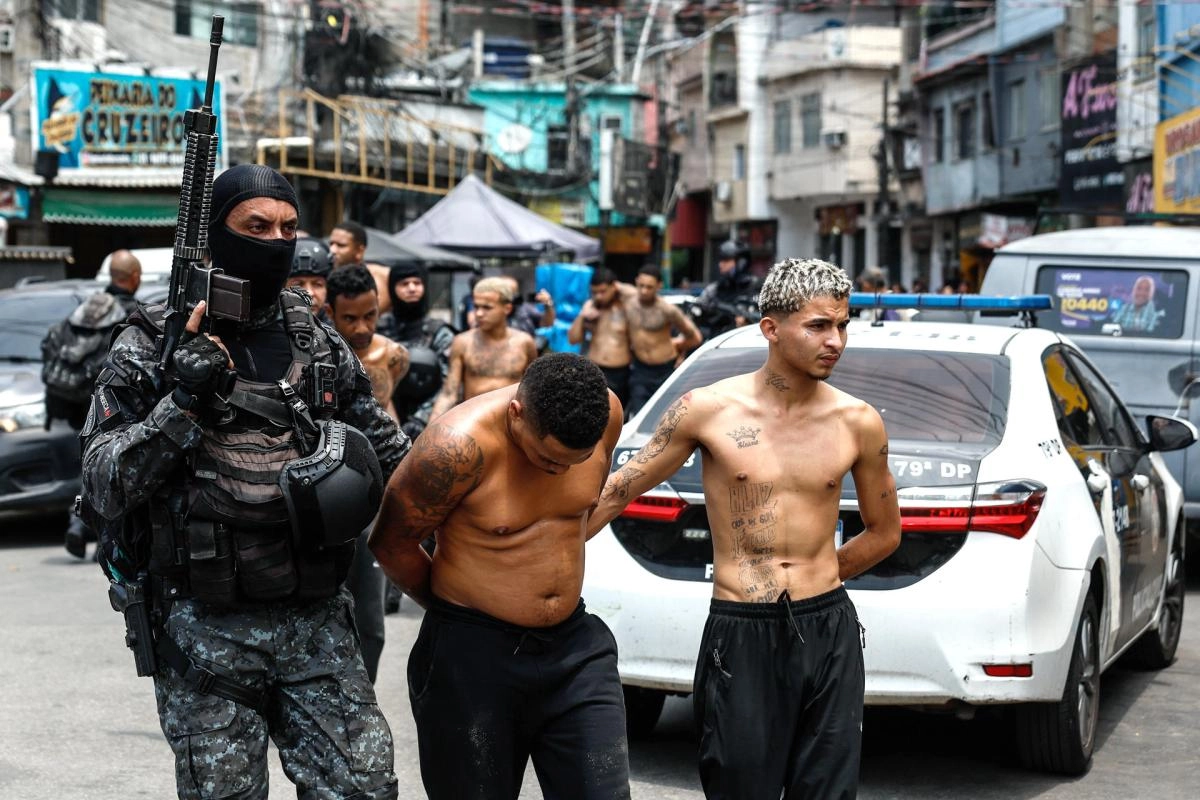

Rio de Janeiro experienced one of its most violent days in years, after a massive police operation targeting Comando Vermelho, one of Brazil's most powerful criminal factions. The operation, the deadliest in the city's recent history, left at least 64 dead, including 60 Alleged members of the gang were arrested, and 81 people were detained, according to official reports. Four security officers were also killed and more than 10 wounded.
Operation against criminal gangs
Since dawn, approximately 2,500 agents of the Rio Civil Police, supported by local prosecutors, executed 100 arrest warrants in the favelas of Alemao and Penha, two of the poorest and most violent neighborhoods in the city's northern zone. The operation aimed to dismantle the Comando Vermelho criminal groups, particularly the leaders who operate from the Penha complex, considered one of the organization's main centers of territorial expansion.
The Civil Police explained that the Penha complex has been fundamental to the gang's expansion project, which uses the area as a strategic point for drug and arms trafficking due to its proximity to major transportation routes.
During the operation, authorities seized 93 assault rifles and “a huge amount of drugs,” although seizure figures are still preliminary
Violence and chaos in the city
The chaos not only affected the favelas, but spread to various parts of Rio, where clashes between police and alleged members of the Comando Vermelho (Red Command) led to blockades on major avenues, such as the “Yellow Line,” and other key roads. The criminals used burning barricades, cars, buses, and even drones loaded with explosives to try to slow the advance of the security forces.
This caused chaos in the city, with nearly 200,000 people affected by the closure of schools and health centers and the suspension of various public services, including transportation.
Impact on security and local politics
Rio Governor Claudio Castro stressed that the city was “completely alone” during the operation, in an apparent criticism of the lack of support from the federal government.Although he acknowledged the need for greater collaboration with federal forces, Justice Minister Ricardo Lewandowski defended state autonomy in security matters and lamented the violence of the operation. He also mentioned that the government of Luiz Inacio Lula da Silva is promoting a reform to better coordinate the actions of federal, regional, and municipal forces, which is currently under review in Congress. The massive operation is taking place a week before the arrival in Brazil of Prince William of England, who will participate in the presentation of the prestigious Earthshot Prize in Rio and in the Local Leaders Forum, prior to the COP30 Climate Summit in the Amazonian city of Belem. The violence on the streets of Rio has overshadowed preparations for these high-profile events, which will attract international attention. Authorities have highlighted their concern about Brazil's image in the context of security and urban violence.
Against criminal organizations in Rio de Janeiro
The Comando Vermelho (Red Command), founded in the 1970s in the Ilha Grande prison in Rio de Janeiro, is one of Brazil's oldest and most complex criminal organizations. Initially created as a self-defense militia, the group has evolved into one of the most powerful factions, controlling much of the drug trafficking in Rio de Janeiro and expanding its influence to other states such as Amazonas and Mato Grosso.
In addition to drug trafficking, the gang is involved in a range of illicit activities, including arms smuggling, extortion, kidnapping, loan sharking, and armored truck robberies.
The faction has close ties to the Brazilian prison system, which has allowed it to maintain a significant capacity for expansion both inside and outside prisons.
The Future of Rio and the Fight Against Organized Crime
This violent operation reflects growing concern about the security situation in Rio de Janeiro, where the power of factions like Comando Vermelho seems unstoppable. Despite police and military efforts, the faction remains a dominant force in drug trafficking and urban violence, testing the Brazilian government's ability to contain its power and guarantee public safety.
With the operation still underway and the consequences yet to be assessed, Authorities continue to face a monumental challenge in restoring order to a city plagued by violence and organized crime.The massive operation is taking place a week before the arrival in Brazil of Prince William of England, who will participate in the presentation of the prestigious Earthshot Prize in Rio and in the Local Leaders Forum, prior to the COP30 Climate Summit in the Amazonian city of Belem. The violence on the streets of Rio has overshadowed preparations for these high-profile events, which will attract international attention. Authorities have highlighted their concern about Brazil's image in the context of security and urban violence.
Against criminal organizations in Rio de Janeiro
The Comando Vermelho (Red Command), founded in the 1970s in the Ilha Grande prison in Rio de Janeiro, is one of Brazil's oldest and most complex criminal organizations. Initially created as a self-defense militia, the group has evolved into one of the most powerful factions, controlling much of the drug trafficking in Rio de Janeiro and expanding its influence to other states such as Amazonas and Mato Grosso.
In addition to drug trafficking, the gang is involved in a range of illicit activities, including arms smuggling, extortion, kidnapping, loan sharking, and armored truck robberies.
The faction has close ties to the Brazilian prison system, which has allowed it to maintain a significant capacity for expansion both inside and outside prisons.
The Future of Rio and the Fight Against Organized Crime
This violent operation reflects growing concern about the security situation in Rio de Janeiro, where the power of factions like Comando Vermelho seems unstoppable. Despite police and military efforts, the faction remains a dominant force in drug trafficking and urban violence, testing the Brazilian government's ability to contain its power and guarantee public safety.
With the operation still underway and the consequences yet to be assessed, Authorities continue to face a monumental challenge in restoring order to a city plagued by violence and organized crime.The massive operation is taking place a week before the arrival in Brazil of Prince William of England, who will participate in the presentation of the prestigious Earthshot Prize in Rio and in the Local Leaders Forum, prior to the COP30 Climate Summit in the Amazonian city of Belem. The violence on the streets of Rio has overshadowed preparations for these high-profile events, which will attract international attention. Authorities have highlighted their concern about Brazil's image in the context of security and urban violence.
Against criminal organizations in Rio de Janeiro
The Comando Vermelho (Red Command), founded in the 1970s in the Ilha Grande prison in Rio de Janeiro, is one of Brazil's oldest and most complex criminal organizations. Initially created as a self-defense militia, the group has evolved into one of the most powerful factions, controlling much of the drug trafficking in Rio de Janeiro and expanding its influence to other states such as Amazonas and Mato Grosso.
In addition to drug trafficking, the gang is involved in a range of illicit activities, including arms smuggling, extortion, kidnapping, loan sharking, and armored truck robberies.
The faction has close ties to the Brazilian prison system, which has allowed it to maintain a significant capacity for expansion both inside and outside prisons.
The Future of Rio and the Fight Against Organized Crime
This violent operation reflects growing concern about the security situation in Rio de Janeiro, where the power of factions like Comando Vermelho seems unstoppable. Despite police and military efforts, the faction remains a dominant force in drug trafficking and urban violence, testing the Brazilian government's ability to contain its power and guarantee public safety.
With the operation still underway and the consequences yet to be assessed, Authorities continue to face a monumental challenge in restoring order to a city plagued by violence and organized crime.controlling much of the drug trafficking in Rio de Janeiro and expanding its influence to other states such as Amazonas and Mato Grosso.
In addition to drug trafficking, the gang is involved in a range of illicit activities, including arms smuggling, extortion, kidnapping, loan sharking, and armored truck robberies.
The faction has close ties to the Brazilian prison system, which has allowed it to maintain a significant capacity for expansion both inside and outside prisons.
The Future of Rio and the Fight Against Organized Crime
This violent operation reflects growing concern about the security situation in Rio de Janeiro, where the power of factions like Comando Vermelho seems unstoppable. Despite police and military efforts, the faction remains a dominant force in drug trafficking and urban violence, testing the Brazilian government's ability to contain its power and guarantee public safety.
With the operation still underway and the consequences yet to be assessed, Authorities continue to face a monumental challenge in restoring order to a city plagued by violence and organized crime.controlling much of the drug trafficking in Rio de Janeiro and expanding its influence to other states such as Amazonas and Mato Grosso.
In addition to drug trafficking, the gang is involved in a range of illicit activities, including arms smuggling, extortion, kidnapping, loan sharking, and armored truck robberies.
The faction has close ties to the Brazilian prison system, which has allowed it to maintain a significant capacity for expansion both inside and outside prisons.
The Future of Rio and the Fight Against Organized Crime
This violent operation reflects growing concern about the security situation in Rio de Janeiro, where the power of factions like Comando Vermelho seems unstoppable. Despite police and military efforts, the faction remains a dominant force in drug trafficking and urban violence, testing the Brazilian government's ability to contain its power and guarantee public safety.
With the operation still underway and the consequences yet to be assessed, Authorities continue to face a monumental challenge in restoring order to a city plagued by violence and organized crime.