

Sheinbaum affirms that there is no deadline for the US to present evidence in the extradition request against a governor
"If the United States does not provide the evidence, this request for urgent detention may be rejected," warned Claudia Sheinbaum.
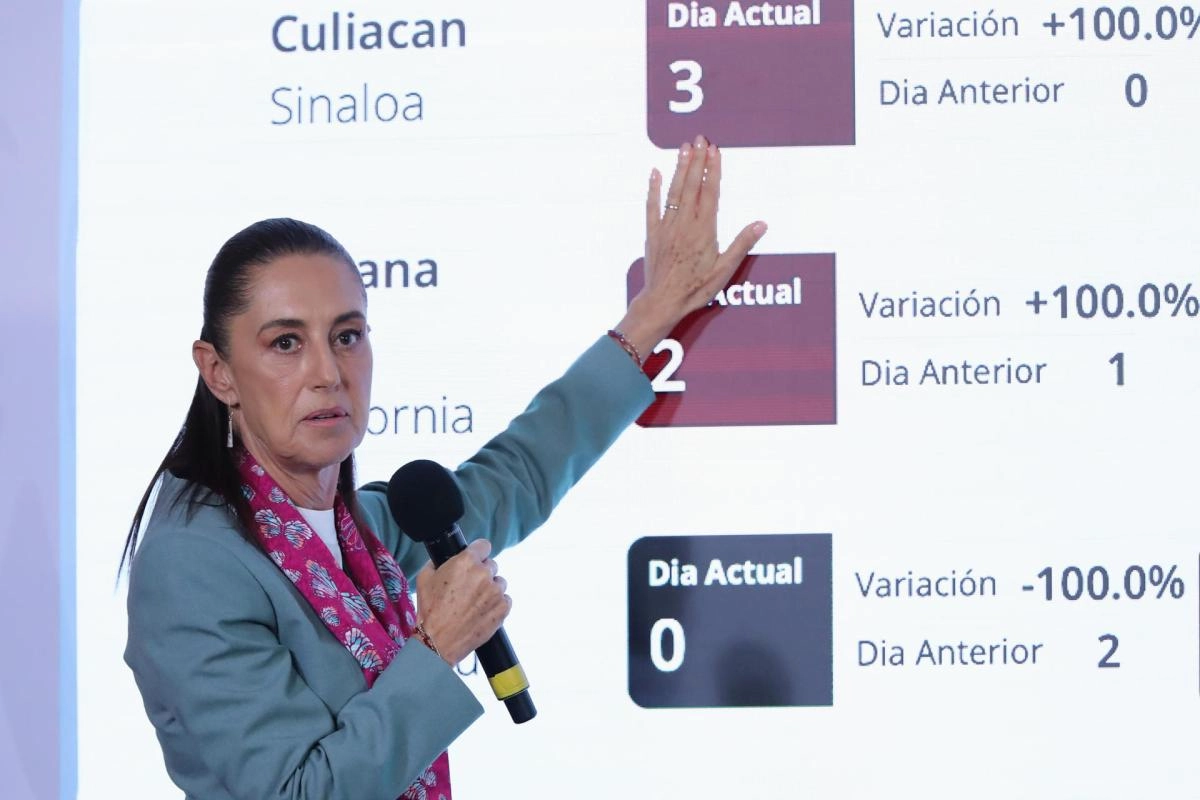

The president of Mexico, Claudia Sheinbaum, stated that there is no deadline for United States authorities to present evidence to support the request for detention for extradition purposes against the licensed governor of Sinaloa, Rubén Rocha Moya, named in an indictment filed by federal prosecutors in New York for alleged links to drug trafficking.
During her morning conference from the National Palace, the president clarified that the procedure currently underway does not correspond to a formal extradition trial, but rather to a request for “urgent detention for extradition purposes,” a preliminary stage that requires sufficient evidence for the Mexican government to act.
Sheinbaum explained that the request was submitted by an office of the United States Department of Justice and subsequently reviewed by the Ministry of Foreign Affairs (SRE), which concluded that the documentation sent did not contain sufficient evidence to justify an immediate detention.
"The Attorney General's Office is carrying out its own investigations and proceedings. We are at that stage of the process," said the president. The accusation against Rocha Moya was announced on April 29 by prosecutors from the Southern District of New York.
Other former Sinaloa officials also appear in it, who allegedly collaborated with leaders of the Sinaloa Cartel to facilitate drug trafficking operations into US territory in exchange for political benefits and illicit payments.
The United States keeps the path of formal extradition open
The president stressed that a possible refusal by Mexico to carry out the urgent detention would not definitively close the case. As he explained, the US authorities retain the possibility of initiating a formal extradition procedure, which would involve a broader judicial review and the presentation of additional evidence.
"If there are not sufficient elements, the Mexican government cannot proceed. However, the United States has the option of promoting a formal extradition trial if it considers that it has the necessary foundations," he indicated. Sheinbaum highlighted that these types of situations are part of the usual cooperation mechanisms between both countries and recalled that Mexico has also faced rejections by US authorities when requests for urgent detention have not been accompanied by sufficient evidence.
As an example, he mentioned previous cases related to former Mexican officials whose surrender was requested by the Mexican government without obtaining an immediate favorable response due to questions about the evidence presented.
Federal government denies providing special protection to the former governor
Separately, the Secretary of Security and Citizen Protection, Omar García Harfuch, rejected versions that pointed to alleged federal protection for Rocha Moya while the process takes place. The official assured that the governor on leave does not have escorts assigned by any agency of the federal Security Cabinet and that he has not requested special support from national authorities.
“The people named in the accusation do not have protection from the Secretariat of National Defense, the Navy, the Secretariat of Security or the Attorney General's Office of the Republic,” he stated. García Harfuch added that the security measures that currently accompany Rocha Moya correspond exclusively to state authorities in Sinaloa.
While the investigations of the Attorney General's Office continue and an eventual response from the US authorities is awaited, the case has become one of the most sensitive issues within the bilateral agenda in matters of justice and combating drug trafficking, involving one of the most influential politicians in the state of Sinaloa.