

The internal war of the Sinaloa Cartel does not stop the shipment of fentanyl to the United States.
The beginning of the conflict arose after the capture in 2024 in the United States of the drug trafficker Ismael "El Mayo" Zambada, who fractured the Sinaloa Cartel.
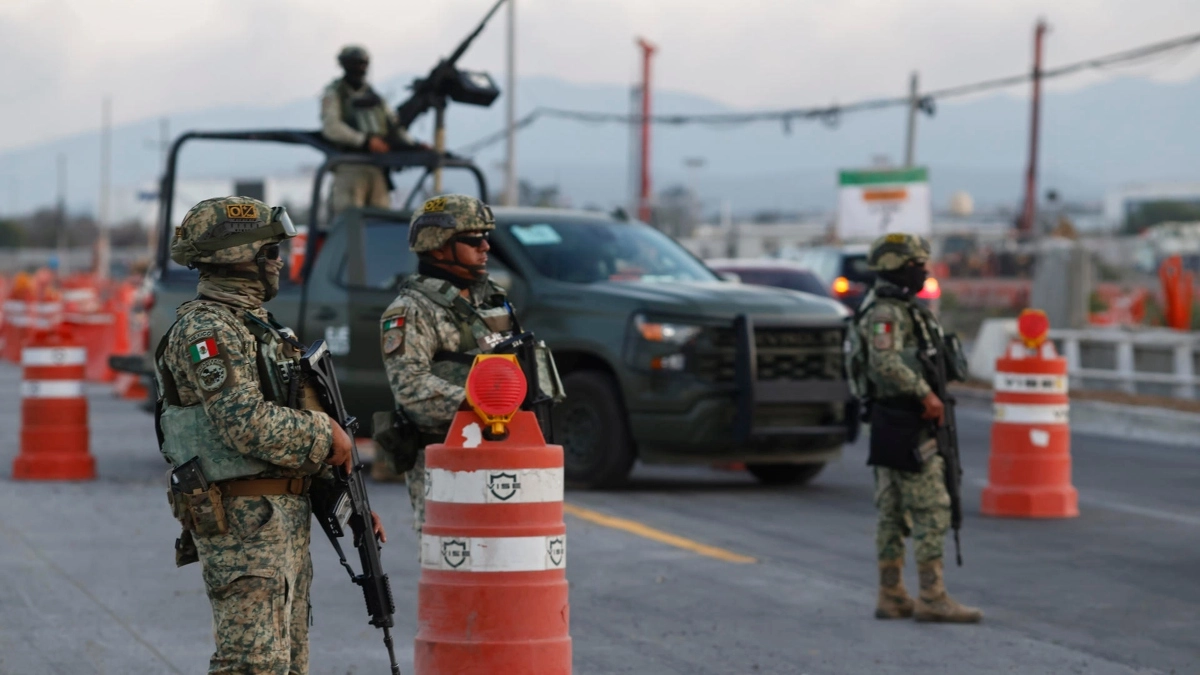

The current internal war between factions of the historic Sinaloa Cartel has not put a stop to fentanyl shipments to the United States, while the violence in that Mexican state, with more than 3,000 deaths in two years, continues despite the military deployment of the federal government.
According to the report by the International Crisis Group (ICG) organization “The war of the heirs in Sinaloa: fighting crime in Mexico under pressure in the US”, the crisis of violence has not dissipated, but rather has been “transformed” and displaced to the most rural areas, amid the strong military deployment of the Executive.
The beginning of the conflict arose after the capture in 2024 in the United States of drug trafficker Ismael “El Mayo” Zambada, which fractured the Sinaloa Cartel amid accusations of treason and led to a wave of violence that shook the state between the factions of Los Mayos and Los Chapitos.
After almost two years of internal war, the Mexican State is far from achieving a fundamental change in the balance of forces of organized crime, as David Mora, principal investigator of the ICG report, explained to EFE this Friday.
“What we see now is that they are much more focused attacks, they are less random,” said Mora, who stated that Los Mayos are “gaining ground” against Los Chapitos, in a conflict in which the missing and murdered tend to be young men and even minors.
Despite the erosion of the cartel's power, the study warns that the demand and price of fentanyl remains "the same" and "relatively stable" in the United States, which is indicative of the "adaptation capacity of criminal markets" and that other groups could be covering part of the supply of illicit substances.
However, the different factions of the Sinaloa Cartel control “many parts” of its territory, with places where “the authority is a criminal group and not the Mexican State,” said Mora, who interviewed more than 60 people to carry out this analysis.
In this context, he recalled that there are more than 10,000 soldiers deployed in the state concentrated in the capital (Culiacán) that has achieved large seizures of narcotics although the violence rates "continue to be extremely high."
For this reason, the military reinforcement strategy, in the opinion of the ICG researcher, marks a “turning point” compared to the policy of “hugs and not bullets” coined by the former Mexican president, Andrés Manuel López Obrador (2018-2024).
"Before with López Obrador this was between two sides and now with (the president, Claudia) Sheinbaum it does feel like it is between three. There is a new actor and it is the Government," he added.
Likewise, the report draws attention to the complicity of political actors in Sinaloa with drug trafficking, which has been going on for several decades but is current after the formal accusation by the United States against the state governor, Rubén Rocha Moya, for his alleged collaboration with Los Chapitos in exchange for bribes.
Mora recalled that the power of the Sinaloa Cartel is explained by the “protection of political power”, which, in his opinion, is the “great pending task” of Mexico to “face the threat” of organized crime.
Since 2024, clashes between rival organized crime groups have left more than 3,000 dead in that western Mexican state.