

Colonel Sofiya Qureshi Exposes Pakistan’s Aggression: Operation Sindoor Unveiled
Colonel Sofiya Qureshi details Pakistan’s aggressive attacks on India’s western borders, highlighting the use of drones, missiles, and fighter jets in Operation Sindoor.
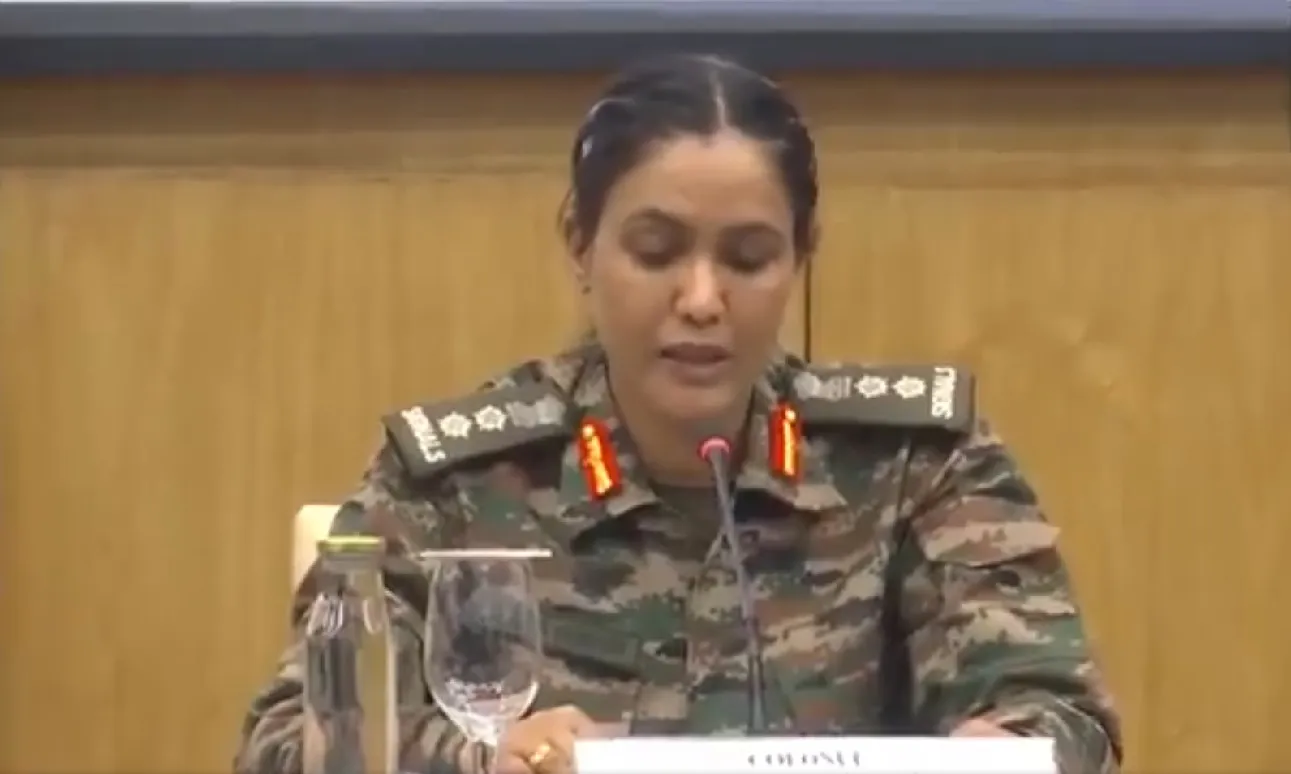

In a detailed briefing, Colonel Sofiya Qureshi of the Indian Army shed light on the recent escalations along India’s western borders, attributing the aggression to continuous attacks by the Pakistani army. The assaults, characterized by the deployment of drones, long-range weapons, loitering munitions, and fighter jets, have targeted India’s military sites, leading to significant damage and casualties.
Operation Sindoor: A Strategic Response
Colonel Qureshi elaborated on Operation Sindoor, India’s calculated military response to the provocations. She stated, “The Pakistani army is continuously attacking the western borders; it has used drones, long-range weapons, loitering munitions, and fighter jets to attack India’s military sites. India neutralised many dangers, but Pakistan tried to infiltrate via air at more than 26 places, and they damaged our equipment and personnel at air force bases in Udhampur, Bhuj, Pathankot, Bathinda. They used high-speed missiles at 1:40 am to target Punjab’s air base. They even attacked health facilities and schools.”
Targets and Impact
The attacks have been widespread, with key Indian Air Force bases in Udhampur, Bhuj, Pathankot, and Bathinda bearing the brunt. The use of high-speed missiles to target the Punjab air base at 1:40 am marked a significant escalation. Beyond military installations, the Pakistani offensives extended to civilian infrastructures, including health facilities and schools, raising concerns over violations of international humanitarian laws.
India’s Defensive Measures
In response to the aggressive maneuvers, India has activated its advanced defense systems. The S-400 air defense system has been instrumental in intercepting incoming threats, while the deployment of loitering munitions and precision-guided missiles has enabled targeted strikes on hostile positions. The Indian Armed Forces have also intensified surveillance along the borders to thwart further infiltration attempts.
International Reactions and Diplomatic Efforts
The international community has expressed deep concern over the escalating tensions. The United States, through Secretary of State Marco Rubio, has offered to mediate talks between the two nations, urging restraint and dialogue. Similarly, the G7 nations have called for immediate de-escalation to prevent further deterioration of regional stability.
Colonel Sofiya Qureshi: A Trailblazer in Military Leadership
Colonel Qureshi’s leadership during these challenging times has been commendable. As an officer from the Indian Army’s Corps of Signals, she has previously led a 40-member Indian Army contingent at ‘Exercise Force 18,’ the largest foreign military exercise hosted by India. Her role in briefing the nation on Operation Sindoor underscores the increasing participation of women in pivotal military positions.
The recent aggressions by Pakistan have not only strained diplomatic relations but have also resulted in significant loss and damage. India’s measured yet firm response through Operation Sindoor reflects its commitment to safeguarding national sovereignty while adhering to international norms. As the situation remains fluid, the emphasis is on diplomatic engagements to restore peace and stability in the region.