

Why the death of Russia transport minister serves as a warning for the political elite of Putin environment
The body of Roman Starovoit was found lifeless in a park on Monday, just hours after being dismissed by President Putin.
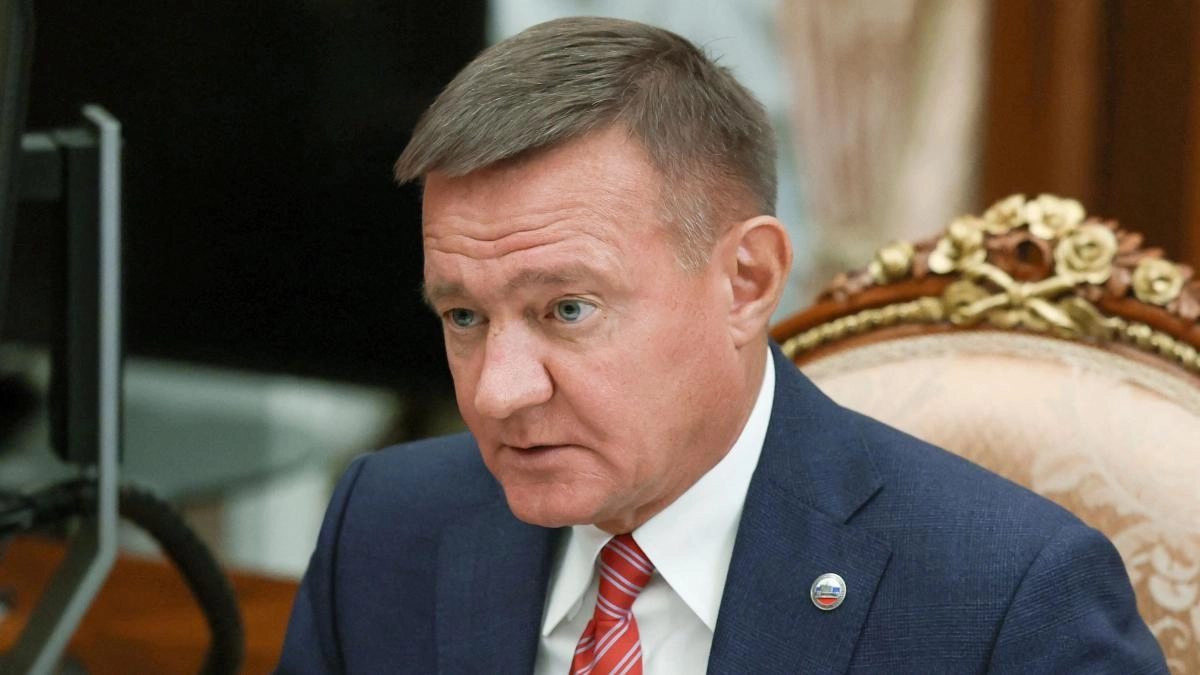

On Monday morning, President Vladimir Putin dismissed his transport minister, Roman Starovoit.
By the afternoon, Starovoit was dead; his body was discovered in a park outside Moscow with a gunshot wound to the head. A pistol was allegedly found next to the body.
Investigators said they presumed the former minister had taken his own life.
A sense of shock was pervasive in the Moskovsky Komsomolets tabloid on Tuesday morning.
“The suicide of Roman Starovoit just hours after the order to remove the president is an almost unique event in Russian history,” the paper said.
That’s because you have to go back more than 30 years, to before the fall of the Soviet Union, to find an example of a government minister taking his own life.
In August 1991, after the failed coup by hardline communists, one of the coup leaders, Soviet Interior Minister Boris Pugo, shot himself.
The Kremlin has said little about Starovoit’s death.
“What "How shocked were you that a federal minister was found dead just hours after being fired by the president?" I asked Vladimir Putin's spokesman, Dmitry Peskov, on a Kremlin conference call. "Ordinary people can't help but be shocked by this," Peskov replied. "Of course, it shocked us too." "It's up to the investigation to provide answers to all the questions. While it's ongoing, one can only speculate. But that's more for the media and political analysts. Not for us." The Russian press, in fact, has been full of speculation. Speculation in the Press On Tuesday, several Russian newspapers linked what happened to Roman Starovoit to the events in the Kursk region, which borders Ukraine. Prior to his appointment as Transport Minister in May 2024, Starovoit served as the Kursk Regional Governor for over five years.
With large sums of state money, Governor Starovoit began the construction of defensive fortifications along the border. These were not strong enough to prevent Ukrainian troops from storming into the Kursk region last year and seizing part of its territory.
Starovoit’s successor as governor, Alexei Smirnov, and his former deputy minister, Alexei Dedov, have since been arrested and charged with large-scale fraud in connection with the construction of the fortifications.
“Mr. Starovoit may well have become one of the main defendants in this case,” suggested an article in the business daily “Kommersant.”
Russian authorities have not confirmed that.
But if it was fear of persecution that drove a former minister to take his own life, what does that tell us about Russia today?
“The most dramatic part of this, with all the re-Stalinization that’s been going on in Russia in recent years, is that a high-level government official [takes off his life] because he has no other way out of the system,” says Nina Khrushcheva, a professor of international affairs at The New School in New York.
“He must have feared that he would receive dozens of years in prison if he were to be investigated, and that his family would suffer enormously. So there is no way out. I immediately thought of Sergo Ordzhonikidze, one of Stalin’s ministers, who [took his own life] in 1937 because he felt there was no way out. When you start comparing 1937 in today’s environment, it gives you a lot to think about.”
Roman Starovoit’s death may have made headlines here. But this “almost unique event in Russian history” has received minimal coverage on state television.
Perhaps that’s because the Kremlin recognizes the power of television to shape public opinion. In Russia, television is more influential than newspapers. Therefore, when it comes to television, authorities tend to be more careful and cautious with their messaging.
The main Monday evening news bulletin on Russia-1 included a four-minute report on Putin's appointment of a new acting transport minister, Andrei Nikitin.
There was no mention at all that the previous transport minister had been dismissed. Or that he had been found dead.
Only 40 minutes later, towards the end of the news bulletin, did the anchor briefly mention the death of Roman Starovoit.
Few Seconds on TV
The news anchor devoted a total of 18 seconds to it, which means that most Russians probably won't see Monday's dramatic events as significant.
For the political elite, it's a different story. For Russian ministers, governors, and other officials who have sought to be part of the political system, what happened to Starovoit will serve as a warning.
“Unlike before, when you could get these jobs, get rich, rise from the regional to the federal level, today, that is clearly not a career path if you want to stay alive,” says Nina Khrushcheva.
“Not only is there no upward mobility to begin with, but even downward mobility ends with death,” she adds.
It is a reminder of the dangers that emanate from falling out of favor with the Russian system.