

the United States government which also takes political power in the South American nation and control of its vast natur
It is clear that the US is betting on regaining absolute control of the Western Hemisphere through the “Trump Corollary”
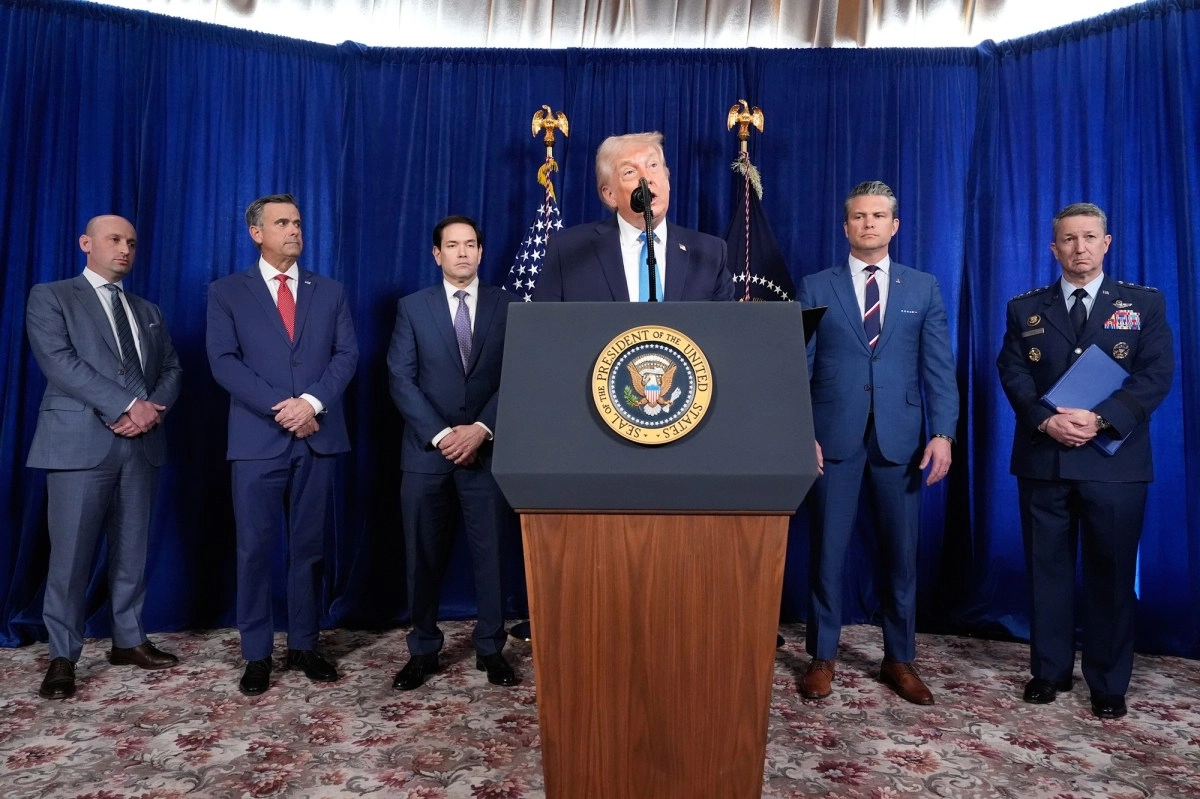

Beyond the enormous implications for Venezuela (in all areas) of the capture of Nicolas Maduro by the United States government—which also takes political power in the South American nation and control of its vast natural resources (mainly oil)—it is important to discuss the possible political and geopolitical effects of this action and what is anticipated in this same direction. Over the past two days, most of the global commentary establishment has been discussing this event and speculating about the future of the Venezuelan government, its future political leadership, and its strategic resources. It is difficult, at this point, to know the outcome of the carefully crafted military strategy that was executed with apparent (and immediate) success on January 3rd of this year. It has generated much discussion, as it certainly reflects a new hemispheric order, at least. It appears that the current US administration has opted for an illiberal and belligerent path to defend what it considers—by decree and without consensus—its national interest. Much can be said about what has happened in the last couple of days (in addition to the attack in recent months against a once sovereign Latin American nation), but what seems most interesting perhaps has to do with the electoral process that will take place this year in the United States, which could define the future of the Trump project, the role of that North American nation in a new multipolar world order, an even more aggressive redirection of migration flows, and, ultimately, the “end of the liberal order” in America and other parts of the world. It is clear that Trump is betting on regaining absolute control of the Western Hemisphere by enforcing what they call the “Monroe Doctrine” through its corollary (the “Trump Corollary”), with which he attempts to reaffirm the sole leadership of the United States in the region, removing China from the equation. Since Trump assumed the presidency of the United States, he has been very clear and "has not beaten around the bush"; the objective is America and to recover the lost influence "by all means necessary" and using all means necessary (BAMN).Trump wants to subjugate all of the Americas and control the continent's strategic resources—and “seems to have permission to do so” domestically. With what has just happened in Venezuela, the US president, along with his “brand-new” cabinet, is attempting to faithfully follow his new national security plan, which would subject the entire American continent—including Canada—to the geopolitical agendas of the United States. Many more spectacular coups are expected before the midterm elections on November 3, and Trump will surely want to project that, under his leadership, the United States is on a direct path to becoming great again (Make America Great Again). He may succeed, but he may also fail. The road is arduous and will take time. Perhaps the aim is simply to generate "spectacle" and give the appearance that the empire that seemed to be in decline can now have its way in America, get rid of other foreign imperialist influences (like China), violate the sovereignty of nations with strategic resources, depose rebellious political leaders, and subjugate peoples who are not aligned with it or who represent an obstacle to its interests. This is what the United States has always done since it became a superpower (and to become one), but at times it has maintained appearances. Now Trump is once again imposing his agendas with the iron fist of warmongering, in search of fentanyl, which he now calls a "weapon of mass destruction," and through a supposed war against what he also calls, by decree, narco-terrorism. Trump is once again using drug policy, but now more brazenly, to achieve his geopolitical and geostrategic objectives. Those are their aspirations, but this time, it might not be so easy for the United States to achieve its far-reaching objectives and consolidate its regional hegemony once again; we don't know yet. It's easy to outwit Cuban intelligence and subdue the Venezuelan military because of the inherent asymmetries that place the world's most militarily powerful nation above any other nation on the continent. However, the national security agenda is quite ambitious, and the limitations this nation faces are significant due to its deep internal divisions, conflicts of interest, structural inequalities, and the concentration of power in a kind of "king" and a tiny, almost all-powerful business class. Perhaps Trumpism and the elites that support it will achieve their objectives through extreme militarism and the principles of the "Dark Enlightenment," which would manage the nation like a business and concentrate power in the executive branch—who would rule like a monarch, primarily for those who control technology and most of the capital. It will be difficult with a divided population, severely deteriorated infrastructure, and major social problems.But it's not impossible. We're talking about the world's largest military power. It could be that what just happened in Venezuela, and what's to come, will consolidate the power of Trumpism in the November elections and the United States will "be great again." It's also possible that the project will fail and the empire will continue its decline. The outcome is still unclear; we'll see…
The texts published in this section are the sole responsibility of the authors, therefore La Opinion assumes no responsibility for them.