

Washington accuses China of carrying out nuclear tests and threatens to conduct tests
US says China detonated an underground nuclear device on June 22, 2020, near the historic Lop Nur test site in Xinjiang
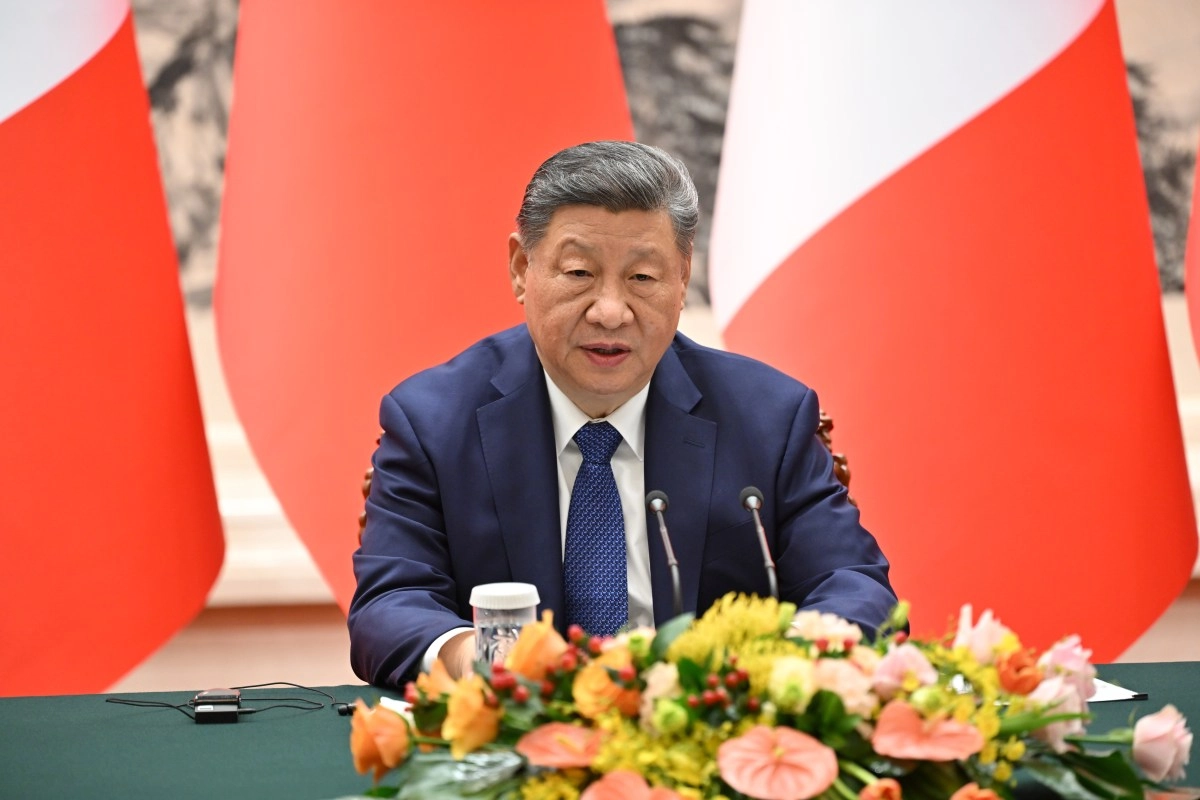

The United States formally accused China of conducting a covert nuclear test in June 2020, escalating tensions as major arms control treaties expire and fueling fears of a new arms race.
The U.S. Under Secretary of State for Arms Control and Nonproliferation Christopher Yeaw stated Tuesday during an event in Washington that China detonated an underground nuclear device on June 22, 2020, near the historic Lop Nur test site in Xinjiang, to avoid detection by international monitoring systems. Yeaw asserted that the United States used seismic data from a station in Kazakhstan to identify a 2.76 magnitude explosion, inconsistent with an earthquake or mining activity, and claimed that Beijing used “decoupling” techniques to conceal it. External Doubts and International Rejection: The Comprehensive Nuclear-Test-Ban Treaty Organization (CTBTO), which operates a global network of seismic sensors, said it recorded two very small seismic events separated by seconds that day, but that they were too weak to confirm their origin.
Independent seismology experts have indicated that, with publicly available data, it is not possible to determine with certainty whether the event was a nuclear explosion or a natural phenomenon, which complicates verifying the accusation without access to classified information.
For its part, China has categorically rejected the accusations, calling them “completely unfounded” and warning that the United States is politicizing the nuclear issue to justify its own strategic aims.
Furthermore, Russia, a traditional ally of Beijing on international security matters, stated that neither its country nor China has conducted recent nuclear tests, and supported China's position in the face of Washington's accusations.
United States could resume nuclear tests
The US official stressed that the Donald Trump administration could consider resuming its own nuclear tests, suspended since 1992, to avoid being at an “intolerable disadvantage” vis-a-vis China and Russia in terms of strategic deterrence.
The last nuclear explosion tested by the United States was more than three decades ago, while China acknowledges having conducted its last underground test in 1996, although the alleged events of 2020 have not been officially confirmed by Beijing or international organizations.
End of agreements and new uncertainties
This confrontation comes just after the New START treaty, the main bilateral agreement limiting the nuclear arsenals of the United States and Russia, expired in February 2026, leaving the world's largest nuclear powers without a strong legal framework.
Trump and other officials have pointed to the need for a new arms control treaty that includes China, but Beijing has refused to join negotiations, arguing that its arsenal is much smaller than that of Washington or Moscow and that the principle of verifiable reductions should nevertheless be respected. The US accusation and the lack of international consensus on the verification of nuclear tests have reignited the debate about the future of nuclear disarmament and global strategic stability. The lack of effective treaties and the possibility that major powers will resume nuclear testing raise concerns about a potential escalation of the arms race, with effects on global security and on the military policies of countries with Hispanic communities in the United States that closely follow these geopolitical developments.But Beijing has refused to join negotiations, arguing that its arsenal is much smaller than that of Washington or Moscow and that the principle of verifiable reductions should nevertheless be respected. The US accusation and the lack of international consensus on the verification of nuclear tests have reignited the debate about the future of nuclear disarmament and global strategic stability. The lack of effective treaties and the possibility that major powers will resume nuclear testing raise concerns about a potential escalation of the arms race, with effects on global security and on the military policies of countries with Hispanic communities in the United States that closely follow these geopolitical developments.But Beijing has refused to join negotiations, arguing that its arsenal is much smaller than that of Washington or Moscow and that the principle of verifiable reductions should nevertheless be respected. The US accusation and the lack of international consensus on the verification of nuclear tests have reignited the debate about the future of nuclear disarmament and global strategic stability. The lack of effective treaties and the possibility that major powers will resume nuclear testing raise concerns about a potential escalation of the arms race, with effects on global security and on the military policies of countries with Hispanic communities in the United States that closely follow these geopolitical developments.