

Air India accident: Boeing 787 Dreamliner was considered the safest plane, but people inside the company had serious dou
The aircraft has carried nearly one billion passengers in nearly 15 years of operation, but doubts have been raised about its manufacture
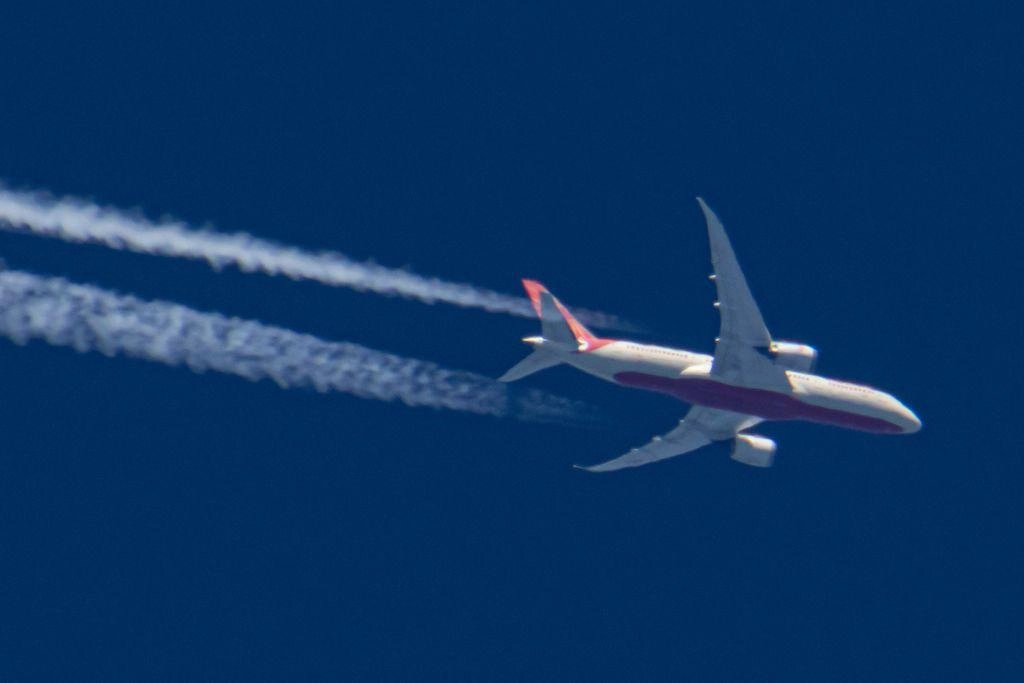

The Air India tragedy, in which at least 270 people died, involved one of Boeing's most innovative and popular planes.
We still don't know why Air India Flight 171 crashed 30 seconds after takeoff.
Investigators have already located the black box and are working hard to answer that question. But this incident has drawn new attention to the aircraft involved: the 787 Dreamliner, the first of a modern generation of radically new, fuel-efficient airliners.
Before the crash, the 787 had operated for nearly 15 years without any major accidents or deaths. According to Boeing, during that time it has carried nearly 1 billion passengers.
There are currently 1,100 787 aircraft in operation.
However, it has suffered from a number of quality control problems.
People who have worked on the aircraft have raised numerous concerns about production standards. Some have alleged that planes with dangerous defects have been allowed into service.
These accusations have been consistently denied by the company.
The Sonic Cruiser and the 9/11 Effect
It was a cold December morning in 2009 and a brand new aircraft emerged from the runway at Paine Field Airport near Seattle, USA and, supported by a cheering crowd, took flight into a cloud-filled sky.
That flight was the culmination of years of development and billions of dollars of investment.
The 787 was conceived in the early 2000s, when gasoline prices were skyrocketing and those costs were a big concern for airlines.
So what Boeing did was design a long-haul aircraft that would set new standards for efficiency.
“In the late 1990s, Boeing was working on a project called the Sonic Cruiser,”
The original idea was to use the latest technology available to create a 250-passenger aircraft that would travel close to the speed of sound.
The main idea was to reduce speed and flight times rather than save fuel.
“But the effects of September 11, 2001, were particularly hard on the airline industry,” explains Oakley.
“Airlines started telling Boeing they needed intercontinental jets that were as economical and fuel-efficient as possible. They wanted an aircraft with the capability of the Sonic Cruiser, but without the speed,” he adds.
Boeing then abandoned its initial concept and began work on what became the 787.
At In doing so, it helped create a new business model for airlines.
Instead of using giant jetliners to transport lots of people between large airports before putting passengers on connecting flights to other countries, these companies could now fly smaller or fewer-occupied aircraft on direct routes to medium-sized cities, which would not have been possible previously.
Airbus Super Jumbo vs. Boeing's Fuel-Efficient
At the same time, Boeing's main rival, the European giant Airbus, was going in a different direction: it was developing the enormous A380, a superjumbo whose main job was to get as many passengers as possible on the busiest routes and to the busiest airports.
In some ways, Boeing's idea turned out to be smarter. The giant, gas-hungry A380 was discontinued in 2021 after just 251 aircraft were built.
“Airbus thought the future was big airports where people always want to change planes, like London, Frankfurt, or Tokyo,” aviation analyst Richard Aboulafia, director of AeroDynamic Advisory, tells the BBC.
“Boeing said no. People want to travel point-to-point. And they were right,” he adds.
The 787 was a radical aircraft. It was the first commercial airliner to be built with materials like carbon fiber, not aluminum, to keep its weight down. They also improved its aerodynamics to reduce air resistance.
Modern, efficient engines built by General Electric and Rolls-Royce were also used, and mechanical parts and pneumatic systems were replaced with much lighter electric ones.
With all this, Boeing stated,which would make their 787 20% more fuel-efficient than its predecessor, the 767. It was also significantly quieter, with a noise footprint (the area on the ground affected by significant noise from the plane) that the manufacturer claimed was up to 60% lower.
Emergency landings and fires on board
Serious problems began to appear soon after the aircraft entered service.
In January 2013, lithium-ion batteries carried by a 787 caught fire while it was waiting at a gate at Boston Airport.
A week later, overcharged batteries on a 787 forced an emergency landing on a domestic flight in Japan.
Airplanes of this model around the world had to be grounded for several months while a solution was found.
Since then, day-to-day operations have been easier, but production has been problematic. Analysts say this may be partly due to the decision to build a 787 assembly line in South Carolina, more than 3,000 miles from Boeing’s Seattle headquarters. This was done to take advantage of low union membership rates and generous support from the state of South Carolina. “There were significant development issues there. Significant production glitches, especially related to the decision to build the first production line outside of the Puget Sound area,” Aboulafia says. Damaging Allegations In 2019, Boeing discovered the first in a series of manufacturing defects affecting how different parts of the aircraft fit together. And as problems grew, the company expanded its investigation—and the findings grew. Deliveries of the planes were impacted, and was halted between May 2021 and July 2022, only to be halted again the following year.
However, the potentially most damaging allegations about the 787 program came from current and former employees of the company.
Among the most prominent of these was that of John Barnett, a quality control manager on the 787 production line in South Carolina.
He alleged that the pressure to produce planes as quickly as possible had seriously affected the aircraft's safety.
In 2019, he told the BBC that workers had not followed the factory's strict procedures for tracing components, leading to faulty parts going undetected.
In some cases, he said,Workers had even deliberately fitted substandard parts from scrap bins to the planes to avoid production line delays.
He also claimed that faulty components were used to secure the aircraft cockpits.
He also claimed that faulty fasteners were used to secure the aircraft canopies.
When they were screwed on, they produced extremely sharp metal shards, which in some cases accumulated under the canopy in areas with a large amount of aircraft wiring.
His complaints had been heard by the US aviation regulator, the Federal Aviation Administration (FAA), which partially supported them. After investigating them, it concluded that at least 53 “non-conforming” parts had gone missing from the factory.
An FAA audit also confirmed that metal shavings had been found on several aircraft.
Boeing said its experts analyzed the problem and decided not to “issue a safety alert,” even though the fasteners had been redesigned.
The company later said that it has “resolved the FAA’s findings on the tracking of the parts and has implemented corrective actions to prevent it from happening again.”
A matter of time before something serious happens
Barnett was deeply concerned about the aircraft remaining in service carrying defective parts that could cause a serious accident.
“I think it’s a matter of time before something very big happens with a 787. I pray I’m wrong,” he told the BBC in 2019.
A In early 2024, Barnett committed suicide. At the time, he was in the midst of a legal battle against the company that he claimed had victimized him as a result of his allegations. Boeing denied this.
Much of what he said echoed another allegation made by another quality-control manager at the plant, Cynthia Kitchens.
In 2011, she had complained to aviation regulators about substandard parts that had been deliberately removed from quarantined containers and assembled into aircraft in an attempt to keep the production line moving.
Kitchens, who left Boeing in 2016, also said that employees had been told to ignore substandard work, and that faulty wiring blocks containing metal shavings, posing a risk of short circuits, had been deliberately installed.
Boeing has not responded to those specific allegations, but has noted that Kitchens resigned in 2016 “after being informed that she had been placed on a performance improvement plan.”
And they explained that she had sued Boeing for “discrimination and retaliation that were unrelated to the quality issue.” The lawsuit was rejected.
More recently, a third whistleblower made headlines when he testified before a U.S. Senate committee.
Sam Salehpour, a current Boeing employee, told lawmakers he decided to speak out because “if the safety issues at Boeing are not addressed, they could result in a commercial airplane catastrophe that could lead to the loss of dozens of lives.”
The quality assurance engineer said that while he worked on the 787 in late 2020, he had seen the company cut corners in the assembly process to speed up production and delivery of airplanes.
Salehpour said this “allowed potentially defective parts to be installed in the 787.”
He also noted that on most of the aircraft he examined, small gaps in the joints between sections of the fuselage.
This, he explained, meant that such joints would be prone to “premature fatigue failure over time and create extremely unsafe conditions for the aircraft, with potentially catastrophic consequences.”
He suggested that more than 1,000 aircraft, the majority of the 787 fleet, could be affected.
Boeing insists that “claims about the structural integrity of the 787 are inaccurate.”
“The issues raised have undergone rigorous examination under FAA oversight. This analysis has validated that the aircraft will maintain its durability and service life for several decades, and these issues do not pose any safety risks,” he said.
“Serious problems would have been identified.”
There is no doubt that Boeing has been under enormous pressure in recent years due to its corporate culture and production standards.
Following two crashes fatalities involving its successful 737 Max jetliner, and another serious incident last year, it has been repeatedly accused of prioritizing profit over passenger safety. It’s a perception that Chief Executive Kelly Ortberg, who joined the company last year, has been working hard to reverse, reviewing its internal processes and working with regulators on a comprehensive safety and quality control plan. But has the 787 been compromised by past failures that could have created ongoing safety risks? Richard Aboulafia thinks not. “You know. It’s been 16 years of operations, 1,200 airplanes, and over a billion passengers carried,but no accidents so far,” he says.
“It’s a stellar safety record.”
He believes any major problems would have become apparent by now.
“I really think production issues are more of a short-term concern,” he concludes.
For the past few years, 787 production has been under much greater oversight.
“For older planes, I think any serious problems would have been caught by now.”
The Air India plane that crashed in Ahmedabad was more than 11 years old, having first flown in 2013.
But the Air Safety Foundation, a US organization founded by former Boeing employee Ed Pierson, who has previously been highly critical of the company, says it had concerns about 787s before the recent crash.
“Yes, it was a potential safety risk,” Pierson says.
“We monitor the incident reports, regulatory documents. Airworthiness directives are issued that describe various problems, and that does give you pause.”
One of these problems, he argues, is the potential for water to leak from bathroom faucets into electrical equipment compartments. Last year, the FAA ordered airlines to conduct regular inspections following reports that leaks on certain 787 models were being overlooked.
However, he emphasizes that the cause of the recent tragedy is still unknown and that it is vital that the investigation move quickly so that any problems—with the plane, the airline, or otherwise—can be resolved.
For the time being, however, the 787’s safety record remains strong.
“We don’t know at this point the cause of the Air India crash,” says Scott Hamilton, managing director of aviation consultancy Leeham Company.
“But based on what we know about the airplane, I wouldn’t hesitate to address a 787”.
Click here to read more stories from BBC News Mundo.
Subscribe here to our new newsletter to receive a selection of our best content of the week every Friday.
You can also follow us on YouTube, Instagram, TikTok, X, Facebook and our new WhatsApp channel.
And remember that you can receive notifications in our app. Download the latest version and activate them.