

Column: Los Angeles is sad After many weeks, I take the Volvo to the Carwash on Sepulveda Avenue
We live in an ellipsis that says almost everything. Except how we’re going to get out of this destruction of Latino Los Angeles.
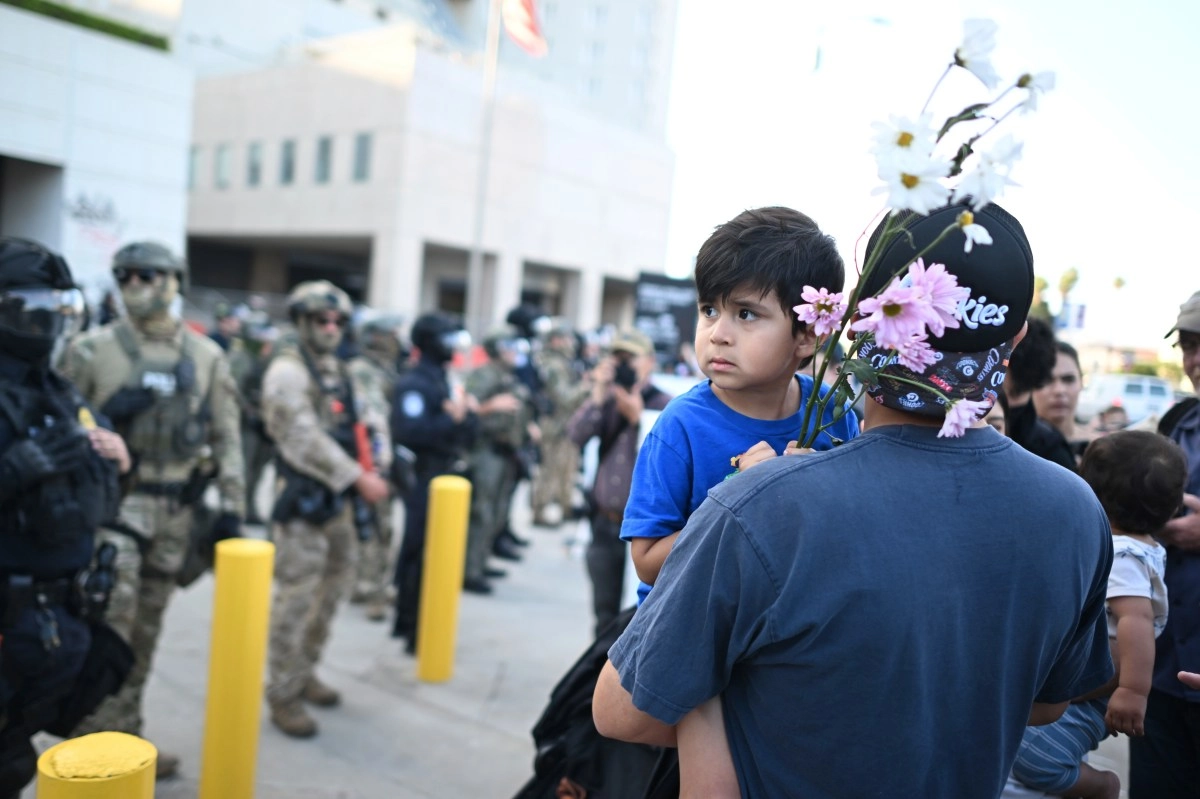

After many weeks, I take the Volvo to the Carwash on Sepulveda Avenue. It's Friday, and at this time of day, it's always full. Dozens because there are dozens of carwashers almost all Latino, clean the already clean cars with overwhelming energy, with a purpose impossible to replicate. And dozens of drivers look at them, already anxious.
And you know, when the cleaning is over, the cleaner picks up one of the rags, waves it, and yells "Ready!"
But not today. Today the place is almost deserted. No employees or customers.
The carwash cashier is probably the owner. I ask her why it's quiet, or calm, or empty.
"It's because of the situation," she tells me. Because of the situation, she looks me in the eyes, and we both know what situation she's referring to.
It's because the workers haven't come for fear of falling into an immigration raid, being arrested, imprisoned, and ultimately deported to their country of origin, where they have nothing.
Nor is there anything here either.
The Carwash cashier says things are sad, and that business is going through a rough patch, but she's also trying to figure out whose side I'm on. Her conversation is revolving, complicated, yes, she says, but the immigrants had to know.
She's an immigrant from some Eastern European country. Her white skin protects her. Like it does me.
The new reality of Los Angeles can't be touched. Because it's not there. It's the thousands and thousands and thousands to use Trump's flowery vocabulary and thousands and thousands of undocumented immigrants who are missing, who left, who are hiding. Who disappeared. Who aren't here.
Two blocks from my house, on a busy corner, there's a Guatemalan restaurant. Popular, simple. The walls are painted with scenes of the delicacies it offers. It's changed its name three times in the last few years. The current owners are trying very hard. During COVID, they set up stools and tables outside on the sidewalks and were able to continue doing so. They marked out their property with flowers. A couple of times a week there's live music, and the rest of the time, there's CDs with house music. It's very loud, though.
It strikes me that at six in the evening it's dark inside. The door opens and a couple comes out, looking at me, uneasy, and I say, "No, sorry, I just want to read the sign you put on the door because it's blocking my view." Relieved, they move away.
The sign apologizes and asks for understanding, because due to the situation, they have to close at five. They don't have anyone working in the kitchen, or serving, or cleaning.
And the little card ends with an ellipsis.
It's the most explicit part of the message. Those three little dots. They mean a lot, they mean, you understand, it's because of the raids, the attacks, the misfortune.
The message is that the cooks haven't come for fear of being disappeared by the heavily armed, masked men in civilian clothes who are wandering around. Now they close at five, but if the immigration raids continue like this, they might have to close completely.
Los Angeles is sad. We live in those little ellipses that say almost everything. But they don't tell us how we're going to get out of this destruction of Latin American Los Angeles.
A woman requested asylum as a victim of violence in El Salvador. They gave her a temporary permit. She has five children: 15, 11, 9, 8, and 6. In "the country," the oldest was kidnapped and held for almost nine months. They paid what they could, and miraculously, the girl returned. That week, they fled to the United States.
Their children's parents, who live with their respective families, stayed there.
They have nothing here, just their lives. The girl practically doesn't speak because of the terror she suffered. So she wouldn't have to tell stories.
The girl regains her humanity at school. A classmate who went through something similar is her best friend.
Filled with terror by the immigration agents' raids, the mother decides the children won't go to school anymore. They should stay home.
The problem is that there isn't a home. They live in a shelter. And they spend the entire day, all crammed together, in one room.
Except for the girl, the oldest, the victim, who continues going to school. No matter what happens. It's her future, says the mother.