

Can alternative routes to the Strait of Hormuz keep Gulf oil and gas flowing?
Although there are alternatives, experts say that none can replace this strategic route, where a quarter of the world's oil trade transits.
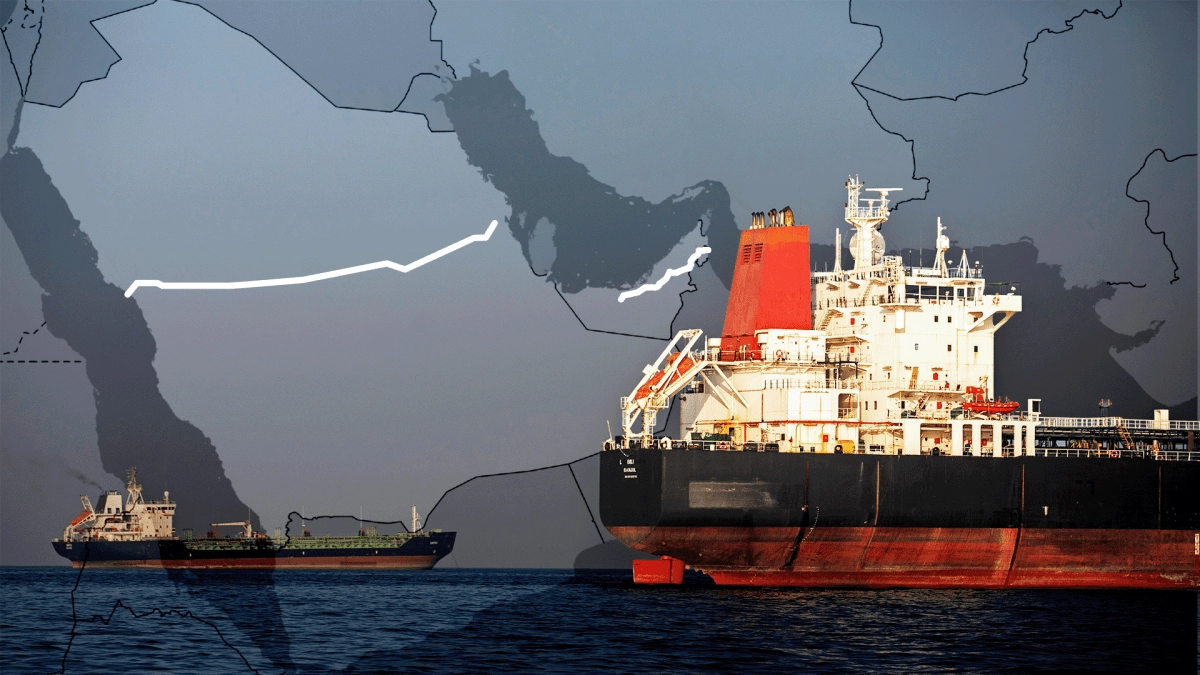

The Strait of Hormuz, one of the most important strategic navigation points in the world, is once again in the international spotlight after a new escalation of tensions between Iran and the United States.
The two countries have resumed exchanging attacks just a month after signing a provisional agreement aimed at paving the way towards a definitive end to the conflict.
And renewed tensions have caused oil prices to rise.
If shipping through the Strait of Hormuz becomes too dangerous, are there alternative routes that Gulf exporters can use to get their oil and gas to market?
Experts say that there are alternatives, but none can completely replace this vital watercourse today.
Why Hormuz is important
The Strait of Hormuz, between Iran and Oman, remains the main export route for much of the Gulf's oil and gas production due to its size, flexibility and profitability.
Tankers can transport larger volumes at a lower cost than pipeline networks, which require significant investment in infrastructure and maintenance.
According to the International Energy Agency (IEA), around 20 million barrels of oil and petroleum products transit the strait daily, representing approximately a quarter of global seaborne oil trade.
About 80% of these shipments are destined for Asia.
This sea route also transports almost a fifth of global liquefied natural gas (LNG) exports.
Strait dependence is even greater for LNG.
Qatar, one of the largest LNG exporters in the world, depends on this route to reach international markets, and there is currently no large-scale alternative for its LNG exports.
Existing detours
Because the Strait of Hormuz gives Iran significant influence over global energy markets, Gulf producers have long invested in infrastructure designed to transport oil without relying on this sea lane.
The largest of these is Saudi Arabia's East-West pipeline, also known as Petroline, a 1,200-kilometer network that connects the kingdom's eastern oil fields to the Yanbu export terminal on the Red Sea.
It was built in the 1980s during the Iran-Iraq War, when both countries were attacking oil tankers and other merchant ships in the Gulf.
The pipeline's capacity was expanded to an emergency ceiling of 7 million barrels per day in 2019.
The UAE has developed its own alternative route via the 406-kilometre Abu Dhabi Crude Oil Pipeline (Adcop), which connects the Habshan oilfields in Abu Dhabi to the port of Fujairah on the Gulf of Oman, allowing exports to bypass the Strait of Hormuz entirely.
According to The Financial Times, citing sources familiar with the matter, DP World, the Dubai-based port operator, is in talks to develop a new multipurpose port in Fujairah, along with a new terminal at the current port.
The aim of these projects is to reduce dependence on Jebel Ali, Dubai's main logistics hub, and improve access to shipping routes outside the Strait of Hormuz.
The main limitation is the scale.
While alternatives exist, the IEA estimates they can only divert between 3.5 and 5.5 million barrels per day, far below the roughly 20 million barrels per day that normally pass through the strait.
“This is still far from enough,” wrote David B. Roberts, associate professor of International Security and Middle East Studies at King’s College London, in a recent article.
Even where bypass roads exist, practical limitations restrict their usefulness.
The Yanbu cargo terminals, for example, were never designed to handle “so much oil so fast,” Roberts argued.
Both routes have also been targeted.
In March, the United Arab Emirates accused Iran of attacking facilities in Fujairah, setting storage tanks on fire and forcing the suspension of cargo operations.
In April, similar attacks on a Petroline pumping station knocked out 700,000 barrels a day.
Saudi Aramco, the operator, restored service to full capacity in three days.
Iran has also built its own Strait of Hormuz bypass: a 1,000-kilometre pipeline running from Goreh at the edge of the Persian Gulf to the Jask export terminal in the Gulf of Oman.
Designed to transport up to one million barrels a day, it allows Iranian oil to reach international markets without having to pass through the strait.
In practice, however, sanctions and incomplete terminal infrastructure have kept transaction volumes well below their planned capacity.
Future export routes
New export routes are also being considered to reduce dependence on the Strait of Hormuz.
One option is the 970-kilometer Kirkuk-Ceyhan pipeline, which transports oil from the Kirkuk region of northern Iraq to the Turkish port of Ceyhan on the Mediterranean.
The pipeline reopened in September 2025 after being closed for two and a half years.
By March 2026, the flow had increased to about 250,000 barrels per day, providing Iraq with an alternative export route, although it remains small compared to the country's total exports.
Iraq exports about 3.4 million barrels of crude oil a day, and about 95% of those shipments leave through the southern port of Basra and pass through the Strait of Hormuz.
Another possibility is to reactivate the Kirkuk-Baniyas pipeline, which would allow Iraqi oil to reach Syria's Mediterranean coast without passing through the Persian Gulf.
The approximately 800-kilometer pipeline was completed in 1952, but was closed during the Iran-Iraq war.
Recent media reports suggest that Iraq, Syria and the US have discussed rebuilding them as part of a broader effort to diversify regional export routes.
One of the most ambitious proposals is the Four Seas Project, a transport and energy network that would connect the Mediterranean, the Black Sea, the Caspian Sea and the Persian Gulf through Syria and Turkey.
In April 2026, Turkish Energy Minister Alparslan Bayraktar raised the possibility of reviving a long-stalled 2009 proposal to build a gas pipeline linking Qatar and Turkey across the Arabian Peninsula, possibly as part of that broader initiative.
Calls have also been revived for the Basra-Aqaba pipeline, a project first proposed in 1983 that would transport Iraqi oil to the Jordanian Red Sea port of Aqaba.
However, political disputes and funding problems have repeatedly delayed its development.
Supporters of these initiatives argue that they would reduce exposure to vicissitudes in the Gulf and weaken Iran's influence over global energy flows.
But Huzeir Ezekiel Dzulhisham, a senior analyst at the S. Rajaratnam School of International Studies in Singapore, warned in a recent article that these projects could simply create new forms of dependency.
“These routes give greater control over energy trade to non-energy producing states and transit states,” he wrote.
As a result, countries like Türkiye could gain greater influence.
Security remains a major obstacle.
Any route through Iraq or Syria would still face risks from regional instability, militant groups and attacks on energy infrastructure, Dzulhisham said.
Beyond Hormuz
Even if Gulf exporters reduce their dependence on the Strait of Hormuz, it is unlikely that they will be able to escape the geopolitical risks associated with alternative routes for transporting energy through the region.
One example is Egypt's Sumed pipeline, which connects the Red Sea to the Mediterranean and provides a route to Europe that bypasses the Suez Canal.
That pipeline can transport between 2.5 and 2.8 million barrels a day.
However, recent attacks by Yemen's Houthis on merchant ships in the Red Sea and the Mandeb Strait highlighted the vulnerability of the Suez corridor in general.
Although the flow of oil through the Sumed pipeline has increased considerably since the conflict began, its relatively limited capacity remains “a major constraint on European supply,” Roberts noted.
On Wednesday, the Iranian Revolutionary Guard declared that the Strait of Hormuz will remain closed until the US ends its “acts of aggression.”
They also threatened to interrupt other oil and gas export routes in the region.
Less dependence on Hormuz?
HA Hellyer, a Middle East specialist at the British think tank Royal United Services Institute (RUSI), argues that Gulf states are increasingly determined to reduce their exposure to the Strait of Hormuz.
“The Arab states of the Gulf will try to offset, to the extent possible, any future exposure to the Strait of Hormuz,” he says.
Hellyer believes regional governments are likely to continue developing alternative export routes as they cannot rely on the Strait of Hormuz to the same extent as before.
In any case, he does not expect these alternatives to completely replace the Strait of Hormuz.
“It's not going to be a simple exchange of one route for another,” he says.
Still, Hellyer believes the strait will become “a lot less valuable, not more,” as countries seek alternative routes wherever possible to reduce dependence on any dominant regional power.
“The region does not want Israeli supremacy, but it is not interested in Iranian hegemony either.”
This article was originally written in English and we used an artificial intelligence tool to translate it. BBC journalists reviewed the text before publication. Learn more about how we use AI.