

Panama once again declares a state of emergency in its banana-growing region due to protests against pension reform
The Panamanian government declared a state of emergency in Bocas del Toro, due to looting of commercial establishments and acts of vandalism.
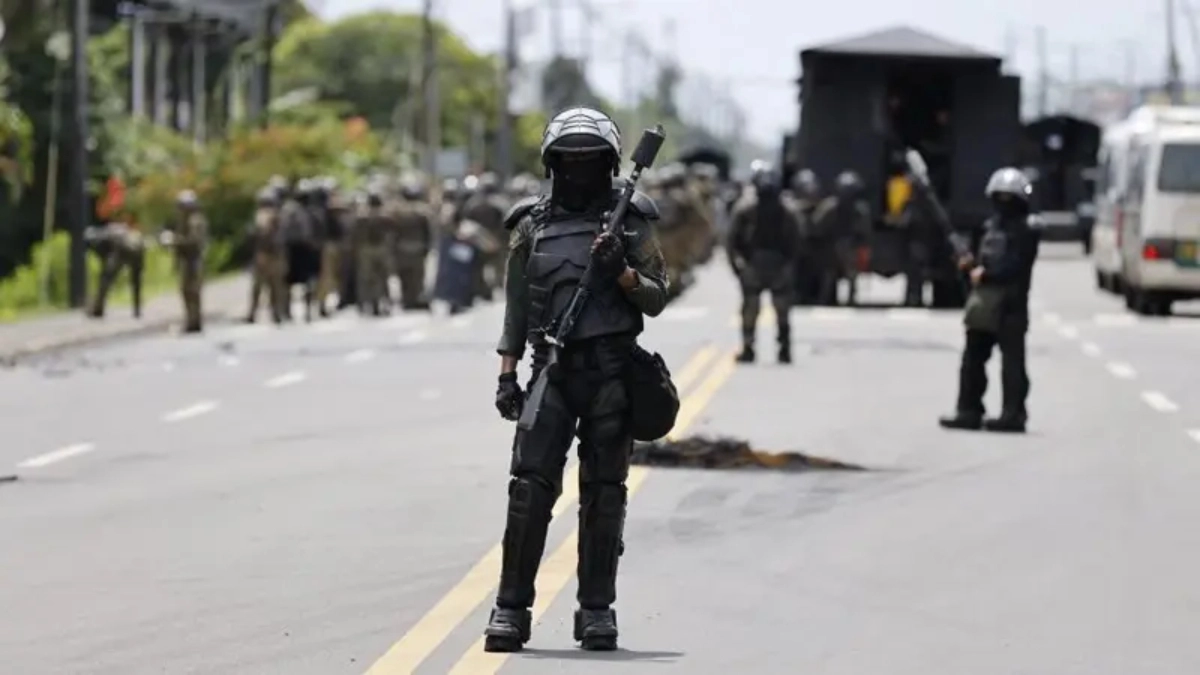

The Panamanian government declared a state of emergency in its main banana-growing region, after looting of commercial establishments and acts of vandalism against buildings and vehicles were reported.
The riots occurred in the province of Bocas del Toro, in the northwest of the country, where A series of protests have been taking place for weeks against a pension reform that was approved by Congress in March.
The government said that for the next five days, several constitutional guarantees will be suspended in this province bordering Costa Rica.
The measure restricts freedom of movement and allows police to make arrests without a warrant.
The unrest in the region began a month ago, when the local banana workers' union joined a national protest against proposed pension cuts and declared a strike.
"Faced with the breakdown of order and acts of systematic violence, the State will enforce its constitutional mandate to guarantee peace, order, and respect for the fundamental rights of the majority of Panamanians," said Minister of the Presidency Juan Carlos Orillac.
"We took this measure to prevent radical and criminal groups from gathering to organize acts of violence and vandalism."
Calls for a strike
The protests in the Central American country erupted in March when Congress approved a package of reforms pushed by the executive branch to change social security laws, including pension and retirement laws.
The Central American country has accumulated a deficit of more than $650 million in workers' pensions.
The changes generated a major parliamentary debate, protests from labor unions, and calls for an indefinite strike by the teachers' union.
Other sectors, such as construction, the largest in the country, joined the call.
In Bocas del Toro,Banana workers joined together to demonstrate against social security reforms.
The confrontation escalated last month after Chiquita Brands fired thousands of striking employees.
The company said that after 24 days of strikes, it suffered losses of US$75 million and that there was “irreversible damage to production.”
Protesters have been blocking roads in the province, often clashing with police.
The airport and a stadium
On May 27, the Panamanian government declared a state of emergency in the province.
At the time, Orillac said the state of emergency would allow the government to streamline bureaucratic processes to quickly address the economic crisis in the province, which is economically dependent on tourism and banana production.
He added that “the declaration of a state of emergency does not imply the suspension of fundamental guarantees or constitutional rights of any citizen.”
However, this Friday the government decided to declare a state of emergency again and, this time, suspend constitutional guarantees in that region.
On Friday, the Vice Minister of Public Security, Luis Felipe Icaza, indicated that Bocas del Toro “will be rescued from vandalism and crime.”
He indicated that “80 people linked to road closures and criminal acts” have been arrested.
According to the official, in the city of Changuinola, damage was reported to “a large amount of infrastructure, such as the Changuinola airport,” public and police offices, as well as local businesses, a gas station, and the facilities of the Chiquita Panama company.
“I don’t understand that anyone in their right mind would destroy their own team’s stadium, a modern, new stadium used for baseball, I don’t understand how they destroyed it.” the way they did it,” Icaza said, referring to the Calvin Byron stadium in that province.
Security Minister Frank Ábrego said that in the last few hours, some 12 police officers were injured in clashes with protesters, according to the Reuters news agency.
The newspaper La Estrella de Panamá reported that Chiquita cars were taken by hooded individuals.
According to the EFE news agency, “this week a new special law with greater labor benefits for banana workers came into effect,” following an agreement reached with union members in the sector to lift blockades on transportation routes.
But other sectors ignored the agreement.
*With information from Leonardo Rocha and Jaroslav Lukiv
Click here to read more stories from BBC News Mundo.
Subscribe here to our new newsletter to receive a selection of our best content of the week every Friday.
You can also follow us on YouTube, Instagram, TikTok, X, Facebook and on our WhatsApp channel.
And remember that you can receive notifications in our app. Download the latest version and activate them.