

A report reveals the brutal punishments of the Comando Vermelho to those who break their “rules”
From beatings and torture to summary executions, the Comando Vermelho decides the sanctions to be applied for alleged offenses or breaches of the rules
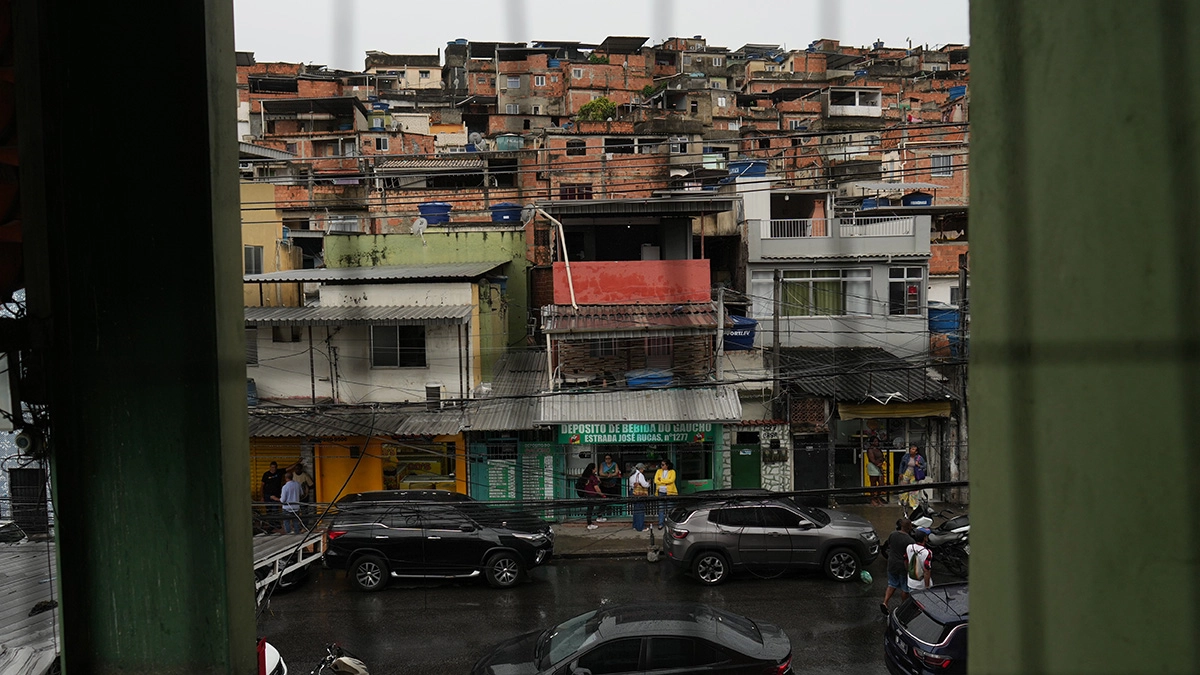

An investigation by the Public Prosecutor's Office of Rio de Janeiro revealed the methods of torture and punishment applied by the Comando Vermelho, one of the most powerful criminal organizations in Brazil, which maintains control of vast areas in the Rio de Janeiro favelas through fear and intimidation. Violence.
According to the report by the Special Action Group to Combat Organized Crime (Gaeco), the leaders of Comando Vermelho impose brutal punishments on both members of the faction and residents of the communities under their control. The punishments include women submerged in ice, men dragged through the streets, and victims beaten unconscious, sometimes while the aggressors record the events to instill terror in the population.
The document, disseminated by media outlets such as O Globo and the BBC, describes the existence of so-called “trafficking tribunals,” internal structures where the organization's leaders decide, without state intervention, the physical punishments or humiliations to be applied for alleged offenses, disputes, or breaches of the rules imposed by the gang. In these spaces, punishments range from beatings and torture to summary executions.
Among the documented episodes, one shows a woman submerged in a bathtub full of ice as punishment for being “troublesome at parties.” In the video, the aggressors claim they prefer this method because “they don't want to hit the neighbors.” Another recording shows a man, tied up and gagged, being dragged by a car until he loses consciousness while walking for his life. The Comando Vermelho's chain of command was reflected in the file. Edgar Alves Andrade, alias Doca—currently a fugitive—is listed as the top leader, while Juan Breno Malta Ramos Rodrigues, known as BMW, leads the Equipe Sombra, the group in charge of carrying out the punishments. In some cases, BMW participated via video call during the punishments, supervising the assaults in real time and ordering the victims to explain the reasons for their punishment to other leaders, such as Carlos Costa Neves.alias Gadernal.
The report also identifies Fagner Campos Marinho, alias Bafo, as one of the main perpetrators of the beatings. In a recording included in the complaint, he is seen hitting a bloodied victim while asking him: “Do you want to die?” Authorities indicate that these acts are part of a disciplinary system designed to reinforce the authority of the leaders and maintain order through terror.
The investigation details that violent practices continue to be a mechanism of social and territorial control in the Alemao and Penha complexes, historical strongholds of the Comando Vermelho in Rio de Janeiro. In addition to its power in drug trafficking, the organization imposes rules of coexistence, punishes transgressions, and restricts access for state authorities, thus consolidating a parallel justice system. The Public Prosecutor's Office emphasized that obtaining videos, testimonies, and records strengthens the investigations and will allow for the prosecution of both the perpetrators and the higher-ups. However, it acknowledged the difficulty of operating in the favelas, where the faction imposes its own law and limits police presence. The case also links BMW to the murder of three doctors at a kiosk in Barra da Tijuca, south of Rio, an attack motivated by mistaken identity: the victims were confused with members of a rival militia. According to the investigation, those responsible were executed by the faction itself after the mistake was discovered.
Authorities conclude that the regime of violent punishments remains one of the main tools of internal and external control for Comando Vermelho, an organization that combines drug trafficking, social coercion, and territorial power. For the Public Prosecutor's Office, exposing these practices is essential to advancing criminal proceedings against a criminal structure that perpetuates its dominance in the favelas of Rio de Janeiro through fear and impunity.