

An airline wants to send packages to the Moon in 2028: what objects on Earth should be preserved
Would you send something to the Moon? An airline plans to transport objects of humanity on a mission scheduled for 2028. What would you choose?
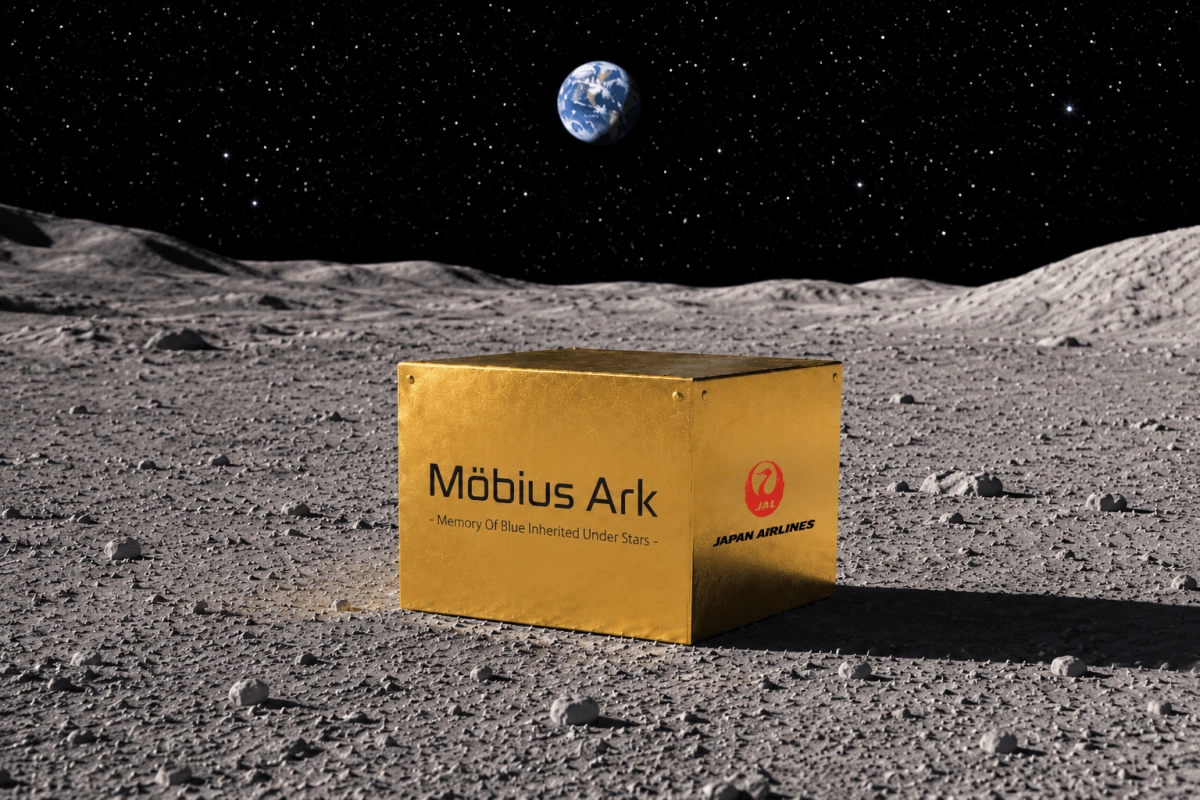

For decades, airlines competed to open new routes between continents. Now a Japanese company wants to go much further: to the Moon. Japan Airlines (JAL) announced a project that seems straight out of a science fiction movie and is already generating attention around the world. The company plans to start sending packages with cultural objects, souvenirs and symbolic pieces to the Earth's natural satellite starting in 2028.
The idea is not to transport tourists or build space hotels. The goal is to create a kind of lunar time capsule capable of preserving representative elements of human civilization for generations.
A safe of humanity… on the Moon
The project was named ARGO Trans-Lunar Heritage Project and seeks to preserve cultural objects outside of Earth. As explained by Japan Airlines, companies, institutions and even individuals will be able to send small objects in containers specially designed to withstand the harsh conditions of the lunar environment.
The proposal aims to preserve elements that represent culture, history and human identity so that they can be discovered in the future.
What types of objects could travel
The company has not yet published a definitive list of permitted items, but explained that the project is designed to transport:
The question that has already begun to circulate on social networks is inevitable: if you could send only one thing to represent humanity on the Moon, what would you choose?
What will the capsules be like?
The objects will travel inside small containers known as Möbius Ark, designed to resist radiation, extreme temperature changes and other conditions typical of the lunar surface.
The boxes will be approximately 20 centimeters long, 20 wide and 10 high. JAL began marketing these cargo spaces this week, although it has not yet revealed how much it will cost to send a package to the Moon.
The space company behind the project
Although Japan Airlines is promoting the initiative, the lunar trip will be carried out by the Japanese company ispace, one of the private companies that is most committed to the exploration of the satellite.
The mission is planned for 2028 using a new lander called Ultra. However, there is one important detail: ispace has not yet managed to successfully complete a moon landing.
The company lost a mission in 2023 and failed again in 2025 during a descent attempt with its Resilience module. Even so, he maintains his plans to return to the Moon in the coming years.
The Moon begins to become a new business
The most striking thing about the project is that it shows how the space race is changing.
For much of history, lunar missions were the preserve of governments and space agencies. Today, more and more private companies are appearing that seek to develop commercial services related to space.
The idea of transporting cultural objects may seem strange, but it is part of a broader trend: turning the Moon into a destination for scientific, technological, logistical and even commercial activities.
A question that is already generating debate
Beyond technology, the project opened a much more human discussion. If hundreds or thousands of years from now someone were to find one of those capsules on the lunar surface, what should they discover about us? Books? Music? Photographs? Works of art? Everyday objects?
Japan Airlines' initiative is based on precisely that question: what is worth preserving about a civilization that produces enormous amounts of information, but that also faces wars, climate crises and accelerated technological changes.
For now the project remains in the preparation phase. But, if everything goes as planned, in 2028 some of the first “packages” in lunar history could take off towards a destination that no airline had previously included on its route map.