

Countries in the UN warn of the need to "govern" AI or submit to it
Among the theses, it was proposed that technology could create
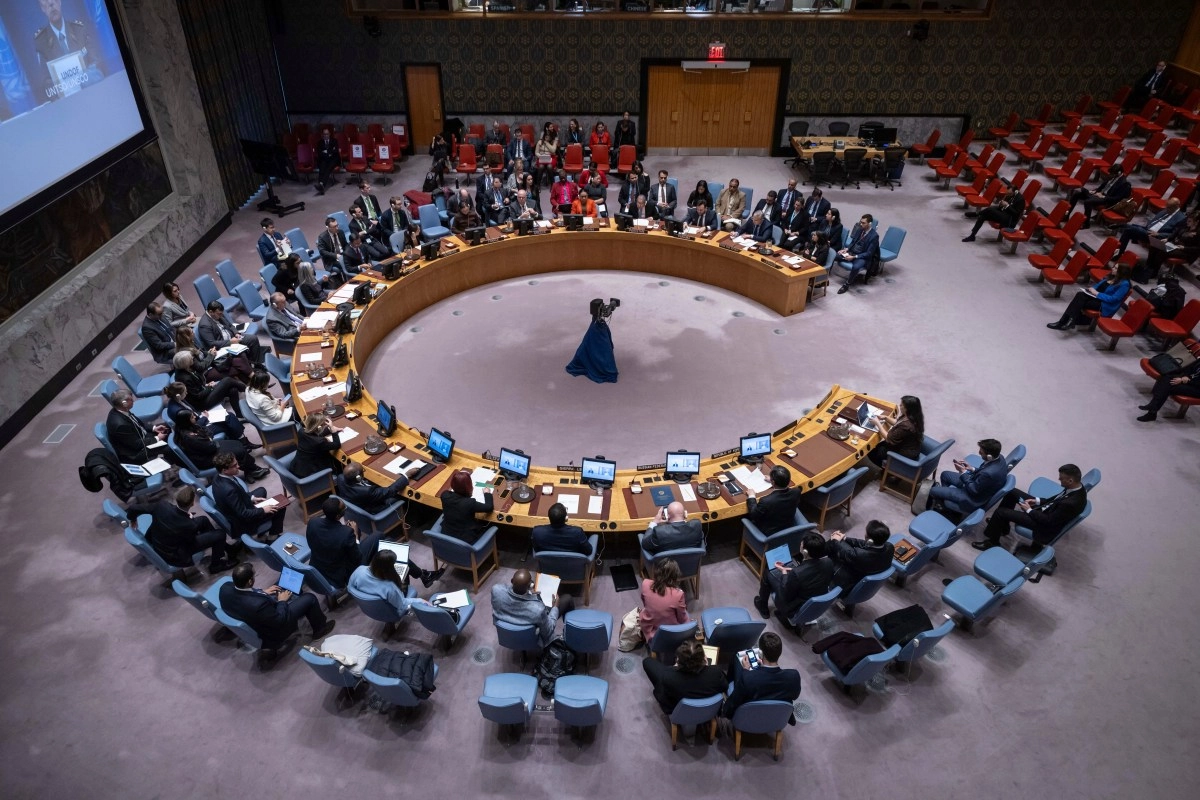

The 193 member states of the UN, plus technology companies, experts and members of civil society gathered in an unusual and multitudinous event at the UN to share their ideas on the governance of artificial intelligence (AI).
This was the first Dialogue global on AI governance, a forum facilitated by Spain and Costa Rica and approved by the General Assembly to allow as many stakeholders as possible to participate in the development and limits of AI, although the final format was a succession of speeches.
In this context, UN Secretary General Antonio Guterres issued a warning, “Either we govern artificial intelligence or it will govern us,” while Spain warned that this technology could create “a future of winners and losers” if global control mechanisms are not established.
Among the prominent speakers was Microsoft President Brad Smith, who noted that AI requires “foundations,” as it will not be available to a country unless it has “electricity, connectivity, and broad access to digital capabilities,” and some 3.9 billion people lack these conditions.
The global architecture presented by Guterres, he said, is articulated around three pillars: policy, science, and capacity. This structure directly responds to the three challenges identified by the President of the General Assembly, Annalena Baerbock: concentration of technological power, regulatory vacuum, and sustainability. Baerbock had warned at the inauguration that "99% of those targeted in deepfake pornography are women" and that AI "can turn hidden prejudices into a denied job." In response, Guterres insisted that these initiatives seek to "provide clarity, build trust, and reduce inequalities." For his part, the President of the Spanish Government, Pedro Sanchez, compared this regulatory effort to the creation of the International Atomic Energy Agency in 1957, highlighting that since then, "no country has used nuclear weapons against another."
The final message was forceful: “AI can be an engine for human development or a factor of greater inequality and risk. It can help us fulfill our dreams as humanity or make our worst nightmares come true.”