

Iran claims it attacked a US military base in response to Washington's new offensive in the south of the Islamic nation
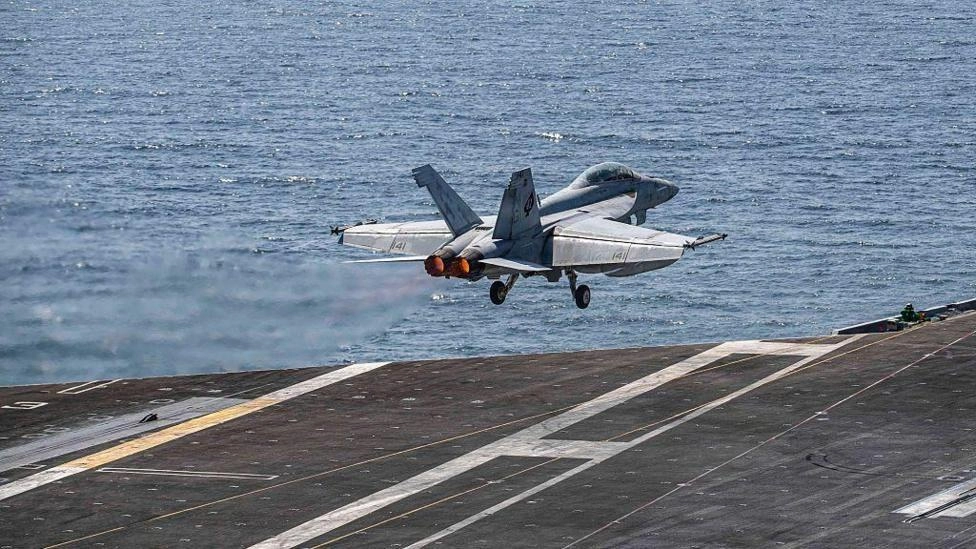
US forces reported that they attacked a military installation in the strategic port city of Bandar Abbas and shot down four drones

Iran's Islamic Revolutionary Guard Corps (IRGC) claimed to have attacked a US air base in the region, in response to recent US bombings in the south of the country.
The IRGC did not specify the location of the base. However, Kuwait — which hosts U.S. military installations — reported that it intercepted “hostile missile and drone threats,” without detailing their origin.
According to state broadcaster IRIB, the Revolutionary Guard claimed that the attacked base “served as the origin” of the bombing of Bandar Abbas, a strategic port city in southern Iran.
Previously, the US military claimed to have shot down Iranian drones over the Strait of Hormuz and attacked a military facility in Bandar Abbas.
The US Central Command (Centcom) indicated that the attack occurred when the base was preparing to launch a fifth drone. Iranian media reported explosions east of the city.
Centcom described its actions as “measured, purely defensive and intended to maintain the ceasefire,” and said its forces shot down four Iranian one-way attack drones that posed a threat around the Strait of Hormuz.
This is the second time in three days that the US attacks targets in Iran, actions that Washington justifies as acts of legitimate defense.
The resumption of hostilities puts the fragile ceasefire between both countries at risk.
For his part, Iranian Foreign Ministry spokesman Esmail Baqai condemned the US attacks and stated that they constitute a violation of the ceasefire.
In statements reported by IRIB, Baqai added that the Islamic republic “will take all necessary measures to defend its national sovereignty.”
“Legitimate defense”
Earlier this week, the US confirmed a previous round of “self-defense” strikes against southern Iran, carried out on Monday.
According to Washington, the operations targeted Iranian missile sites and vessels attempting to lay mines in the Strait of Hormuz, where thousands of commercial tankers have been stranded as a result of the conflict.
Centcom stated that these strikes were designed “to protect our troops from threats posed by Iranian forces.”
In parallel, the US imposed sanctions on the so-called “Persian Gulf Strait Authority”, the Iranian body in charge of collecting payments from ships that transit the Strait of Hormuz.
According to a statement from the Treasury Department, any vessel that makes payments to this entity could be “exposed to the risk of sanctions.”
About a fifth of the world's oil and liquefied natural gas regularly transits through the Strait of Hormuz, so its interruption has had a significant impact on global fuel trade.
For his part, Iranian Foreign Ministry spokesman Esmail Baqai stated on Monday that Tehran is charging fees for “navigation services” and will continue to manage traffic through this strategic route.
Waiting for an agreement
During a Cabinet meeting on Wednesday, US President Donald Trump said Iran is negotiating from a position of weakness, insisting that its war strategy will not be affected by November's US congressional elections.
“Maybe we have to go back and finish it, maybe not,” he said.
During that meeting, the president also urged Gulf nations to join the Abraham Accords to normalize relations with Israel.
Israel launched war against Iran alongside the United States on February 28 and is also embroiled in a conflict with Iran-backed Hezbollah in Lebanon.
President Trump has threatened to resume a large-scale bombing campaign if Iran does not agree to his conditions.
Although Trump struck an optimistic tone over the weekend, saying a peace deal with Iran had been “largely negotiated,” he said by Wednesday's Cabinet meeting that the United States is “not satisfied.”
He said Tehran was “very determined” to reach an agreement to end the conflict, but added that “so far they have not achieved it,” repeating Washington's willingness to resume attacks if a deal is not reached.
His remarks came after Iranian state television reported what it said were details of a draft agreement, which included the reopening of the Strait of Hormuz and the withdrawal of US forces from the region.
The White House called the text an “absolute lie.”
Both sides signaled late last week that progress had been made toward a deal, raising speculation that an announcement was near.
However, Tehran soon warned that a deal “is not imminent,” while Trump said he had instructed his negotiators “not to rush” into closing one.
Speaking to reporters at a cabinet meeting on Wednesday, the US president said: "They just want to make a deal; I don't think they have a choice."