

The Dongfeng-61 missile (DF-61): China equals the US and Russia in nuclear power
The Dongfeng-61 has a range that would allow it to reach any strategic point in the United States and much of Europe
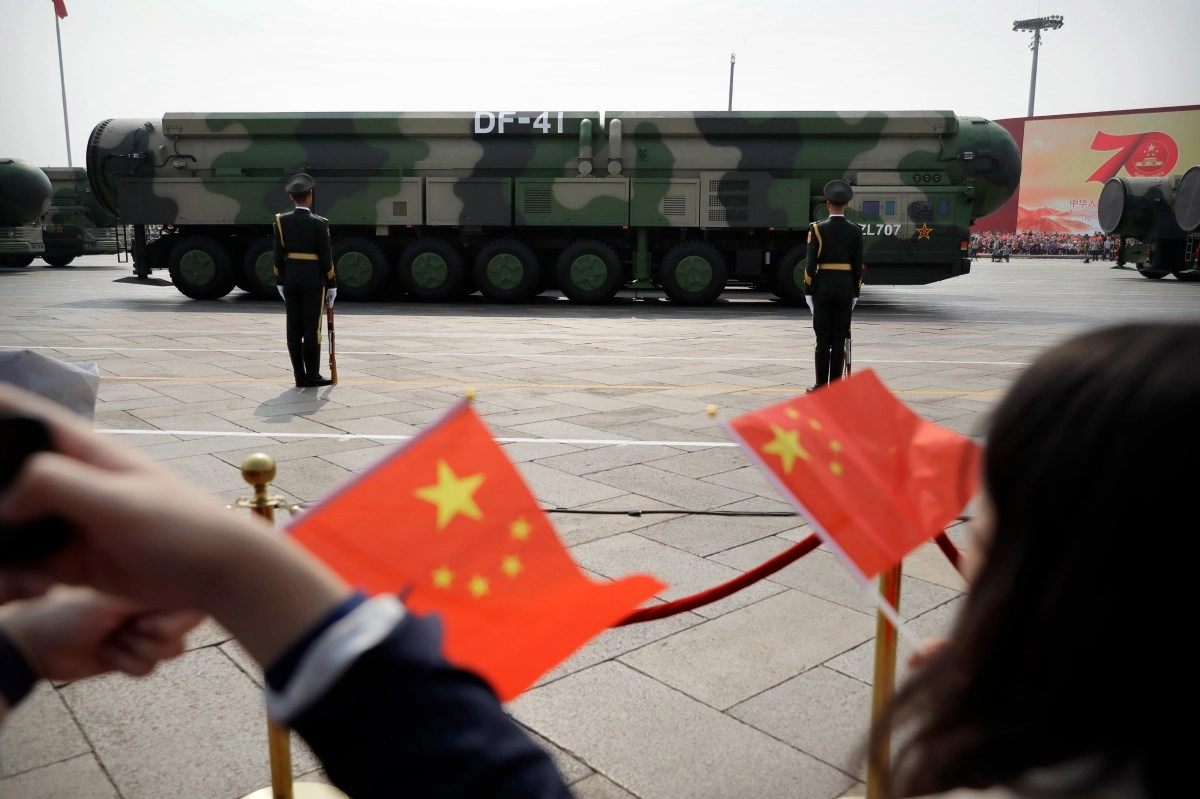

China surprised the world on September 3, 2025, on Victory Day celebrated in Beijing, with the unveiling of its Dongfeng-61, or DF-61, intercontinental ballistic missile. This weapon marks a turning point in China's nuclear strategy, putting it on par with the United States and Russia in terms of nuclear deployment capabilities. The DF-61 is not only a long-range mobile missile, but also a symbol of the impressive technological advances Beijing has made in recent years.
Technological Advances and Features of the DF-61
The DF-61 is a mobile intercontinental ballistic missile that uses solid fuel, allowing it to be faster and more flexible in launch compared to previous models. It has an estimated range of up to 18,000 km, meaning it can reach any strategic point in the United States and other continents. What makes it truly dangerous is its ability to carry up to 14 multiple independent nuclear warheads (MIRVs), which can be directed at different targets in a single launch.
Another key point is its mobile launch system, based on 16-wheeled trucks, which gives it great survivability and rapid deployment, making it difficult to locate and neutralize. This strengthens China's nuclear deterrent by guaranteeing the possibility of a second strike even if part of the arsenal is destroyed. Furthermore, the DF-61 is part of China's nuclear triad, complementing missiles from submarines and strategic bombers.
How it works and what it means for global strategy
The DF-61 works with advanced technology that includes modern guidance systems capable of evading missile defenses, and multiple warheads to maximize damage. This makes China's nuclear arsenal more sophisticated and lethal, placing it among the most feared in the world. The system's mobility also means that Beijing can reposition these missiles quickly, maintaining uncertainty for its adversaries.
From a geopolitical standpoint, The DF-61 is a clear statement that China not only wants to be a nuclear power, but is ready to compete on equal terms with the United States and Russia.This drastically changes the global balance of power and forces a rethinking of defense strategies in multiple regions, especially in the Indo-Pacific.
The Impact of the DF-61 on the Global Nuclear Race
With this new missile, China has consolidated its modern and mobile nuclear arsenal, making the dynamics of global deterrence more complex. According to experts, Beijing is increasing its nuclear capacity by more than 100 warheads per year, and the DF-61 is the jewel in this expansion. This fact is causing concern among major powers, as China's "second strike capability" is strengthening, making any attempt at disarmament or preemptive strikes more difficult.
The DF-61 is not just a new weapon, but a symbol of China's military technological evolution and a powerful influence in current and future global geopolitics.