

US imposes new sanctions on networks in China and Middle East for military support to Iran
The sanctions target entities and individuals identified for supporting the Iranian military program amid new tensions

The United States government reinforced its pressure strategy against Iran with a new sanctions package targeting more than a dozen individuals and entities cities in the Middle East, China, Belarus and United Arab Emirates, noted for their alleged role in strengthening Iranian military capabilities.
The measures seek to restrict Tehran's access to technology, financing and materials linked to defense programs in a context of sustained international tension.
Companies accused of supporting Iran
Within the affected entities there are three Chinese companies:
These firms have provided satellite images of US facilities located in the Middle East to Iranian authorities, according to official information.
Network linked to the Iranian military sector
The sanctions package includes the Export Center of Iran's Defense Ministry, a body associated with the international marketing of military equipment in the country.
In total, the measure affects 11 entities and 3 individuals, who are attributed participation in the acquisition of weapons, strategic materials and components for ballistic missiles and drones.
Against China support networks
From the Department of State it was noted that these actions are part of a sustained policy of control over networks that support Iran.
The U.S. government warned that it will continue to hold foreign actors involved in military support to Tehran responsible.
Along the same lines, the Secretary of the Treasury, Scott Bessent, stated that the measures seek to weaken the financial and operational structures linked to the Iranian military apparatus, in coordination with President Donald Trump's strategy.
They seek to end the conflict
While sanctions intensify, the United States and Iran hold talks to try to reach an agreement that ends the active conflict for 10 weeks.
Washington is analyzing a 14 point proposal that considers the suspension of Iranian nuclear enrichment for a period between 10 and 20 years, in exchange for the lifting of economic sanctions and the release of frozen funds.
The plan also includes the progressive reduction of restrictions in the Strait of Hormuz, with the objective of restoring international maritime flow.
Military tension in the Strait of Hormuz
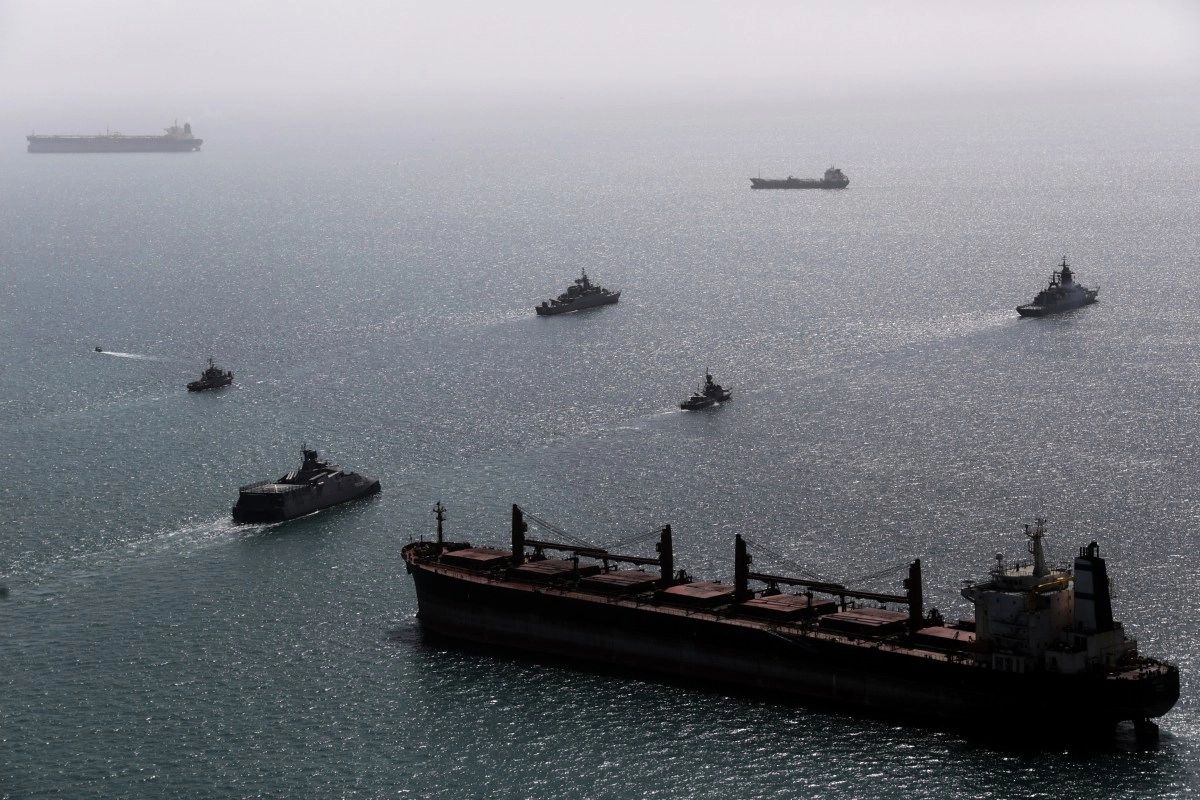
The diplomatic scenario is developing in parallel to new exchanges attacks in the strait of hormuz region, a key area for global energy trade.
According to the United States Central Command, U.S. forces responded to Iranian missile, drone launches,and boats against warships in the area. The threats were intercepted without hits on the boats.
President Donald Trump described the events as a “love stroke” and maintained that the ceasefire remains in effect, without offering details on the status of negotiations with Iran.