

Tesla feels the pressure of an important brand China
In just 15 months since its debut in the automotive sector, Xiaomi achieved the unthinkable: being just 120 units away from reaching Tesla weekly sales in China

The Chinese automotive market is accustomed to dizzying pace, but what Xiaomi is achieving has broken even the most optimistic expectations.
In less than a year and a half since it presented its first electric car, the Beijing-based technology company has not only shown that it is here to stay, but that it is already competing in the big leagues.
According to the latest report published by Car News China, which analyzes the performance of brands in the Asian country between June 30 and July 6, 2025, Xiaomi sold 4,890 units of its SU7 electric sedan. A remarkable figure, but what is truly shocking is that it was only 120 units away from matching Tesla, which registered 5,010 vehicles in the same period.
Xiaomi: from electronics to asphalt
When Xiaomi announced its foray into the automotive industry in 2021, few imagined that in such a short time its proposal could compete with the giants of the sector.
The launch of the SU7 in April 2024 marked the beginning of a stage that has revolutionized not only its own numbers, but also the perception of what a technology company can do on wheels.
The success was immediate. The first units of the SU7 sold out quickly, and the waiting list exceeded a year in some markets. This was compounded by the announcement of the YU7, a more accessible model aimed at a younger audience, whose production for all of 2026 was sold out in just three days.
Tesla remains on top, but not by much
That a company with only one model available is so close to reaching Tesla's figures in the country where the most electric cars are sold in the world sends a clear message. And although the firm led by Elon Musk maintains a prominent position, its trend is downward.
Tesla sold 5,010 vehicles during that week, representing a 22.92% drop compared to the same period in 2024,when it had managed to sell 6,500 units. Xiaomi, on the other hand, grew by 32.16%, after going from 3,700 registrations in that week of the previous year to the current 4,890.
Chinese market context: sustained growth
The good health of the electric car market in China is not exclusive to Xiaomi. BYD, the undisputed leader in the segment, achieved 55,570 sales in the same week, surpassing all other brands by a wide margin.
Second place went to Aito, with 9,400 units, followed closely by Leapmotor, with 9,390. Other important brands such as Geely (7,470), Li Auto (7,160), Xpeng (6,450), Tesla (5,010) and Xiaomi (4,890) complete the top positions. Further down are Deepal (4,070) and Zeekr (3,230), closing the top 10.
In this hyper-competitive environment, the entry of Xiaomi has forced traditional brands and emerging manufacturers to rethink their strategies.
Technology, brand and desire
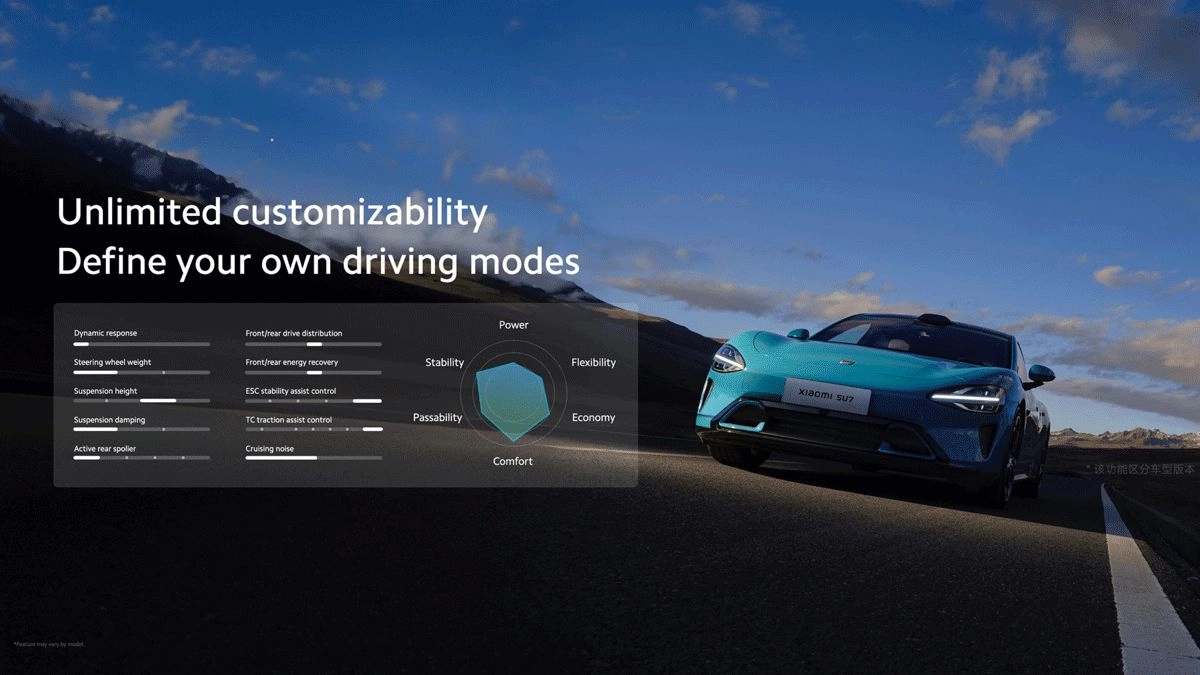
One of Xiaomi's great differentiators has been its ability to integrate its technological ecosystem into the interior of the vehicle. From its own operating system to connectivity with smartphones and smart home devices, the SU7 has achieved what few others can: turn the car into an extension of the user's digital universe.
The YU7, whose launch has not yet been finalized, is already a success without a single unit having been delivered. Production for 2026 sold out in just 72 hours, generating excitement in distribution circles and also some pressure on the company to meet deadlines.
The first registrations of the YU7 have not yet appeared in the sales lists, so Xiaomi's figures could see another significant jump in the coming months. If deliveries take place as expected in the last quarter of 2025, Tesla will have more reasons to look in the rearview mirror.
A competition that is sharpening
Despite its impressive rise, Xiaomi insists on maintaining a respectful profile compared to its competitors. However, it's clear that the gap is narrowing and Xiaomi's ambition is not stopping.
With a proposal that prioritizes efficiency, modern design, and an integrated digital experience, Xiaomi is positioning itself as a rival to be feared in the medium and long term.
The big question is whether it will be able to maintain this pace when it has to scale up its production and face new quality and logistics challenges.