

Exclusively: Don Francisco talks about his vocation and his return to Univision
After a decade, Don Francisco returns to television. In a conversation with La Opinión, he reflected on his work and the new project
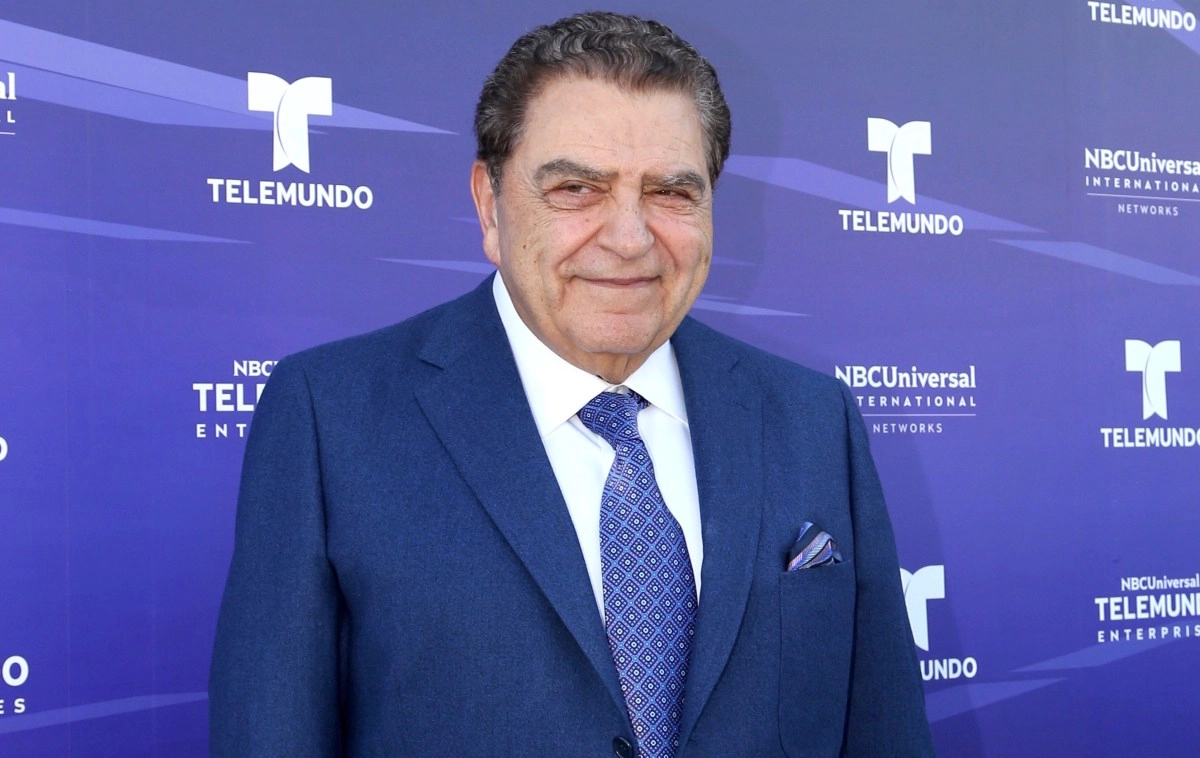

Mario Luis Kreutzberger Blumenfeld, better known as Don Francisco, returns to the Univision screen. In a moving conversation with Clary Castro, journalist from La Opinión de Los Ángeles, he spoke about his return, his expectations, his vocation; He also reflected on artificial intelligence and life.
In the first part of the conversation, they delve into the impact of Don Francisco on Hispanic television, thanks to his legendary program “Sábado Gigante”, after six decades of experience and career. When asked this question, the host states that he is not very aware of his impact, but he is aware of his vocation and what this new program brings, at 85 years old.
"That's why we want to have a program with an audience to evoke the times, but at the same time update them with the interviews we do there, because for them, for the artists, for the stars we invite, some time has also passed. It has passed in some decades, in other cases less time, but evoking is good because they are past times that are unlikely to return," he expressed.
What to expect in this new program?
Don Francisco explained that his return to television came from a call and that, upon hearing the proposal, he said that “yes I can do it.”
"Nacho Meyer, the director of the channel, called me and we talked. I told him, 'Yes, I believe that I can do what you want me to do,' because otherwise I would have said no. There are certain things that one can no longer do because the calendar is very advanced, but what they proposed to me I could do and I think I can do it well," said the Chilean, also.
Regarding the new direction that the program will take, Don Francisco pointed out that they are working on making the format more current: "And then from then on one begins to think and there is no moment in which one is not thinking about that to be able to shape it in the best way to be able to add, because the big change that must be made is the evocation of current affairs to be able to be as transversal as possible and that also this program that is going to be in the traditional media is going to be on the networks of this same company. So, on the networks the content has to be adapted a little and on television it remains as we did.”
The preparation
During the conversation, true to his style, Don Francisco admitted that during his time on television he missed a large part of the lives of his children and grandchildren due to his vocation, but that for him there is no room not to learn or prepare.
"Preparation is the basis of improvisation. Yes, I am going to talk to you. I have to prepare myself about you, know your history, know who you are, how old you are, what your childhood was like, why you are in this job. I have to know as much as possible because improvisation comes through your answer, which I don't know what it will be and then I have to be able to answer you with the greatest knowledge and be able to question you," he said.
He took advantage of the space to talk about his podcast “What I Learned”, in which he addresses everything he learned since he was 16, the age at which he started working.
"There are 70 years of learning. Those learnings possibly serve a person who has nothing to do with my activity, something I said, something I learned, something I can share and with that I feel happy because one's will and my will is to share what I learned."
One of Don Francisco's closing phrases was about life. He left these moving words: "I started this job at 22 years old. What I did at 22 is different, what I did at 42, what I did at 62 is different from what I can do at 82, where I have certain advantages and some disadvantages. The advantages are the accumulation of experience of these 63 years of being a common communicator. The disadvantage may not have the same speed, it may not physically have the same attributes."
That led him to reflect on life: "At this stage one knows that there is something that is inevitable, which is the end of life. So, I already have a cliché phrase for this. The bad thing is that we are in the front row of the theater of life. The good thing is that we do not know what position we are in. Therefore, the day we reach pole position, that is, to first place, that day is the last day. And as long as that does not arrive and the capabilities allow it, one must do the best one can in one's life."