

Trump threatens 100% tariffs on Canada over China deal; Carney denies it
Trump referred to Carney disparagingly as
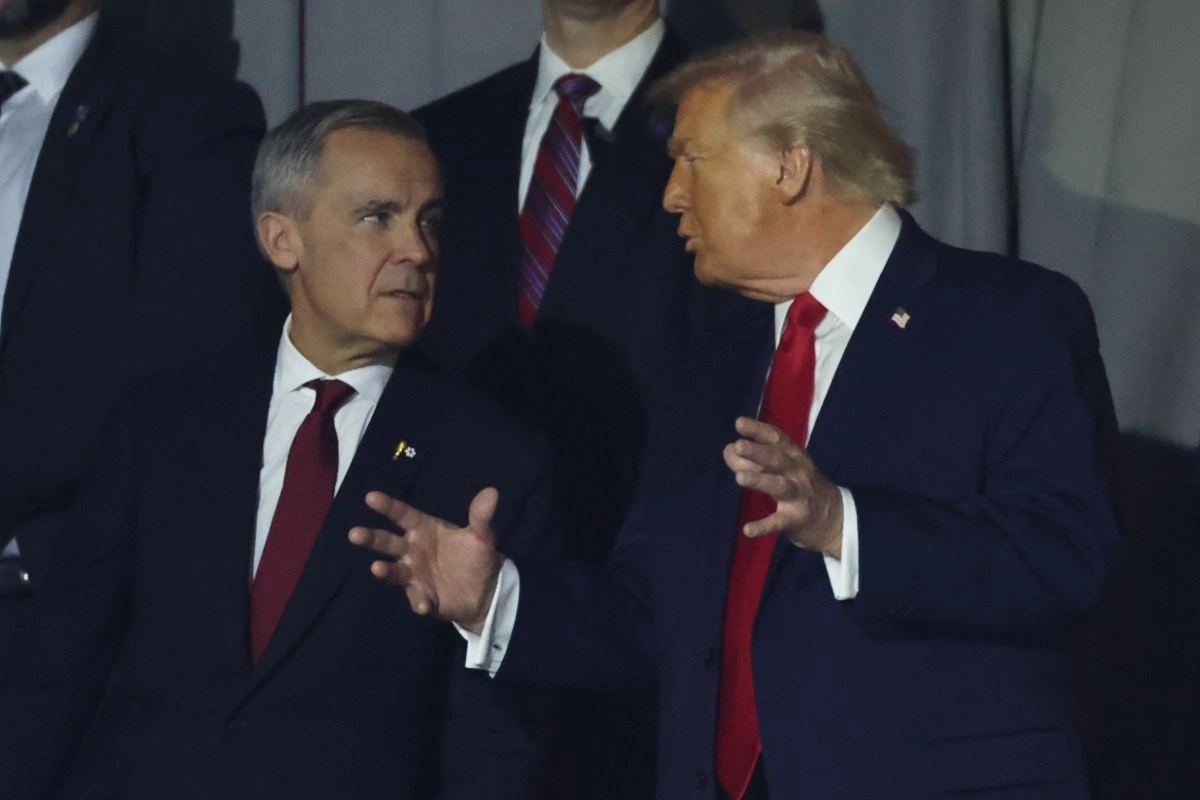

Donald Trump reignited trade tensions in North America by threatening to impose 100% tariffs on Canadian imports if the country signs a trade agreement with China. The warning was directed squarely at Canadian Prime Minister Mark Carney, who denied any intention of a free trade agreement with Beijing. Through his social media account, Truth Social, Trump referred to Carney disparagingly as “Governor,” reviving his old narrative that Canada should become the 51st state of the United States. Trump asserted that allowing a greater Chinese commercial presence would turn Canada into a “backdoor” for Chinese products to enter the American market. “If Governor Carney thinks he can turn Canada into a dumping ground for China, he is very wrong,” Trump wrote. “China would destroy your businesses, your social fabric, and your way of life.” In response, Carney was emphatic: Canada is not negotiating and does not plan to negotiate a free trade agreement with China. He explained that his government only made specific adjustments to certain tariffs to correct recent trade distortions. The Prime Minister recalled that the USMCA (trade agreement between the United States, Mexico, and Canada) establishes commitments not to sign agreements with economies that do not operate under market rules without prior notification to the partners. “We have no intention of doing so with China or any other economy that is not subject to market laws,” Carney stated. “What we did was correct problems that arose in the last two years.” In 2024, Canada aligned itself with the United States in imposing 100% tariffs on Chinese electric vehicles and 25% tariffs on steel and aluminum from that country. China responded with strong retaliatory measures, including 100% tariffs on Canadian canola and 25% tariffs on products such as pork and seafood. During a recent visit to China, Carney announced a partial reduction of the tariff on Chinese electric vehicles.establishing an initial limit of 49,000 units per year with a 6.1% tariff, a figure that could increase to 70,000 vehicles in five years. The dispute reflects the delicate trade balance in North America, where the United States seeks to contain China's economic influence, while Canada attempts to protect key sectors without jeopardizing its relationship with its main trading partner.