

4 keys to understand Israel controversial plan to control Gaza and what this means on the ground
Israel security cabinet approved a plan to escalate the war and occupy Gaza City. What it consists of and what concerns it raises
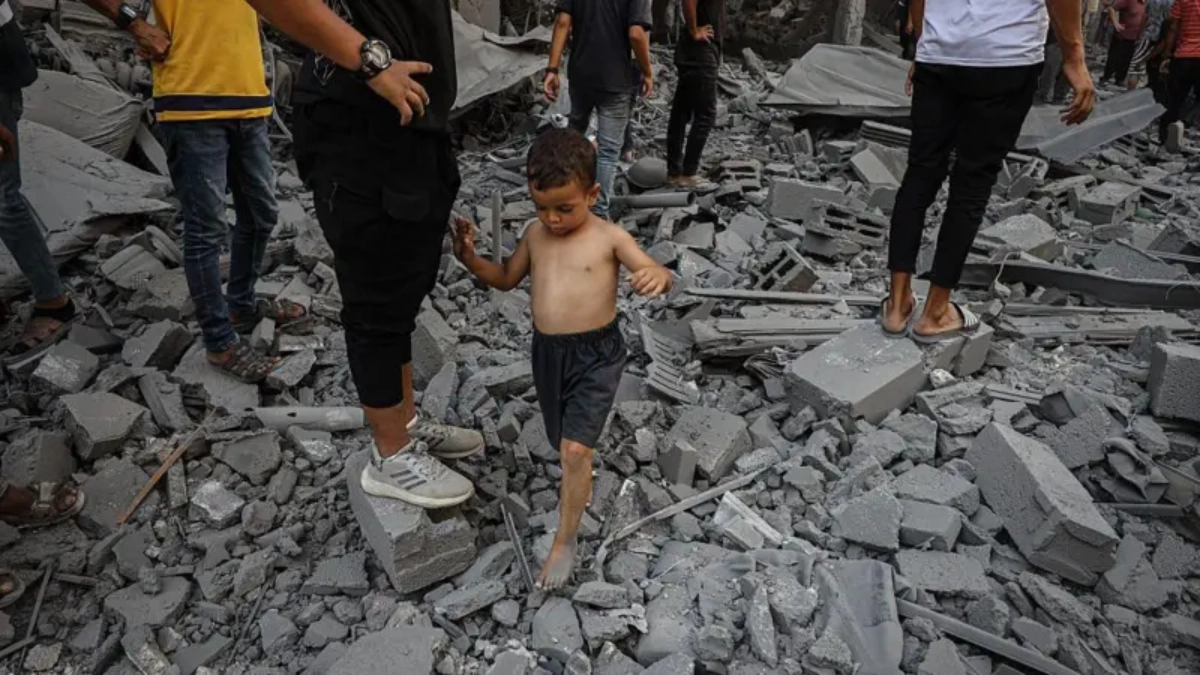

Israel's security cabinet approved a plan on Friday to escalate the war and occupy Gaza City, paving the way for a progressive military capture of the entire strip.
The The plan, unveiled by Israeli Prime Minister Benjamin Netanyahu, is perceived as a risky step that threatens the lives of Israeli hostages and could significantly increase the number of civilian casualties in the Palestinian enclave. The controversial plan has been heavily criticized by international organizations and governments around the world. The United Nations human rights official, Volker Türk, said that “the war in Gaza must end now” and warned that further escalation “will result in more mass forced displacement, more killings, more unbearable suffering, more senseless destruction and atrocity crimes.” For his part, British Prime Minister Sir Keir Starmer called the escalation a Israel called it “wrong” and said it would only bring “more bloodshed.”
There is still much that remains unclear about the Israeli plan.
Israel has not yet said when it will begin “taking control” of the territory. Some Israeli media outlets report that the army will order residents to evacuate first.
The cabinet also agreed that Israel would provide “humanitarian aid to the civilian population outside of combat zones,” but it is unclear whether this is a new form of aid or if it will be delivered through the controversial Gaza Humanitarian Fund, backed by Israel and the United States.
In this note, we summarize in four key points what is known about the controversial plan.
1. The 5 “principles” of the plan
In a statement released Friday by the Prime Minister’s Office, The Israeli government announced that “the Israel Defense Forces (IDF) will prepare to take control of Gaza City while providing humanitarian aid to the civilian population outside of combat zones.” According to the statement, Israel will follow certain “principles” with which it seeks to end the conflict: In an interview with Fox News hours earlier, Benjamin Netanyahu stated that to ensure Israel’s security his government intended to expel Hamas, allow the population of Gaza to free itself, and hand the territory over to civilian rule. “We want to liberate ourselves and the people of Gaza from the terrible terror of Hamas,” he continued. But Netanyahu also said that Israel “does not want to keep it.” have a security perimeter. We don't want to govern it. We don't want to be there as a governing body," he added. The number of displaced Palestinians
The plan to completely occupy Gaza is expected to force up to 1 million of the Strip's residents to move further south.
Israel, which controls around 75 percent of the territory, has not operated in Gaza City or in the camps in the central Strip, where around 1 million Palestinians live.
Since the start of the war, most of Gaza's two million residents have been repeatedly displaced and have lived in tented camps across the territory, under increasingly precarious conditions.
According to the Gaza Health Ministry, more than 61,000 Palestinians have been killed in the Israeli offensive. Most of the fatalities have been women and children.
After being displaced several times in the past two years following the announcement of the Israeli plan, some Palestinians refuse to do so again.
Sabrine Mahmoud told the BBC that she would not leave her home under any circumstances.
“I will not leave my home. We will not live displaced again. We left Gaza City for a whole year and suffered the harshest humiliation in al-Mawasi. We will not repeat the mistake. Let them destroy the house over our heads; we will not leave,” she said.
The Turkish Foreign Ministry urged the international community to prevent Israel’s plan and He claimed that it aims to "forcibly displace Palestinians from their own land."
3. The Hostages
The Israeli army itself has warned that an expansion of the offensive to achieve full control of Gaza would endanger the 20 Israeli hostages believed to be still alive and being held in those areas.
The families of the hostages share these concerns and consider the decision to be "a death sentence and the immediate disappearance of our loved ones."
They believe that the only way to guarantee their release is through a negotiated settlement.
The Hostages and Missing Families Forum: Bring Them Home Now declared this Friday that the "expansion of the fighting only puts those still held in the Gaza tunnels in greater danger."
The forum, which provides support to the families of those taken hostage, accuses the security cabinet of ignoring repeated warnings from the military leadership and the clear will of the majority of the population. Israeli.
It also urges the people of Israel to “stop this dangerous course of action,” adding that the government “is leading us toward a colossal catastrophe for both the hostages and our soldiers.”
“The cabinet decided last night to undertake another reckless march, at the expense of the hostages, the soldiers, and Israeli society as a whole. But it is not too late.”
For its part, the Ma'ariv newspaper reported Thursday that the “prevailing estimate is that most of the living hostages, and possibly all, will die” if the offensive expands, either at the hands of their captors or accidentally by fire from Israeli soldiers.
4. Opposition to the plan
There are reports of real disagreement and opposition from the top echelons of the Israeli military to the operation.
“This week, 600 former national security officials declared that it is time to end the war, in a call to President Trump to put pressure on and stop the fighting,” says BBC journalist Jon Donnington from Jerusalem.
“Basically, they are saying that the idea of occupying Gaza, descending into a situation that is likely to be hostile and insurgent-type, is counterproductive, damaging to Israel’s international reputation, and without a real long-term plan,” he adds.
“But, as has been the case throughout this war, Prime Minister Netanyahu seems intent on going his own way and believes it is necessary to end Hamas,” Donnington concludes.
A growing number of countries have expressed their opposition to the plan, including long-time allies of Israel such as Germany.
The German government announced on Friday that it will suspend arms exports to Israel that could be used in the Gaza Strip, Chancellor Friedrich Merz said.
This marks Berlin's clearest change yet in response to Israel's military campaign.
For its part, China's Foreign Ministry said that "Gaza belongs to the Palestinian people and is an inseparable part of the Palestinian territory" and called for an immediate ceasefire. Dutch Foreign Minister Caspar Veldkamp called the Israeli government's plans to "step up operations in Gaza" "a wrong move" and said it "will not help the hostages return home." Denmark said Israel should reverse its decision, while European Commission President Ursula von der Leyen called on the country to reconsider its plans. But the government of Israel's closest ally, the United States, has yet to comment.
Reports have emerged that the Americans have given Israeli Prime Minister Benjamin Netanyahu the green light to take control of Gaza City, according to analyst Jeremy Bowen, international editor of the BBC, in Jerusalem.
This is information that has not yet been confirmed, but it is clear to many that Netanyahu has fewer and fewer allies inside his country and around the world.