

Wildfires fuel the crisis of the insurance of homes in California
Thousands of people left without adequate coverage as insurers withdraw from the state
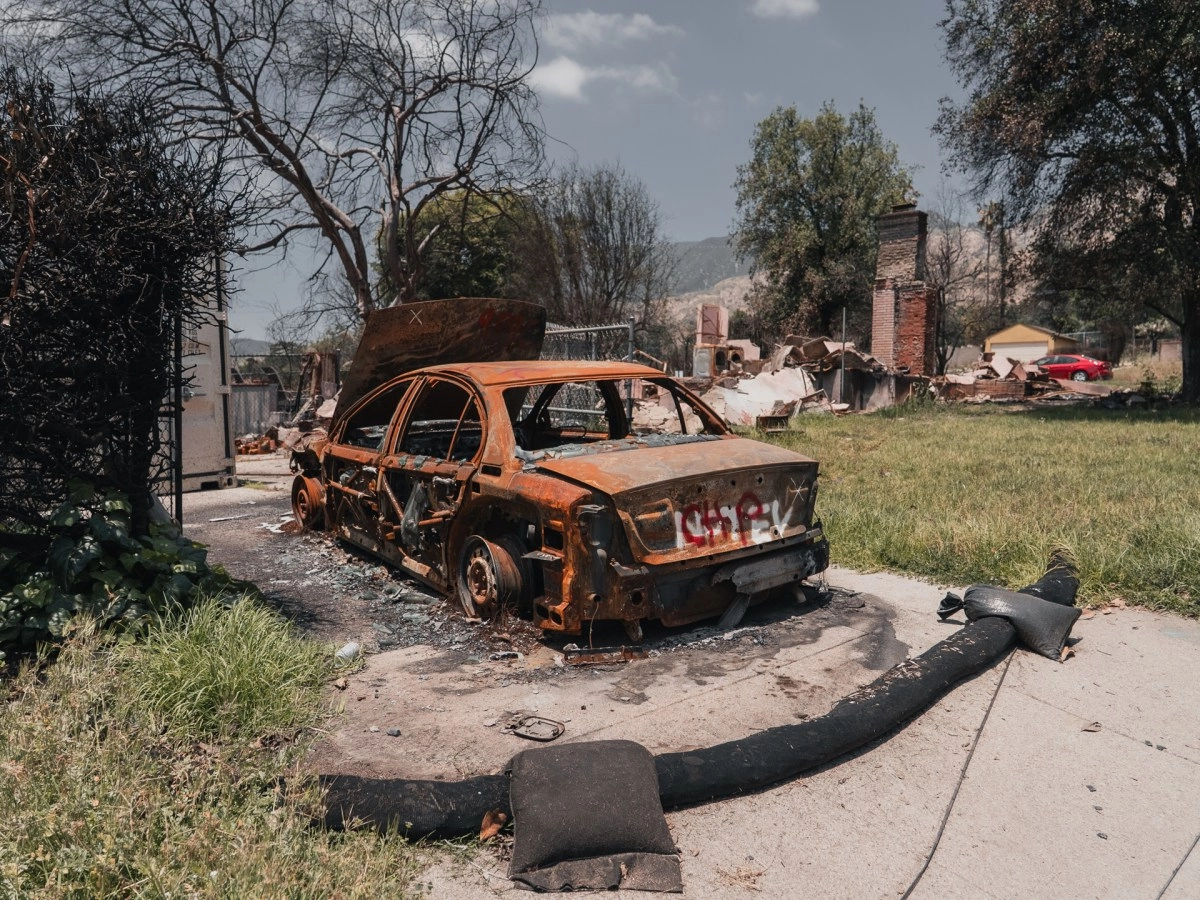

The Eaton and Palisades fires, registered in January, destroyed some 16,000 homes and caused losses estimated at 275 billion dollars. Furthermore, a study by the UCLA Latino Institute for Public Policy indicates that nearly 30% of Latino small businesses that suffered damage did not have fire or natural disaster insurance.
This level of destruction revealed deep inequalities in California's homeowners insurance system.
Marisela Viramontes, a disaster victim from Altadena and an insurance agent, says that over the past decade she has seen climate change weaken the private insurance system. "Many companies were leaving California because they were already predicting that the fires were going to get worse and worse and worse."
As a result, between 2020 and 2024, seven of the state's 12 largest insurance companies suspended or reduced issuing new policies, citing rising risks linked to climate change such as floods, storms, and brush fires, according to research by Huella Zero.
Data from the California Department of Insurance reveals that between 2020 and 2022, at least 2 million homeowners became uninsured. This situation left vulnerable residents without private coverage options.
Higher Policies and Little Room for Maneuver
Marisela had hoped that an improvement would come to the sector at the beginning of the year. However, the January wildfires wiped out that possibility. In fact, among homeowners, businesses, and authorities, there was fear that policies and the requirements for acquiring them would increase. A fear that ended up being confirmed.
In May, State Farm, the largest insurer in California, received authorization from the state to increase its rates by 17% to cover losses caused by the fires. This measure has generated controversy because many of the affected residents accuse the company of delaying or denying payments.
In June, The California Department of Insurance announced an investigation due to the large number of complaints against State Farm. For its part, the company, which has more than 1 million customers in the state, says it is committed to helping its customers recover. It added that as of mid-June, it has received "approximately 12,870 total fire-related claims" and has paid out more than $4 billion to its California customers.
Meanwhile, there is growing frustration among those affected because they feel the insurance system is not adequately responding to their needs and that authorities are not doing enough to protect them.
Although discussions are underway about how to modify the system, nothing concrete has been done yet. Homeowners who lost their homes in the 2025 fires face a double challenge: material loss and financial uncertainty.
Many discover that their policies do not cover certain fire-related damages or that the compensation limits are insufficient to cover rebuilding costs, which have increased due to shortages of labor and materials.
Urban planning faces a monumental challenge
Global warming is no longer a future threat, but a reality that has changed the rules of the game, especially for urban planning.
It is no longer enough to look to the past to foresee the future. The intensification of natural disasters like the brush fires in Los Angeles County forces a critical analysis of decisions made not only before the fires but also afterward.
"In my personal opinion, I think there are many things that need to be considered when rebuilding... New construction needs to take into account, to some extent, the environment in which it is being built and the risks around that environment," said Dr. Erika Podest, a NASA scientist specializing in environmental phenomena.
Los Angeles County, with its complex wildland-urban interface, is particularly vulnerable. In recent decades, entire residential and commercial buildings have been built next to natural ecosystems prone to brush fires. As communities expand into arid wilderness areas, more people will be exposed.
“It’s always a risk. Wherever there is that interface between urban areas and areas where there is vegetation, there’s always going to be a risk, and we have to find the balance between the management of those natural areas and that interface with urban areas,” Podest said.
One of the solutions is to build fireproof, J. Lopez explained. former deputy chief of the Los Angeles County Fire Department, who devotes much of his time to fire education.
As the events have increased in intensity, we have to increase our preparedness... The most important thing is to build with existing building codes, said Lopez.
He emphasized the importance of choosing fireproof building materials: There are about five different types of roofs that are approved. There are different types of windows that are approved for fire and weather conditions.
Multi-pane windows, roofs with Class A materials such as metal, concrete, or clay shingles, and a building buffer zone of at least 5 feet free of combustible materials are essential.
Even insurance companies now have more stringent construction or modernization requirements in their policies, such as protecting the property from fires.
Marisela Viramontes mentioned that "the main thing is the plumbing, electrical, and your roof... If you have replaced or modernized them, they consider a discount."
She and her family will take these recommendations into account as they plan to rebuild their home, knowing that they are also building a resilient future for their neighbors.
This is the third of five articles that will be published each week in La Opinion. Analysis conducted by Huella Zero's Environmental Research Unit.