

Jim Lovell, the Heroic Astronaut Who Managed Apollo 13 to Return Safely to Earth, Dies
The Apollo 13 commander who rescued his crew from near-certain death in space has died at 97.
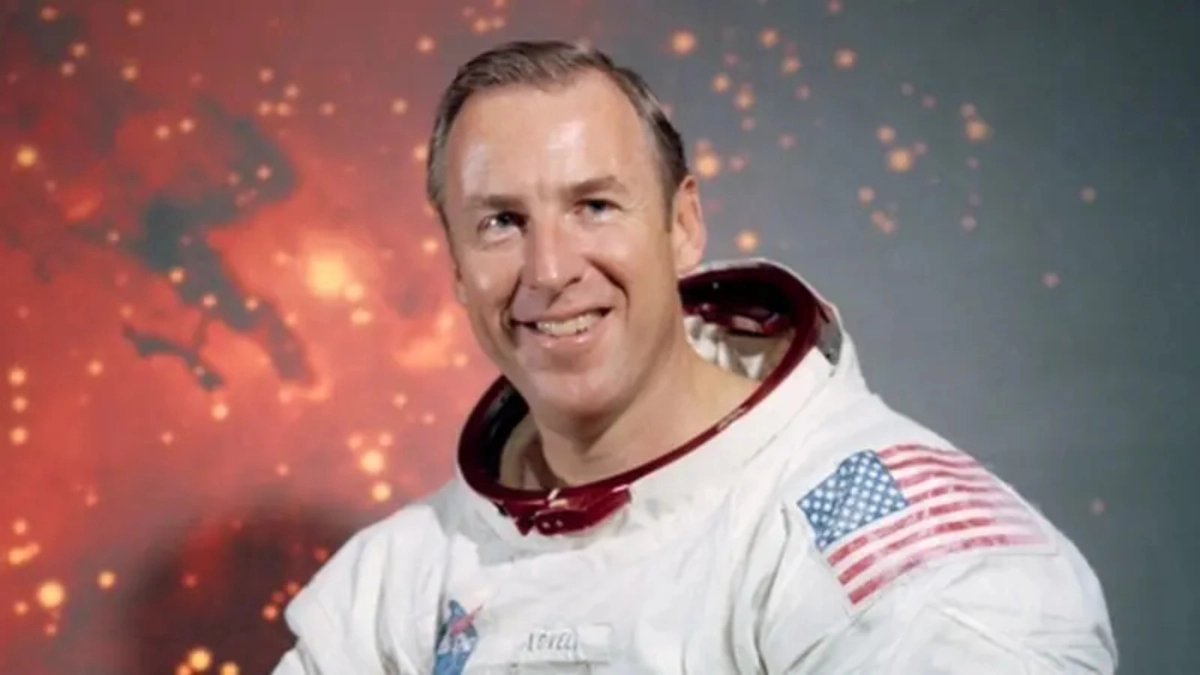

Astronaut Jim Lovell, who successfully guided the Apollo 13 mission back to Earth in 1970, died Friday at the age of 97.
NASA declared that Lovell “turned a potential tragedy into a success” after an attempt to land on the moon was aborted due to an explosion on board the spacecraft while it was hundreds of thousands of miles from Earth.
Tens of millions of people watched on television as Lovell and two other astronauts splashed down in the Pacific Ocean, a moment that has become one of the most iconic in the history of space travel.
Lovell, who also took part in the Apollo 8 mission, was the first man to travel to the Moon.
Acting NASA chief Sean Duffy said Lovell helped the U.S. space program “forge a historic path.”
Lovell’s extraordinary life
One Saturday, a 16-year-old boy dragged a heavy, three-foot-long pipe to the center of a large field in Wisconsin.
He had convinced his science teacher to help him build a makeshift rocket.
Somehow, he had acquired the ingredients for gunpowder: potassium nitrate, sulfur, and charcoal.
He donned a welder’s helmet for protection. He filled the tube with gunpowder, lit a match, and ran as fast as he could.
The rocket rose 80 feet (24 meters) and exploded. If the chemicals had been packaged differently, he would have been blown to bits.
For Jim Lovell, this was more than just teenage prank.
James Arthur Lovell Jr. was born on March 25, 1928, just a year after Charles Lindbergh's historic flight across the Atlantic.
"Kids are interested in dinosaurs or airplanes," he said. “I was totally an airplane kid.”
But when he was 5, his father died in a car accident.
His mother, Blanche, He worked tirelessly to pay for food and clothing for his family. College was out of reach.
Naval Pilot
The answer was the U.S. Navy, which was looking for new pilots after World War II. He wouldn't build rockets, but at least there he could fly.
Lovell enrolled in a program that sent him to college with expenses paid by the military while he trained as a fighter pilot.
Two years later, he gambled by transferring to the Naval Academy in Annapolis, hoping to work with his beloved rockets.
A few months later, the Korean War broke out, and his former classmates were sent to Southeast Asia. Many never finished their studies.
Marriage was forbidden at the Academy, and girlfriends were discouraged.
But Lovell did have a girlfriend: Marilyn Gerlach, the high school girl he shyly asked to the prom.
Hours after graduating in 1952, the newly commissioned Ensign Lovell married Marilyn.
They were together for more than 70 years, until her death in 2023.
After graduation, Lovell was assigned to an aircraft carrier group to fly jets off ships at night.
It was a dangerous assignment, only fit for daredevils. But for him, it wasn't enough.
Space
Project Mercury was America's attempt to place a man in orbit. Lovell was one of 110 test pilots considered, but a temporary liver condition thwarted his chances.
Four years later, he tried again.
In June 1962, after rigorous medical tests, NASA announced the "New Nine." These would be the men charged with fulfilling President Kennedy's promise to land Americans on the moon.
It was the most elite group of aviators ever assembled. It included Neil Armstrong, John Young, and, fulfilling his childhood dream, Jim Lovell.
Three years later, he was ready.
His first trip into space was aboard Gemini 7, alongside astronaut Frank Borman.
Their mission: to see if humans could survive two weeks in space. Otherwise, the Moon would be unreachable.
After completing the endurance record, Lovell commanded Gemini 12 alongside rookie Buzz Aldrin.
This time they proved that humans could work outside of a spacecraft. Aldrin stepped out into the void and spent five hours photographing star fields.
The Apollo 8 crew would be the first to travel beyond Earth's orbit and enter the gravity of another celestial body.
It was NASA's most dangerous mission up to that point.
Dawn on Earth
The Saturn V rocket that launched Lovell, Borman, and William Anders to 25,000 mph was enormous, three times larger than any other in the Gemini program.
Sixty-eight hours after liftoff, they did it: Apollo 8 slid silently behind the Moon.
The fascinated astronauts pressed against the windows, the first humans to see the far side of our celestial neighbor. And then, over the horizon, an incredible sight appeared.
"Dawn on Earth!" Borman exclaimed.
"Quick, the camera!" Lovell replied.
The U.S. was in the throes of the Vietnam War and social unrest. But in that moment, it seemed that humanity was united.
The world saw their planet as the astronauts saw it: fragile and beautiful, shining in the desolation of space.
For Lovell, it was the most moving experience of her life.
At that precise moment, 385,000 kilometers away, a man in a blue Rolls-Royce pulled up in front of Lovell's Houston home. He walked up and handed a box to Marilyn.
She opened the star-printed tissue paper and took out a mink jacket. “Merry Christmas,” the accompanying card read, “with love from the Man in the Moon.”
They went up as astronauts and came back down as celebrities.
There were ribbon-waving parades, Congressional tributes, and a spot on the cover of Time magazine. And they hadn't even set foot on the moon.
That honor, of course, went to Neil Armstrong and Buzz Aldrin.
A year later, Kennedy's dream was posthumously fulfilled. One small step was taken, and humanity took a giant leap. The “New Nine” had accomplished their mission.
“Houston, we have a problem.”
In April 1970, Lovell, Jack Swigert, and Fred Haise were determined to follow in Armstrong and Aldrin’s footsteps to the lunar surface on Apollo 13.
But things went horribly wrong.
They were 200,000 miles (320,000 kilometers) from Earth and approaching their target when they detected low pressure in a hydrogen tank. It needed to be stirred to prevent the supercooled gas from settling into layers.
Swigert flipped the switch. It should have been routine procedure, but the command module, Odyssey, lurched. Oxygen pressure dropped and power was cut off.
“I think we have a problem here,” Swigert said.
Lovell had to repeat the message for a stunned Mission Control: “Houston, we have a problem.”
It was one of the biggest understatements of all time.
The crew was in serious trouble: a dramatic explosion had rendered their ship useless.
Haise and Lovell worked frantically to activate the lunar module, Aquarius.
It wasn’t designed to be used all the way to the moon. It had no heat shield, so it couldn’t be used to re-enter Earth’s atmosphere. But he could keep them alive until then.
The world held its breath and watched.
For the second time, Lovell had united the world as one.
“For four days,” Marilyn said, “I didn’t know if I was a wife or a widow.”
Temperatures dropped to freezing, and they had to ration food and water.
Days passed before they slowly drifted back to the edge of Earth’s atmosphere.
They returned aboard the Odyssey and prayed that the heat shield was undamaged.
The radio silence that accompanies reentry stretched far longer than usual. Millions watched on television, many convinced all was lost.
After six agonizing minutes, Swigert's voice broke the silence.
The team on the ground held its breath until the parachutes deployed and the crew arrived safely.
The mission was NASA's biggest failure and, arguably, its finest hour.
Lovell retired from the Navy in 1973 and opted for a quiet life.
His book, Apollo 13, was made into the famous 1995 movie, starring Tom Hanks as Jim Lovell.
For the film, the director asked him to dress as an admiral for a scene in which he shook Hanks's hand as the crew was rescued from the sea.
But the old hero declined. He saw no reason to falsely embellish his CV.
He took out his old Navy uniform, dusted it off and put it on for the special appearance.
"I retired as a captain," he insisted, "and I will continue to be a captain."